In the demanding landscape of 2026 industrial manufacturing, the margin for error in thermal processing has narrowed to near-zero. As a leading industrial furnace manufacturer with over 35 years of engineering pedigree, Continental Furnaces has observed a consistent trend: technical debt in maintenance is the primary driver of unscheduled downtime and catastrophic yield loss.
Whether you are operating a steel rolling mill, an aluminum melting furnace, or a complex hot dip galvanizing plant, your furnace is not merely a piece of hardware; it is a precision instrument. Neglecting its maintenance is a strategic risk that directly impacts your bottom line and regulatory compliance.
Below, we outline the seven most critical maintenance mistakes currently being made in the industry and provide the technical roadmaps to rectify them.
1. Neglecting Refractory Health and Insulation Integrity
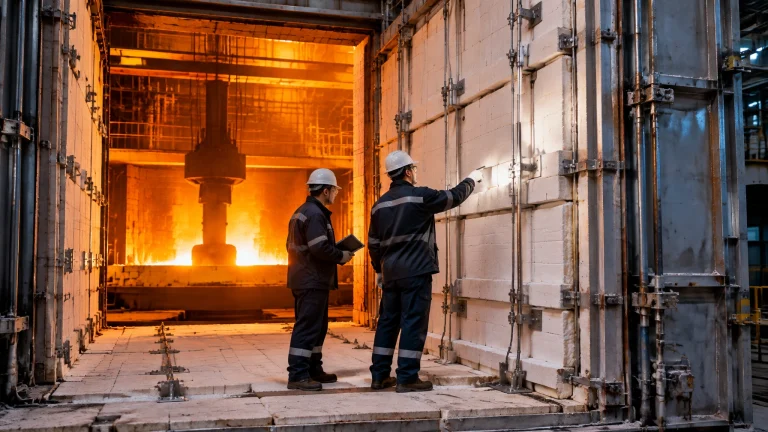
The refractory lining is the thermal heart of your furnace. We frequently see operators ignore hairline cracks or "minor" spalling in the insulation. In high-temperature environments: especially those exceeding 1,100°C: even small breaches lead to significant heat bypass.
- The Mistake: Treating refractory wear as a cosmetic issue.
- The Impact: Increased fuel consumption by up to 15-20% and the creation of "hot spots" that can permanently warp the furnace shell.
- The Fix: Implement a monthly visual inspection protocol. For metal recycling furnaces, use infrared thermography to identify sub-surface insulation failures before they manifest as shell discoloration.
2. Inaccurate Combustion System Tuning
Burner performance drifts. This is an unavoidable physical reality caused by component wear and fluctuations in fuel quality. Many facilities fail to recalibrate their air-to-fuel ratios, leading to inefficient combustion.
- The Mistake: Set-and-forget burner management.
- The Impact: Excess oxygen causes heavy scale formation on workpieces in steel rolling mills, while insufficient oxygen leads to soot buildup and hazardous CO emissions.
- The Fix: Schedule quarterly combustion audits. Aim for an excess oxygen level of 2% to 3% for optimal efficiency. Modern industrial furnace systems now integrate automated oxygen trim systems that adjust in real-time.

3. The Calibration Gap: Sensor and Thermocouple Drift
In 2026, precision is the currency of the Wire and cable industry and aerospace manufacturing. A thermocouple that has drifted by just ±5°C can be the difference between a high-performance alloy and a batch of scrap.
- The Mistake: Relying on aging sensors without periodic verification against a master standard.
- The Impact: Inconsistent metallurgical properties, specifically regarding hardness and ductility, leading to high rejection rates.
- The Fix: Adopt a rigorous System Accuracy Test (SAT) and Temperature Uniformity Survey (TUS) schedule in accordance with AMS2750G standards. Replace sensors every 1,000 to 2,000 operating hours depending on the severity of the atmosphere.
4. Disregarding Atmosphere Integrity and Seal Maintenance
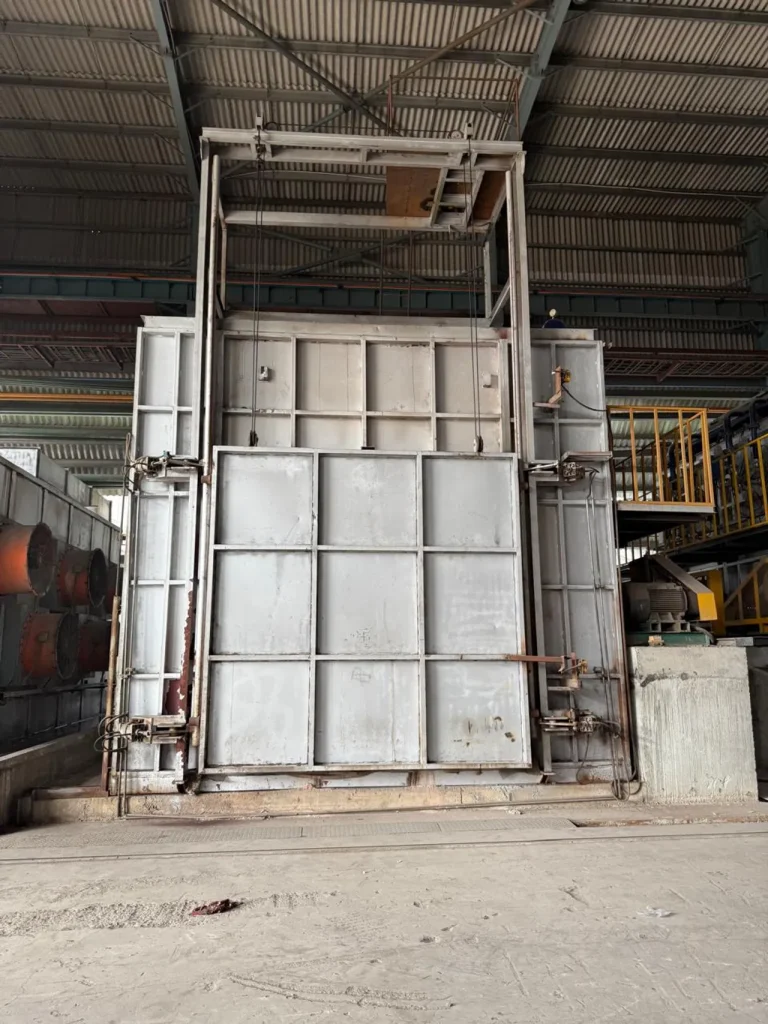
For specialized processes like bright annealing or carburizing, the furnace atmosphere must be pristine. We often find that door gaskets and sand seals are neglected until a visible leak occurs.
- The Mistake: Using worn or "patched" gaskets to save on furnace spare parts costs.
- The Impact: Oxygen ingress ruins the surface finish of products, necessitating expensive secondary pickling or rework. This is particularly devastating in a pickling plant integrated workflow.
- The Fix: Replace all primary seals annually and inspect door pressure weekly. Utilize positive pressure manometers to ensure the furnace interior remains protected from the external environment.
5. Mechanical and Conveyor System Neglect
A furnace that cannot move product is a liability. In continuous heat treatment furnaces, the drive systems, rollers, and belts are under constant thermal stress.
- The Mistake: Inadequate lubrication of bearings or ignoring belt tension variations.
- The Impact: Seized rollers can cause "cobbles" in a steel rolling mill, leading to days of repair work and potential safety hazards.
- The Fix: Transition to high-temperature synthetic lubricants and install vibration sensors on critical drive motors. A 15% increase in vibration is often the first signal of a bearing failure 30 days before it occurs.

6. Utilizing Non-OEM or Substandard Spare Parts
The allure of lower-cost, third-party furnace spare parts is a trap. These components rarely meet the original engineering tolerances or metallurgical specifications required for long-term thermal cycling.
- The Mistake: Procuring mission-critical components based on the lowest bid rather than technical compatibility.
- The Impact: Rapid component failure, often damaging surrounding assemblies. For instance, a sub-par burner nozzle can cause uneven flame geometry, melting the surrounding refractory.
- The Fix: Source exclusively from an established industrial furnace manufacturer like Continental Furnaces. Genuine parts are an investment in operational longevity and 100% uptime.
7. Reactive vs. Predictive Maintenance: The Industry 4.0 Gap
In the mid-2020s, "waiting for it to break" is no longer an acceptable strategy. The most successful plants have moved beyond the reactive model toward a predictive, data-driven approach.
- The Mistake: Failing to utilize the data generated by modern PLC and SCADA systems.
- The Impact: You are always one component failure away from a total production halt.
- The Fix: Integrate your thermal processing equipment with a centralized IoT dashboard. By monitoring energy consumption per kilogram of throughput, you can detect internal inefficiencies before they manifest as mechanical failures.
Comparative Table: Traditional vs. Predictive Maintenance Models
| Feature | Traditional (Reactive) | Modern (Predictive/2026) | Competitive Advantage |
|---|---|---|---|
| Downtime | Unscheduled & High (10%+) | Planned & Minimal (<2%) | 98% Availability |
| Energy Usage | Fluctuates/High | Optimized/Constant | 15% Fuel Savings |
| Component Life | Run to failure | Replaced at 90% RUL | Reduced Capital Expenditure |
| Labor | Emergency Overtime | Scheduled Technical Shifts | Lower Operating Costs |
| Compliance | Manual Paper Logs | Automated Digital Audit Trails | Guaranteed Certification |
The Roadmap to Sustained Performance
To transition your facility from a state of repair to a state of optimization, we recommend a three-phase approach:
- Phase 1: Assessment and Calibration (Month 1): Conduct a full TUS/SAT audit and energy baseline. Replace all critical seals and calibrate all melting furnace for steel instrumentation.
- Phase 2: Digital Integration (Months 2-3): Install IoT sensors for vibration, power draw, and gas flow. Link these to your CMMS (Computerized Maintenance Management System).
- Phase 3: Condition-Based Scheduling (Month 4+): Abandon calendar-based maintenance. Use real-time data to trigger interventions, ensuring you only maintain when necessary, thereby maximizing productivity.

Conclusion: Partnering for Excellence
Maintaining a heat treatment furnace is not a chore; it is an act of engineering stewardship. At Continental Furnaces, we don't just sell equipment; we provide the technical wisdom to ensure that equipment delivers a sustained competitive advantage for decades.
The complexities of 2026 thermal processing require more than a toolbox: they require a partner. If your facility is struggling with inconsistent yields or rising energy costs, it is time to move beyond the "Mistakes" phase and into the "Optimization" phase.
Strategic Directive: Contact our engineering consultancy team today for a comprehensive furnace health audit. Let us transform your thermal processing from a cost center into a high-efficiency engine of growth.