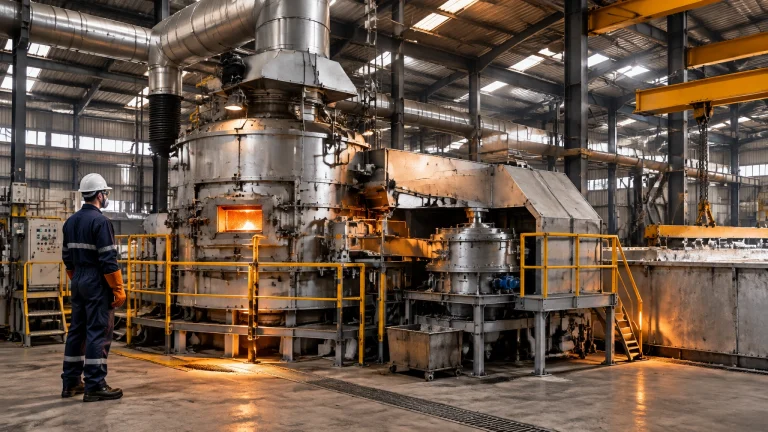
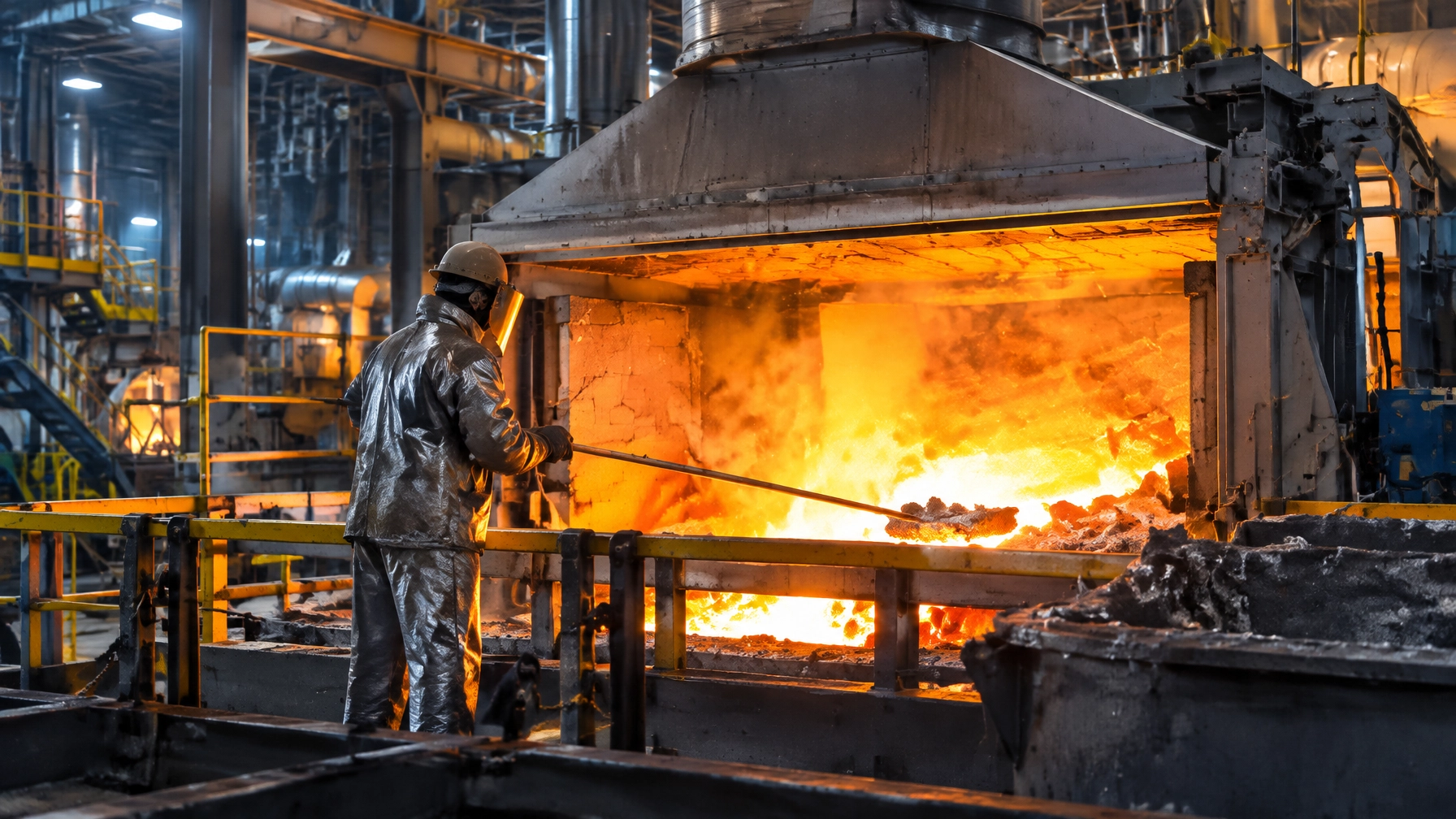
In a casthouse, aluminum lost to dross is bought twice: first as metal, then as the energy used to melt it. If it is handled casually, that loss can be paid for a third time through transport and disposal. The hidden costs include metal value, melting energy, residue handling and disposal, and lost alloy value when recovered metal cannot meet product specifications.
Dross generation is commonly reported at 15–30 kg per tonne of aluminum melted, while total melt loss varies widely, often cited within 1–10% of charge, with oxidative melt loss averaging around 4% across many operations. These are different measures: dross weight is not the same as metal lost.
The useful economic metric is therefore not a headline recovery percentage. It is kilograms of saleable aluminum returned per tonne of charge, after treatment costs and product acceptance are accounted for.
Net recovered value per tonne of dross = dross mass × metallic aluminum content × process recovery × product-acceptance factor − treatment cost.
All figures below are indicative benchmarks drawn from published surveys, plant reports and supplier references. Results vary by alloy, furnace type, charge, dross handling, operating discipline, test method and local disposal rules.
Where the Metal Goes: What Dross Actually Is
Dross is a mixture of aluminum oxide and entrained metallic aluminum. Oxide films can trap small metal droplets, so dross weight alone does not reveal the true loss.
- White or primary dross is typically skimmed early from a clean melt surface. Reported metallic aluminum content ranges broadly from 15–70%.
- Black or secondary dross is often more oxidized and associated with scrap remelting or salt processing. Reported metallic content is commonly around 12–18%, but feed and process conditions change the result.
- Thermiting is the exothermic oxidation of aluminum in hot dross. When skimmed material remains exposed to air as it cools, metallic aluminum can continue oxidizing. This is why time from skimming to controlled cooling or recovery matters, often more than the choice of recovery machine alone.
A ten-percentage-point change in metallic content or recovery can materially affect the value returned. But it is essential to compare like with like: metallic aluminum recovered from the metal contained in the feed is not the same as total mass yield from dross.
Assay each plant’s streams. The ICSOBA 2023 dross-minimisation paper documents wide variation in dross composition and the importance of controlling furnace practice and handling.
The Generation Side: Furnace and Melt Discipline
Dross prevention begins with the melt. The same conditions that increase oxidation can increase energy consumption and reduce yield: excessive temperature, surface turbulence, prolonged exposure to air and contaminated charge.
Priorities for operators and process engineers include:
- Control temperature: maintain the lowest practical temperature for the alloy and operation. For high-magnesium alloys, published casthouse guidance includes keeping preparation below 750°C.
- Limit air infiltration: reduce door-open time and maintain zero-to-slightly-positive furnace pressure where the design and combustion system allow.
- Avoid excessive stirring: mechanical agitation can fold oxide films into the bath, entraining metal.
- Transfer metal gently: siphons or submerged pumps reduce surface exposure and turbulence compared with pouring.
- Skim thoroughly and consistently: residual dross can contribute to continued oxide formation, but skimming should not itself disturb the bath unnecessarily.
- Manage charge quality: clean, dry, appropriately sorted charge generally behaves differently from oily, wet, coated or mixed scrap. Segregation and preparation help stabilize yield.
The Light Metal Age overview of melt-loss reduction and the U.S. DOE aluminum melting efficiency reference discuss the connection between furnace practice, energy and metal losses.
Table 1. Melt-loss and energy benchmarks by furnace type
| Furnace type | Indicative specific energy | Indicative melt loss | Main loss mechanism | Best fit |
|---|---|---|---|---|
| Dry-hearth reverberatory | About 1,100 Btu/lb; roughly 710–730 kWh/t by common direct conversion | About 1.8% average | Oxidation from temperature, exposure and charge quality | Scrap charging where controlled melting and reduced bath disturbance are priorities |
| Wet (bath-type) reverberatory | About 1,350 Btu/lb; reported equivalents vary by accounting basis (direct conversion is roughly 870 kWh/t) | About 3.5% average, with a cited 2–5% range | Surface turbulence, air infiltration and longer exposure of a molten bath | High-throughput melting where the bath supports the production process |
| Rotary with salt flux | Highly feed- and system-dependent; published secondary remelting figures include roughly 550–700 kWh/t of product | Highly variable; depends on feed oxidation, salt practice and yield basis | Metal entrainment in salt slag and oxidation during processing | Contaminated or oxidized streams that benefit from salt-assisted separation |
| Induction/crucible | Plant-specific; varies with furnace size, holding time and electricity basis | Plant-specific; feed and handling strongly influence results | Oxidation at exposed surfaces and losses in transfer or holding | Batch melting and controlled, smaller-scale production |
Do not compare energy figures without checking the boundary and denominator, for example, energy per tonne charged versus per tonne of saleable metal. Furnace type matters, but operation and feed quality determine actual plant performance.
The Recovery Side: Five Ways to Treat Dross
The route should fit dross temperature, composition, throughput, labor model and residue obligations. Rapid transfer to controlled treatment preserves metal before recovery even begins.

Table 2. Dross treatment options
| Route | Indicative metal recovery | Salt/slag liability | In-house capex | Where it fits |
|---|---|---|---|---|
| Open-air cool, crush and external re-melt | Variable; often lower because metal can oxidize during cooling and storage | Depends on external processor | Low | Low-volume operations or plants that need a simple route and have reliable toll processors |
| Hot dross press / skimming box | Foundry references report 60–70% and higher metal recovery under suitable conditions | Usually no salt addition at the press stage; residue route still matters | Low to medium | Plants able to press or separate dross promptly while it is hot |
| Salt-flux rotary furnace | Salt flux can add roughly 9–17 percentage points of recovery versus some alternative routes | Salt slag is generated and must be managed | Medium to high | Mixed, oxidized or contaminated feed where salt-assisted separation is justified |
| Argon rotary salt-free recovery | Published and supplier comparisons report a 7–15% improvement versus conventional salt or plasma routes; a TMS trial reported 94% average absolute recovery in 50 tests | No added process salt; residue still requires characterization and an outlet | High | High-volume plants with prompt hot-dross supply and a case for molten-metal return |
| External toll processing | Contract- and feed-dependent | Set by processor and local route | Low | Plants that want access to specialized recovery without owning a treatment line |
Caveat: Recovery figures are from supplier or published references and are not directly interchangeable. Feed metallic content, alloy, dross temperature, processing time, assay method and denominator all affect results. The TMS paper on argon hot-dross treatment tests reports a 94% average in a specific industrial test series; it is not a guaranteed plant outcome.
The Salt-Slag Question: A Liability You Choose
Salt-flux rotary processing promotes coalescence of entrained metal droplets, but it creates another material stream. Indicative references put salt use at roughly 100–140 kg per tonne treated and salt-slag generation at approximately 300–760 kg per tonne of aluminum produced, depending on feed and process basis.
Classification and cost depend on jurisdiction and site-specific material characterization. The Aluminum Association saltcake position paper describes saltcake as generally non-hazardous under U.S. federal hazardous-waste rules, while noting that transport and state requirements can differ. In Europe, salt slag is generally treated as hazardous waste. Confirm current local requirements and approved routes before selecting a process.
Salt-slag valorisation (recovering salts, metal concentrates and useful by-products) is an active research and commercialisation area. A 2024 Waste Management life-cycle assessment found environmental improvements when salt slag was valorised rather than landfilled in its studied scenario. A salt-free route can therefore serve as a regulatory hedge, but it must still be evaluated against recovery, capital, operating and residue costs.
Engineering the Furnace Around the Dross Metric
Furnace design makes disciplined skimming easier to execute shift after shift. Engineering decisions that support lower loss include:
- Charging and door design that limits open-door time and air ingress.
- Pressure control and burner management suited to the furnace’s operating envelope.
- Refractory, launder and siphon-transfer design that protects the melt from turbulence and unnecessary exposure.
- Precise thermal control to avoid overheating and extended residence.
- Fume capture at skimming stations, with safe, practical access for operators.
- Maintenance access and furnace spare parts readiness to reduce downtime and preserve operating stability.
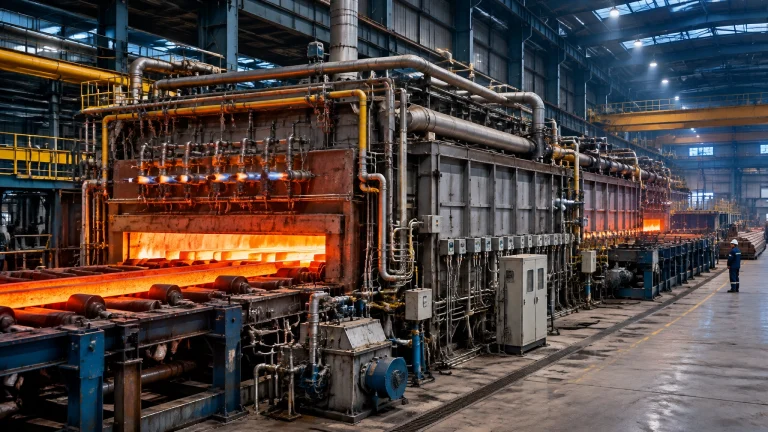
Our experience as an industrial furnace manufacturer informs how the furnace, transfer arrangement and operating routine work together. A metal recycling furnace should be engineered around the actual feed and recovery workflow, not treated as an isolated piece of equipment.

A Four-Phase Dross-Management Roadmap
- Phase 1: Assessment and Planning. Weigh every skim and assay every stream. Track kg of metal lost per tonne of charge by shift, alloy and furnace. Record time from skimming to cooling or treatment.
- Phase 2: Process Selection and Validation. Run controlled trials with measurable acceptance criteria. Separate metallic aluminum recovery from total dross mass yield, and define what recovered product quality your process can accept.
- Phase 3: Engineering and Implementation. Integrate the skimming station, recovery unit, extraction, operator training and maintenance plan as one system. Confirm appropriate spare availability and safe material flow.
- Phase 4: Performance Verification and Optimisation. Review saleable aluminum returned per tonne charged, energy per tonne, salt slag per tonne, labor hours and downtime. Use those results to refine the process and business case.
2026 Technology and Market Updates
Vision-supported skimming and autonomous furnace-tending systems are advancing as ways to reduce cycle time, operator exposure and avoidable refractory damage. The value case remains plant-specific: automation must fit the furnace layout, safety systems and throughput.
Salt-free argon recovery continues to mature, while research on aluminum residue valorisation and salt-slag treatment expands circular-economy options. Environmental scrutiny of saltcake and salt slag is also tightening in some jurisdictions.
Aluminum prices above US$3,000/t sharpen the arithmetic. As an indicative market reference, LME aluminum cash settlement was around US$3,043/t on 23 October 2026; prices move daily. At that level, small per-tonne yield improvements deserve close attention, but no fixed ROI should be promised. A reliable payback assessment needs measured feed assays, accepted-metal value, energy, labor, salt, residue charges, capital and downtime.
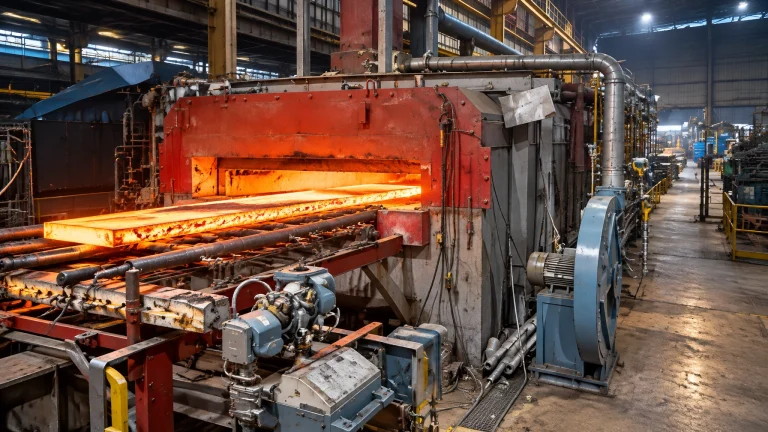
The same measurement culture applies beyond aluminum melting: a steel rolling mill and associated heat treatment furnaces depend on disciplined temperature, flow and yield control. Electrification is an important trend across industrial furnace systems, but dross economics remain a distinct process-improvement opportunity.
The wire and cable industry faces the same melt-loss economics in continuous casting and rolling of aluminum rod. A hot dip galvanizing plant also demonstrates the value of disciplined residue handling, traceability and recovery routes. Across processes, the operating principle is consistent: measure material streams, then engineer the system to protect value.
Continental Furnaces brings 35+ years of industrial furnace experience to customized thermal processing equipment, including a melting furnace for steel and integrated metal-recycling applications. We build enduring partnerships around process requirements, equipment performance and lifecycle support, not one-time transactions.
If your plant is ready to quantify dross losses, assess recovery options or plan a furnace upgrade, request a quote. Start a technical consultation with Continental Furnaces and turn dross control into a measurable step toward sustained competitive advantage.