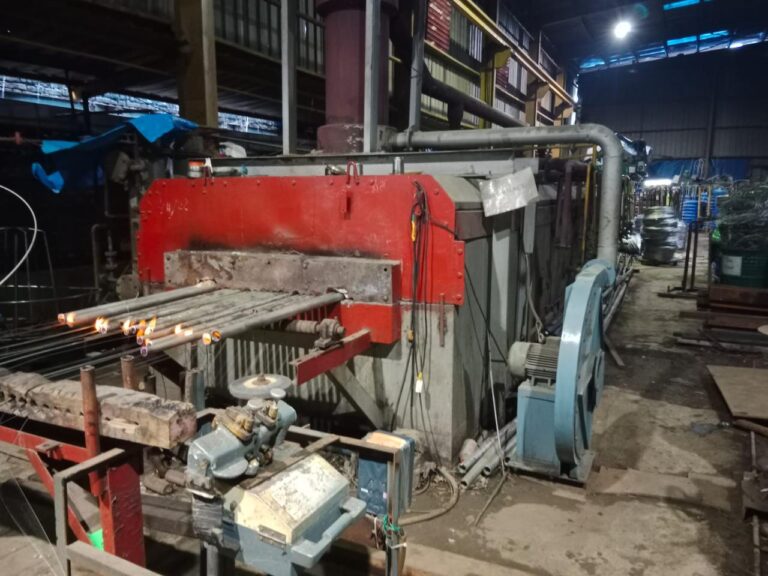
The morning edition examined wire annealing energy efficiency. This afternoon edition addresses the operational foundation behind every efficiency target: reliability engineering, critical spares, and maintenance technology.
Across the steel rolling mill, hot dip galvanizing plant, foundry, recycling operation, and wire and cable industry, furnace downtime creates a multiplier effect. A failed burner, thermocouple, fan, conveyor, refractory section, or control module can interrupt production, compromise metallurgical quality, and trigger costly restart cycles.
In 2026, leading manufacturers are moving beyond reactive maintenance. They are building risk-based spare-parts strategies supported by condition monitoring, failure-mode analysis, and connected industrial furnace systems.
Why furnace reliability is now a strategic priority
Furnaces operate at the intersection of production, quality, safety, and profitability. Reliability failures affect more than equipment availability:
- Unplanned shutdowns interrupt upstream and downstream operations.
- Temperature deviations can create non-conforming material.
- Repeated thermal cycling accelerates refractory and mechanical damage.
- Obsolete PLCs, sensors, and drives extend repair lead times.
- Emergency procurement increases part costs and freight exposure.
- Restarting a furnace can require hours of stabilization before acceptable production resumes.
For a continuous steel rolling mill or wire-processing line, the commercial impact of one failure may exceed the cost of the replacement component by several multiples.
A 2026-ready strategy therefore measures mean time between failures, mean time to repair, spare-part lead time, first-pass yield, and downtime cost per hour: not merely the number of preventive-maintenance tasks completed.
The critical furnace spare parts inventory
A robust inventory begins with a criticality assessment. Not every component requires immediate on-site stocking, but every high-consequence failure must have a defined response.
1. Measurement and control components
These parts protect process stability and regulatory compliance:
- Type K, R, or S thermocouples
- Pyrometers and infrared sensors
- Pressure and oxygen sensors
- Flame scanners and ignition transformers
- PLC, HMI, and remote I/O modules
- Safety relays, switches, and interlock devices
- Control valves and positioners
A sensor can be inexpensive compared with a burner or refractory assembly, yet its failure can stop the complete line. Plants should stock components according to failure consequence and replacement lead time, not purchase price alone.
2. Combustion and heating components
For heat treatment furnaces, reheating systems, and melting equipment, the following parts commonly require strategic planning:
- Burner assemblies, nozzles, and burner blocks
- Ignition electrodes and flame-control components
- Radiant tubes and heating elements
- Recuperator components
- Gas trains, regulators, and shut-off valves
- High-temperature seals and gaskets
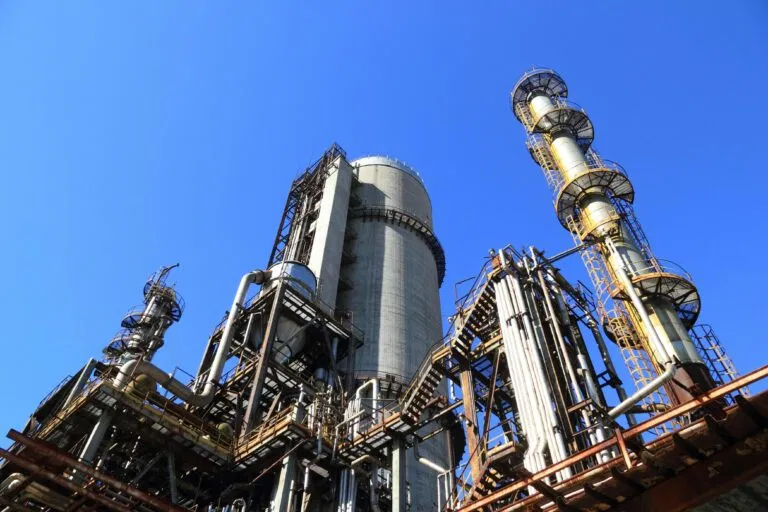
A melting furnace for steel and an aluminum melting furnace have different thermal and metallurgical demands, but both depend on consistent combustion, heat transfer, instrumentation, and safe shutdown logic.
3. Mechanical and refractory components
Mechanical failures frequently develop through vibration, thermal fatigue, misalignment, and wear:
- Circulation fans and fan bearings
- Conveyor chains, rollers, and sprockets
- Furnace hearth and roller components
- Door mechanisms and counterbalances
- High-temperature bearings
- Refractory bricks, castables, and ceramic fiber
- Expansion joints and insulation materials
Continental Furnaces maintains a broad portfolio of furnace spares and accessories designed to support industrial furnaces, heat-treatment systems, and melting operations.

Reactive maintenance versus 2026-ready reliability
| Reliability criterion | Reactive strategy | 2026-ready strategy |
|---|---|---|
| Maintenance trigger | Component failure | Condition trend, risk, and operating hours |
| Spare-parts policy | Buy after breakdown | Criticality-ranked minimum stock |
| Failure response | Emergency repair | Planned intervention during production window |
| Data usage | Manual records | CMMS, sensor, alarm, and work-order analytics |
| Inspection method | Visual and periodic | Vibration, thermal, pressure, and process monitoring |
| Obsolescence control | Addressed after failure | PLC, HMI, sensor, and drive lifecycle audit |
| Labour requirement | High emergency labour | Planned specialist intervention |
| Production impact | Unplanned stoppage | Controlled maintenance window |
| Business result | Higher downtime exposure | Improved availability and lifecycle profitability |
The objective is not to hold every possible part. The objective is to ensure that the right part, specification, documentation, and technical support are available before a predictable failure becomes a production emergency.
Predictive maintenance for industrial furnace systems
Predictive maintenance is becoming practical because modern thermal processing equipment produces large quantities of useful operating data.
Condition-monitoring priorities
Plant teams should monitor:
- Fan and motor vibration
- Bearing temperature
- Burner flame stability
- Furnace pressure and oxygen concentration
- Heating-element current
- Gas-flow deviation
- Furnace-shell hot spots
- Conveyor motor current
- Door-cycle frequency
- Temperature uniformity by zone
A vibration trend on a circulation fan can identify bearing degradation before a seizure. Thermal imaging can reveal refractory loss or insulation failure before shell temperatures become hazardous. Increasing ignition retries can indicate burner, fuel-train, or flame-detection deterioration.
The strongest programs combine these signals with:
- Failure Mode and Effects Analysis
- Computerized maintenance management systems
- Alarm-history analysis
- Digital work orders
- Spare-part consumption data
- Operator inspection checklists
The result is a transition from “replace when broken” to intervene at the economically optimal point.
Reliability priorities by application
Steel rolling mill
A steel rolling mill depends on stable reheating, equalization, material transfer, and discharge temperature. Reliability engineering should prioritize:
- Burners, recuperators, dampers, and gas valves
- Walking-beam or roller-table mechanisms
- Furnace fans and drives
- Billet detection and temperature sensors
- Refractory hot spots
- Hydraulic and pneumatic systems
For continuous operations, planned replacement during scheduled roll or caster maintenance is significantly more valuable than an emergency intervention during peak production.
Hot dip galvanizing plant
A hot dip galvanizing plant requires dependable furnace atmosphere, strip transport, temperature control, and zinc-bath support systems. Critical spares often include:
- Strip-support rolls and bearings
- Atmosphere fans
- Seals and protective-atmosphere components
- Thermocouples and pyrometers
- Control modules and safety devices
- Drive and tension-control components
The maintenance program must connect furnace reliability with coating quality, line speed, zinc consumption, and surface performance.
Wire and cable industry
Wire and cable lines frequently operate continuously, making small mechanical deviations commercially significant. Priority components include:
- Conveyor chains and rollers
- Take-up and drive motors
- Heating elements and radiant tubes
- Atmosphere-control sensors
- Thermocouples and temperature controllers
- PLC and HMI modules
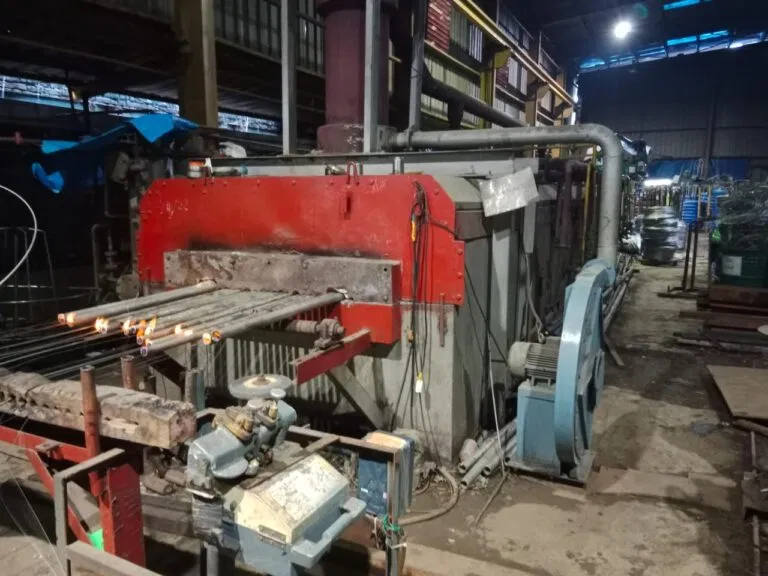
In wire annealing, temperature uniformity and mechanical continuity are essential for conductivity, ductility, dimensional stability, and surface quality.
Metal recycling and melting operations
A metal recycling furnace faces variable charge materials, thermal shock, slag exposure, and demanding refractory conditions. Reliability planning should cover:
- Furnace lining and refractory repair materials
- Burner assemblies and valves
- Charging mechanisms
- Tilting or tapping systems
- Temperature measurement equipment
- Hydraulic power units
- Control and safety interlocks
Continental Furnaces supports melting furnaces and recycling projects with customized solutions focused on performance, resource recovery, and lifecycle support.

The 2026 reliability roadmap
Phase 1: Assessment and planning : 0 to 4 weeks
Create a verified asset and risk baseline.
- List every furnace subsystem and component.
- Record failure history for the previous 24–36 months.
- Calculate downtime cost per hour.
- Identify parts with lead times exceeding 4–8 weeks.
- Audit PLC, HMI, sensor, and drive obsolescence.
- Classify components as critical, essential, or standard.
- Document approved specifications and alternative equivalents.
Phase 2: Reliability improvement : 1 to 3 months
Correct the causes of recurring failures.
- Complete FMEA for burners, fans, drives, refractory, conveyors, and controls.
- Calibrate temperature and pressure instrumentation.
- Repair damaged seals, doors, and refractory.
- Standardize inspection routes and maintenance checklists.
- Establish minimum and maximum stock levels.
- Define emergency-response procedures for critical failures.
Phase 3: Digital integration : 3 to 6 months
Connect condition data with maintenance decisions.
- Add vibration and thermal monitoring to rotating equipment.
- Link furnace alarms with CMMS work orders.
- Track operating hours, heat cycles, and component life.
- Create dashboards for availability, MTBF, MTTR, and repeat failures.
- Use trend alerts to schedule interventions during planned outages.
Phase 4: Continuous improvement : 6 months onward
Review the program at 30-, 90-, and 180-day intervals.
- Adjust stock levels using actual consumption and lead times.
- Update preventive-maintenance intervals.
- Review supplier performance and part quality.
- Train operators to identify early failure indicators.
- Replace obsolete components before they become unavailable.
- Compare maintenance cost with yield, downtime, and production output.

Continental Furnaces: reliability beyond the replacement part
A spare part is valuable only when it matches the application, arrives on time, and is supported by the engineering knowledge required for correct installation.
As an experienced industrial furnace manufacturer, Continental Furnaces combines 35+ years of thermal-processing expertise, customized engineering, ISO-certified quality, energy-conscious design, and responsive service support.
Our solutions serve:
- Steel and non-ferrous rolling mills
- Heat treatment operations
- Melting and recycling plants
- Galvanizing and pickling lines
- Foundries and metal processors
- The wire and cable industry
- Automotive, aerospace, construction, and energy manufacturers
Explore our heat treatment furnaces, applications, and complete range of furnace spares and accessories.
Conclusion: engineer reliability before downtime decides for you
In 2026, furnace maintenance is a profitability discipline. Plants that combine critical spares management, predictive monitoring, reliability engineering, and lifecycle support will achieve higher availability, more consistent quality, safer operation, and stronger regulatory compliance.
Do not wait for a burner failure, refractory breach, obsolete PLC, or failed thermocouple to expose weaknesses in your maintenance system.
Contact Continental Furnaces for a plant-specific reliability assessment, spare-parts strategy, or modernization roadmap. Build an enduring engineering partnership now and convert furnace reliability into sustained competitive advantage.