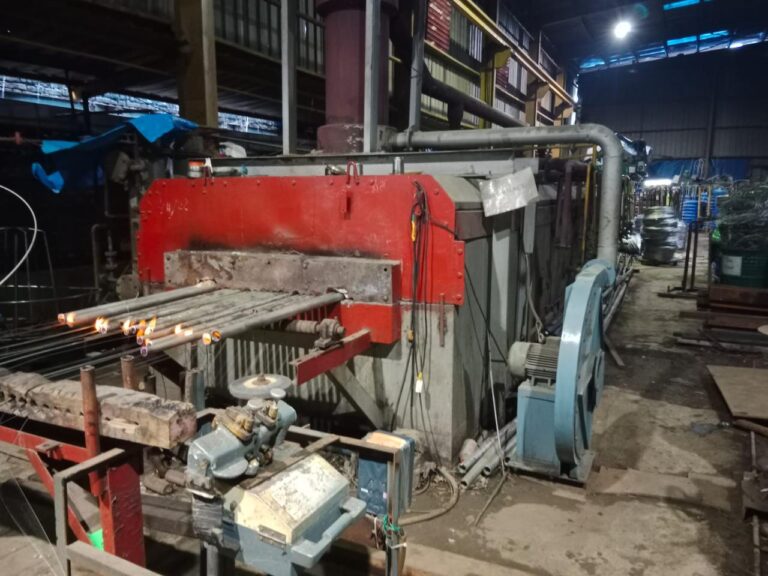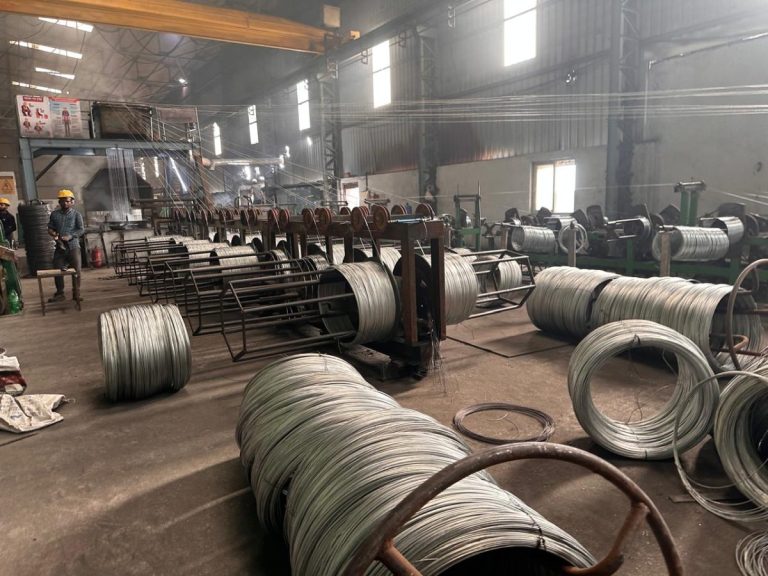
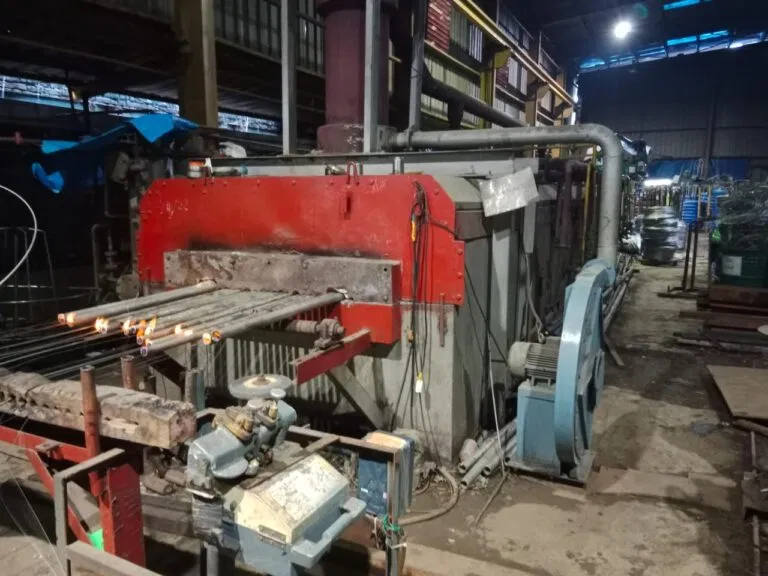
The 2026 efficiency agenda for the wire and cable industry begins upstream: with steelmaking, rod breakdown, drawing, and annealing: and ends with measurable gains in conductivity, ductility, yield, energy intensity, and regulatory compliance.
For wire producers, annealing is not simply a heating step. It is a precision thermal operation that determines whether cold-drawn steel wire achieves the required microstructure, surface condition, tensile strength, and forming performance. At the same time, the embedded energy of the upstream steel rolling mill supply chain is becoming commercially significant as the European Union’s Carbon Border Adjustment Mechanism (CBAM) enters its definitive regime from 1 January 2026 for covered iron and steel imports.
The modern response is clear: integrate controlled atmospheres, heat recovery, electrification, advanced controls, and lifecycle service into one engineered production strategy.
The 2026 wire annealing benchmark
Recrystallization annealing for cold-drawn steel wire commonly operates between approximately 660°C and 860°C, depending on grade, reduction history, target properties, and line design. Higher-alloy or specialty grades can require temperatures approaching 1,050°C.
The process must achieve three objectives simultaneously:
- Restore ductility after cold working
- Control grain structure and tensile properties
- Prevent oxidation, decarburization, scale, and surface defects
Continuous steel annealing installations can achieve energy consumption near 1.0 GJ/t under suitable operating conditions. In rod breakdown lines, modern in-line resistance annealing configurations have been benchmarked at approximately 129 kWh/t, compared with 210 kWh/t or more for older configurations.
These figures are engineering reference points rather than universal guarantees. Actual performance depends on wire diameter, grade, line speed, atmosphere, loading, incoming temperature, insulation, power source, and production scheduling. Nevertheless, the efficiency gap demonstrates why legacy annealing equipment is now a strategic cost and carbon liability.
1. Controlled atmospheres: hydrogen versus nitrogen
Atmosphere control protects the wire surface while enabling accurate metallurgical transformation. Nitrogen remains a practical carrier gas for many applications, particularly where cost, safety, and moderate surface requirements are the primary considerations. Hydrogen, however, provides higher thermal conductivity and stronger reducing capability.
A properly engineered hydrogen atmosphere can deliver up to 20% lower energy consumption than nitrogen in suitable annealing applications. Hydrogen also supports faster heat transfer, reduced oxidation, and improved surface brightness.
The choice should be based on metallurgical and commercial requirements:
- Nitrogen: economical, inert, and widely applicable
- N₂/H₂ blends: a practical compromise between operating cost, surface protection, and heat-transfer performance
- High-purity or 100% hydrogen: maximum thermal performance where grade, safety systems, gas availability, and plant standards support it
- Advanced atmosphere control: dew-point, carbon-potential, oxygen, and flow monitoring to prevent overuse of process gas
Published industrial data reports significant hydrogen advantages in selected wire-rod applications, including shorter cycles, lower fuel consumption, and higher throughput. The correct system must nevertheless include robust purging, leak detection, ventilation, flame safety, pressure control, and operator training.
For continuous lines, nitrogen can serve as the carrier gas while hydrogen is added to reduce oxide layers and maintain a bright annealed surface. This principle is reflected in modern protective-gas heat treatment furnaces for wire coils, bars, tubes, and semi-finished products.
2. Waste heat recovery and recuperation
Exhaust gas and cooling circuits represent recoverable energy streams. In a conventional furnace, this energy is discharged without productive use. In a modern system, it is redirected to preheating, drying, combustion air, process water, or adjacent operations.
High-value opportunities include:
- Recuperative burners that preheat combustion air
- Heat exchangers on flue gas and cooling water
- Incoming coil, rod, or wire preheating
- Drying systems and protective-gas preheating
- Heating pickling tanks or nearby process areas
- Low-temperature heat supply for buildings and utilities
A recuperative upgrade can target approximately 10% fuel savings, while charge preheating can deliver savings approaching 20% in suitable plant configurations. The business case becomes stronger when the furnace operates continuously at high utilization and recovered heat has a stable downstream demand.
Plant teams should measure the following before specifying equipment:
- Exhaust temperature and flow
- Cooling-water temperature and flow
- Furnace operating hours
- Available heat sinks
- Pressure drop across heat exchangers
- Dust, oil, and corrosive contaminants
- Seasonal variation in production demand
The objective is not to install a heat exchanger in isolation. It is to design a heat-integration network that improves total plant efficiency.

3. In-line resistance annealing and electrification
In-line resistance annealing applies electrical current directly to the moving wire. This eliminates much of the thermal mass associated with a conventional combustion chamber and enables rapid heating, short residence times, and precise control.
Its principal advantages include:
- Direct heat transfer into the product
- Rapid heat-up and cool-down
- Compact line integration
- Lower standby losses
- Accurate control of line speed and wire temperature
- Potentially lower direct emissions when powered by low-carbon electricity
The reported benchmark of 129 kWh/t, compared with 210 kWh/t or more for older rod-breakdown configurations, illustrates the potential of integrated electrical heating. The comparison must be evaluated on a like-for-like basis, including product grade, throughput, atmosphere, cooling load, and electrical-generation emissions.
Electrification does not eliminate the need for atmosphere management. Nitrogen, hydrogen, or blended atmospheres may still be required to preserve surface quality and prevent oxidation. Hybrid systems: combining gas-fired heating zones with electrically heated holding or finishing zones: provide a practical transition route where grid capacity or electricity tariffs remain limiting factors.
Conventional versus modern annealing operations
| Performance metric | Conventional annealing operation | Modern integrated annealing operation |
|---|---|---|
| Typical heating approach | Combustion-fired chamber with high thermal mass | In-line resistance, hybrid, or high-efficiency gas heating |
| Atmosphere | Nitrogen or basic protective gas control | Precisely controlled N₂/H₂ or hydrogen-rich atmosphere |
| Energy benchmark | Often above modern line intensity | Continuous annealing near 1.0 GJ/t; selected resistance lines near 129 kWh/t |
| Older rod-breakdown comparison | 210 kWh/t or more in older configurations | Approximately 129 kWh/t in modern in-line resistance configurations |
| Temperature control | Periodic measurement and manual adjustment | Continuous sensors, recipe control, and closed-loop regulation |
| Heat recovery | Limited or absent | Recuperation, exhaust recovery, and charge preheating |
| Quality risk | Oxidation, decarburization, uneven heating | Controlled dew point, atmosphere, temperature, and residence time |
| Labour requirement | Higher manual intervention | Automated loading, monitoring, alarms, and data logging |
| Maintenance model | Reactive | Condition-based and predictive |
| Carbon exposure | Higher fuel intensity and weaker emissions data | Lower energy intensity and improved product-footprint traceability |
4. The steel rolling mill connection: EAF, CBAM, and Industry 4.0
The wire plant cannot optimize annealing while ignoring its wire-rod supply chain. Electric arc furnace (EAF) steelmaking is expanding because it can use high scrap content and, when supplied by lower-carbon electricity, reduce the embedded emissions associated with conventional blast-furnace routes.
Since 1 January 2026, the EU CBAM definitive regime applies to covered imports, including iron and steel. The European Commission’s CBAM overview and definitive-regime guidance provide the official regulatory framework.
For wire and cable manufacturers, the implications are operational:
- Request reliable embedded-emissions data from rod suppliers
- Evaluate EAF-based feedstock where quality and availability permit
- Record annealing fuel and electricity per tonne
- Separate product recipes by grade and diameter
- Link furnace data with ERP, MES, and quality systems
- Track energy intensity as a commercial KPI, not only a maintenance metric
Industry 4.0 systems can record furnace temperature, gas flow, dew point, line speed, electrical consumption, cooling performance, and alarms in real time. This creates a defensible energy and quality record for customer reporting, internal improvement, and carbon-accounting processes.

A four-phase roadmap for 2026 modernization
Phase 1: Assessment and planning
Establish the current baseline over representative production campaigns.
Measure:
- GJ/t and kWh/t
- Wire entry and discharge temperatures
- Furnace residence time
- Atmosphere composition and dew point
- Fuel, electricity, and cooling-water consumption
- Scale loss, rejection rate, and yield
- Unplanned downtime and restart losses
Phase 2: Operational optimization
Implement low-capital improvements before major replacement:
- Correct temperature recipes
- Eliminate unnecessary holding time
- Calibrate thermocouples and gas analyzers
- Repair doors, seals, insulation, and refractory
- Balance heating zones
- Optimize nitrogen and hydrogen flow
- Synchronize drawing, annealing, and coiling schedules
Phase 3: Thermal retrofit
Evaluate:
- Recuperative burners
- Heat exchangers and charge preheating
- Hydrogen-ready gas trains
- In-line resistance annealing
- High-efficiency cooling and heat recovery
- PLC, SCADA, and atmosphere-control upgrades
Phase 4: Integrated supply-chain transformation
Connect:
- EAF or lower-carbon steel sourcing
- Rod breakdown and in-line annealing
- Continuous wire drawing
- MES-based production scheduling
- Digital quality traceability
- Predictive maintenance
- CBAM and product-carbon reporting
This phased approach protects cash flow while delivering measurable gains in efficiency, yield, and uptime.
Reliability is part of energy efficiency
A furnace that stops unexpectedly loses production, consumes restart energy, and can compromise an entire batch. Lifecycle reliability therefore belongs in the energy strategy.
A critical inventory of furnace spare parts should include:
- Thermocouples and temperature sensors
- Flame scanners and ignition electrodes
- Burners, valves, and regulators
- Heating elements and electrical contacts
- PLC modules, relays, and VFD components
- Refractory sections, seals, bearings, and fans
- Atmosphere-control and gas-flow components
Continental Furnaces supports lifecycle requirements across wire annealing, heat treatment furnaces, melting and recycling projects, and other industrial furnace systems. The same engineering discipline applies to an aluminum melting furnace, a melting furnace for steel, a metal recycling furnace, or a hot dip galvanizing plant.
Continental Furnaces: engineering the enduring partnership
Continental Furnaces brings more than 35 years of experience, ISO-certified quality, customized engineering, energy-efficient technology, and responsive service to demanding thermal-processing operations.
As an experienced industrial furnace manufacturer, we help customers evaluate the complete business case:
- Product metallurgy and quality requirements
- Energy and fuel intensity
- Atmosphere and safety architecture
- Electrification and hydrogen readiness
- Heat recovery potential
- Automation and data integration
- Spare-parts availability and lifecycle support
The 2026 agenda is not a single equipment purchase. It is a coordinated program for lower cost per tonne, higher yield, stronger compliance, and sustained production resilience.
Contact Continental Furnaces through confur.net to assess your wire annealing line, upstream steel rolling mill interface, and 2026 modernization priorities. Make the engineering decision now that secures sustained competitive advantage.