9 November 2026 | Morning Edition
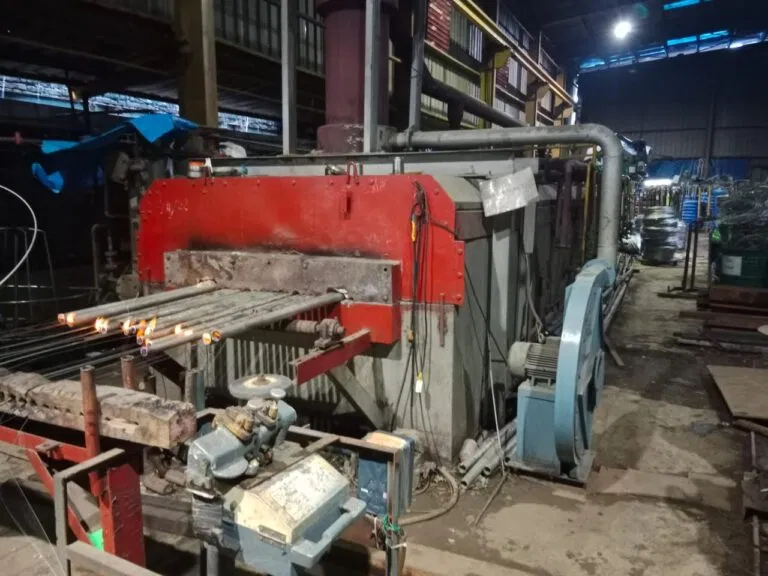
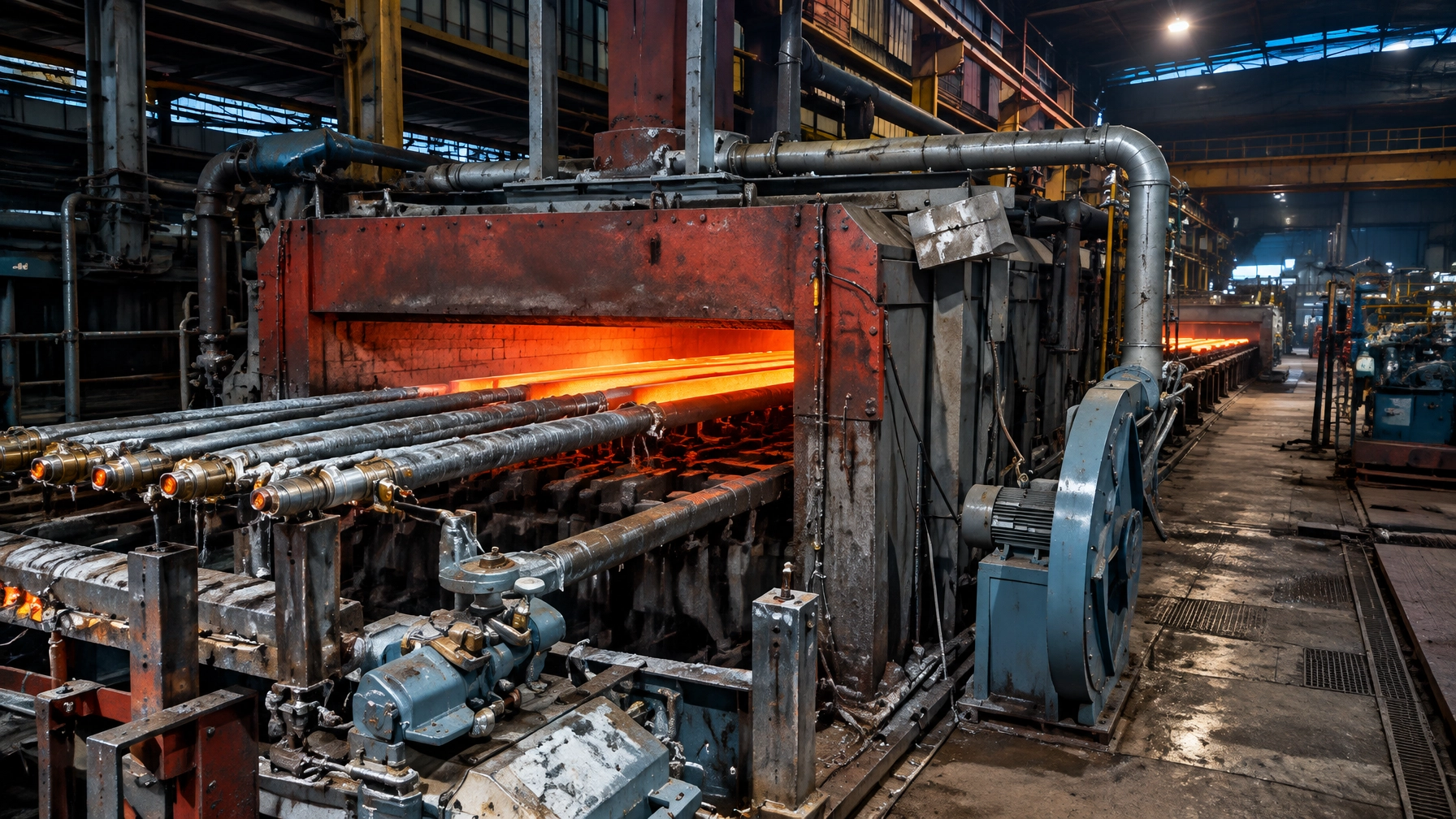
Water-cooled furnace components can fail from the inside out. The water side of a thermal processing equipment installation is often its quietest reliability lever, and chemistry is where that reliability is won or lost. Skid pipes, water-cooled doors, burner hardware and radiant-tube supports depend on a stable water-side environment to limit corrosion, deposits and biological growth.
This is a chemistry guide, not a system-design review. Its central lesson: treatment must reflect the actual circuit, metallurgy, flow and operating temperature, not a generic chemical recipe.
Why furnace cooling circuits fail: the corrosion–deposition–biofouling triangle
Corrosion, deposition and biofouling reinforce one another. Corrosion products become deposits; deposits create under-deposit concentration cells that promote localized pitting. Biofilms impede heat transfer, collect other material and can restrict flow. If corrosion products accumulate inside a narrow passage, the resulting obstruction may be mistaken for contamination entering with the water.
Temperature also matters at the metal surface. A heat exchanger’s skin temperature can be significantly higher than the bulk-water temperature, changing deposition and corrosion reactions. Chemistry assessment must therefore account for the hottest surfaces, not only a convenient water-sample reading.
What the Kurashiki skid-pipe investigation teaches
A JFE Steel investigation at its Kurashiki hot strip mill traced recurring leaks and internal blockage to the skid pipes themselves. X-ray diffraction found the accretion was chiefly iron oxides: about 82% magnetite (Fe₃O₄), with other iron oxides and only 0.9% calcium carbonate. In this case, corrosion-product growth, not suspended solids from the cooling water, was the primary blockage mechanism.
The study also found markedly different corrosion rates between mills using the same raw-water source. Its carbon-steel coupon tests varied flow and temperature, identifying these operating conditions as important drivers. At skid-pipe velocities below roughly 0.3 m/s, the circuit sat in a low-flow region, below approximately 0.5 m/s, where dissolved-oxygen supply to the steel surface can control corrosion. Higher water temperature and velocity increase oxygen transport to the surface.
Chloride illustrates why chemistry cannot be interpreted in isolation: at 0.6 m/s, higher chloride correlated with increased corrosion, consistent with damage to the protective oxide film. Under the lower velocities observed in the actual skid pipes, the study found no significant chloride effect. LSI alone showed no clear effect in the comparable low-velocity tests; however, deliberate calcium-carbonate film formation reduced corrosion in the experiment.
At the plant, JFE adjusted LSI from −0.9 to 1.5, added a calcium dispersant to manage blockage risk, and introduced a corrosion inhibitor. Two-week in-plant coupon comparisons before and after the change showed corrosion reduced to LESS THAN 1/100 OF THE ORIGINAL RATE. This is a specific reported outcome, not a universal target or guaranteed result.

The parameters that decide whether your circuit corrodes or scales
Published reference values, not universal requirements; verify against your own water analysis, circuit metallurgy and adopted standards. The figures below summarize published examples and operating ranges, not default specifications.
| Parameter | What it drives | Typical published control lever or range | Watch-out |
|---|---|---|---|
| pH | Corrosion tendency, carbonate balance and biocide effectiveness | Open recirculating systems: approximately 8.0–8.5; nitrite-treated closed loops: approximately 8.5–11; molybdate programs: typically 9.0–11 | Different circuit types and metals need different limits; higher pH can reduce chlorine’s active HOCl fraction. |
| LSI | Calcium-carbonate saturation and precipitation potential | Track LSI at operating temperature; JFE’s site adjustment moved from −0.9 to 1.5 with dispersant and inhibitor | A positive result can raise scale and blockage risk. Do not apply the JFE setpoint universally. |
| Chloride | Protective-film stability and localized corrosion risk | Measure and trend against source-water and circuit history; no universal limit is established here | JFE found its effect depended on flow conditions; chloride ingress matters particularly in susceptible closed circuits. |
| Calcium hardness / alkalinity | Carbonate saturation, scale potential and LSI | Analyze together and assess at operating temperature | LSI alone does not describe every deposit risk or replace inspection and coupon evidence. |
| Flow velocity & outlet water temperature | Oxygen transport, corrosion rate and deposition conditions | Verify actual circuit flow and track outlet temperature; JFE tests included 0, 0.3 and 0.6 m/s and 30°C and 50°C | Low velocity may limit oxygen supply, but stagnant sections and hot surfaces still require assessment. |
| Inhibitor residual (nitrite or molybdate, closed loop) | Protective film formation on metals | Published examples: nitrite 500–1,500 mg/L; molybdate 200–1,000 mg/L | Maintain the program’s specified minimum; depletion of an anodic inhibitor can drive severe localized pitting. |
| Microbial control (open loop) | Biofilm, slime, fouling and associated corrosion | Select oxidizing or nonoxidizing biocide for water conditions, pH and permit | Efficacy, chemical safety and discharge approval govern selection and use. |
Two chemistries, one furnace: open recirculating vs closed-loop circuits
Open cooling-tower systems concentrate dissolved minerals through evaporation. They require blowdown discipline as well as scale and corrosion control. Published programs commonly use phosphonate scale inhibitors and polymer dispersants at mildly alkaline pH; loss of control in phosphate-based programs can cause calcium-phosphate fouling.
Biocide choice must fit that pH. Chlorine forms hypochlorous acid (HOCl), its stronger active form, but the weaker OCl⁻ fraction rises sharply above pH 7.5. Bromine chemistry, producing HOBr, retains more effectiveness at alkaline pH. Monochloramine or chlorine dioxide may suit waters with high ammonia or organic loading; intermittent oxidizer programs may also use a supplemental nonoxidizing biocide. Biocides require approval and must comply with the plant’s discharge permit.
Closed cooling-water circuits, often serving furnace hardware and rejecting heat to an open system, focus primarily on corrosion inhibition. Published examples include nitrite at 500–1,500 mg/L or molybdate at 200–1,000 mg/L. Nitrite passivates steel but must not fall below its program minimum: an underdosed anodic inhibitor can produce intense localized pitting, potentially through-wall. Nitrite can also nourish certain bacteria, contributing to nitrate formation, slime and microbiologically influenced corrosion. Azoles such as tolyltriazole help protect copper alloys.
Use demineralized or otherwise treated makeup water where appropriate to limit hardness and chloride ingress. If makeup demand is significant, investigate leakage and oxygen entry. Repair leaks; do not treat chronic dilution simply by overdosing.

Monitoring discipline that catches problems early
Monitoring turns a treatment program into a managed reliability practice. Establish a baseline, then trend results by circuit and operating condition.
- Install corrosion coupons in representative locations. JFE’s comparison used coupons in actual skid pipes for two weeks before and after the intervention.
- Periodically analyze pH, conductivity, chloride, calcium hardness, alkalinity, inhibitor residual and microbial activity as relevant to the circuit.
- Track LSI using temperature conditions appropriate to operation; do not rely on room-temperature readings alone.
- Verify skid-circuit flow velocity, and trend outlet temperatures against site-defined alarm levels.
- Keep an inventory of circuit metallurgy, including carbon steel, stainless steel, copper alloys and other wetted materials.
Set sampling frequency, alarm thresholds and test methods from the plant’s water analysis, operating history, metallurgy and applicable standards. Rising iron, changing conductivity, falling inhibitor residual, higher outlet temperature or worsening coupon results should prompt investigation, not automatic chemical adjustment.
Zone discipline by operation
The same plant may need distinct water programs across its processes:
- Reheat skid circuits in a steel rolling mill: assess low-velocity, oxygen-supply-controlled corrosion and balance any LSI/film strategy against carbonate blockage risk.
- Heat treatment furnaces and quench/temper auxiliaries: assess closed-loop inhibitor residuals and copper-alloy protection.
- An aluminum melting furnace: verify water-contact metallurgy around the melting cell and equipment.
- A melting furnace for steel and casting auxiliaries: maintain closed-loop residual discipline while accounting for high surface temperatures.
- A hot dip galvanizing plant: where water-cooled components are installed, monitor chemistry and chloride ingress.
- A metal recycling furnace and scrap-charged operation: account for changes in makeup-water quality.
- Wire and cable industry annealing lines: pay particular attention to slime and blockage sensitivity in small-bore coils.
Keep the water program stocked
A practical maintenance inventory may include corrosion coupon racks and test specimens, sidestream filtration skids, chemical dosing pumps and day tanks, sample coolers and sampling points, inline conductivity/pH/ORP instruments, flow indicators, velocity-check tools and suitable relief and expansion arrangements for closed circuits.
These supporting items complement furnace spare parts planning: the right sampling and monitoring equipment helps teams identify chemistry drift before it becomes a cooling interruption. See Continental Furnaces spares and accessories.
A five-phase roadmap
- Map circuits and metallurgy: separate open and closed circuits; document materials, branches and heat-exchanger interfaces.
- Establish the baseline: obtain water analyses, record operating conditions and begin a representative coupon program.
- Correct the chemistry: manage LSI, blowdown and biocide in open systems; establish and maintain specified inhibitor residuals in closed circuits.
- Verify in operation: compare in-plant coupon results and confirm instrument alarms reflect meaningful changes.
- Institutionalize review: set a review cadence, document corrective actions and make leak repair part of the water-treatment discipline.
Build reliability through an enduring partnership
Cooling-water chemistry is part of the lifecycle performance of industrial furnace systems. Continental Furnaces brings 35+ years of expertise, customized engineering, ISO-certified quality and super prompt service to support reliable plant operation. As an industrial furnace manufacturer, our team can discuss your application and help align equipment choices with operating requirements.
Request a quote or consultation or explore our heat treatment furnace solutions. Start a technical discussion to strengthen cooling-circuit reliability and build sustained competitive advantage.
References
- T. Kubo, “Designing Water Quality of Circulatory Cooling System for Extending Useful Life of Reheating Furnace Skid Pipe,” JFE Technical Report No. 25, March 2020. PDF
- Brad Buecker and Prasad Kalakodimi, “Considerations for Complex Industrial Cooling Water Monitoring and Treatment,” PPCHEM 2021, 23(5), 198–205. ChemTreat republication
- U.S. Army Engineer Research and Development Center, ERDC/CERL TR-07-41: Low Maintenance Water Treatment for Heating and Cooling Systems. Report
- Buckman, The Cooling Water Handbook. Resource page
- U.S. EPA, Survey of Fouling, Foam, Corrosion, and Scaling Control in Iron and Steel Industry Recycle Systems. Report text