Morning Edition | 4 October 2026
For plant heads, maintenance managers and energy managers, furnace decarbonisation has moved from a long-term ambition to an immediate capital-planning priority. The 2026 industrial heating landscape is defined by three practical pathways: hydrogen-ready combustion, hybrid fuel-and-electric heating, and advanced oxygen-enriched systems.
The objective is not simply to replace natural gas. It is to reduce energy intensity, CO₂ per tonne, scale losses, operating risk and regulatory exposure while protecting throughput and metallurgical quality.
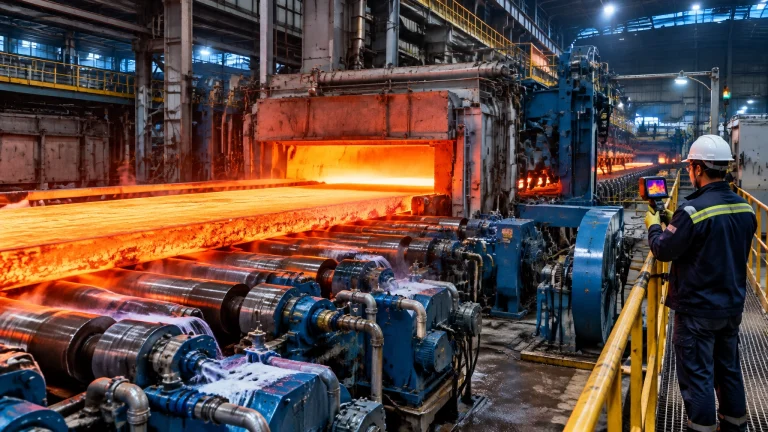
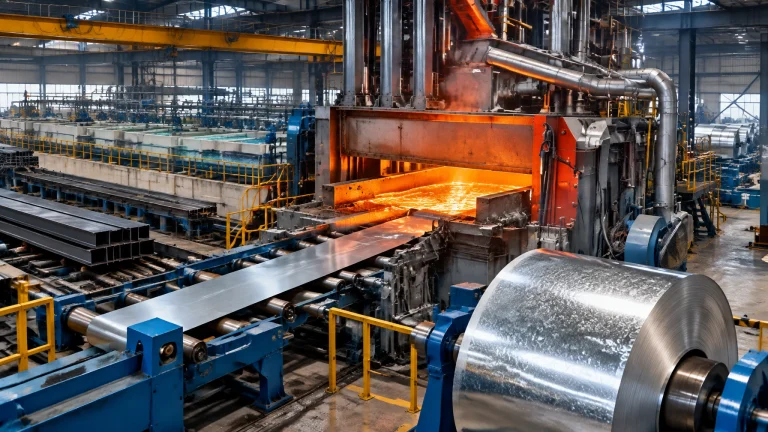
A modern steel rolling mill, heat treatment line, galvanizing operation or melting plant requires a phased transition. The most successful projects begin with measurement and burner compatibility, then progress toward fuel switching as hydrogen, renewable electricity and emissions infrastructure become commercially viable.
Why furnace decarbonisation is now a board-level issue
A conventional natural-gas reheating furnace commonly consumes approximately 1.4–1.8 GJ per tonne for cold-charged steel. At a planning emission factor of 55 kg CO₂/GJ, this represents roughly 77–99 kg of direct CO₂ per tonne reheated.
Best-practice furnaces can perform substantially better:
- 0.9–1.3 GJ/t with advanced insulation, recuperation, combustion control and hot charging.
- Below 1.0 GJ/t in selected oxy-fuel or highly optimised applications.
- 45–100% combustion-side CO₂ reduction when green hydrogen replaces a material share of natural gas.
- Near-zero direct furnace CO₂ at 100% green hydrogen or direct electric heating.
However, the energy source matters. Grey hydrogen transfers emissions upstream, while green hydrogen depends on renewable electricity and electrolyser efficiency. Direct induction can offer lower total energy losses than hydrogen made through electrolysis, but it requires adequate grid capacity and a low-carbon electricity supply.
The correct strategy is therefore a site-specific energy and emissions model, not a generic fuel substitution.
Traditional gas-fired versus hydrogen-ready and hybrid systems
The following figures are indicative engineering benchmarks for early project screening. Actual results depend on furnace design, charge temperature, production rate, steel grade, electricity mix, hydrogen source and local carbon pricing.
| Performance factor | Traditional natural-gas fired | Hydrogen-ready / hybrid electric-fired |
|---|---|---|
| Typical energy intensity | 1.4–1.8 GJ/t cold charge | 0.8–1.4 GJ/t in advanced or hybrid configurations |
| Direct CO₂ from furnace | Approximately 77–99 kg/t | 0–60 kg/t, depending on hydrogen share and electric contribution |
| Hydrogen operating range | Not applicable | Common transition path: 0–30%, 30–65%, then up to 100% H₂ |
| Indicative conversion capex | Existing baseline | H₂-ready: approximately 10–30% of new-furnace cost; hybrid: approximately 20–50% |
| Indicative ROI period | N/A | Approximately 3–8 years where energy, carbon and incentives support the project |
| Retrofit downtime | Routine maintenance outage | Burner retrofit: 1–3 weeks; major hybrid integration: 3–8 weeks |
| Emissions control | Conventional NOx and CO management | Low-NOx, staged/flameless combustion, oxygen control and enhanced monitoring |
| Strategic value | Proven but exposed to gas and carbon volatility | Fuel flexibility, lower emissions and long-term compliance resilience |
These ranges should be validated through a furnace audit and a financial model. A hydrogen-ready retrofit may not deliver the lowest immediate fuel cost, but it creates option value: the ability to increase hydrogen usage as supply improves without replacing the furnace shell.
What hydrogen-ready furnace technology changes
Hydrogen has a higher flame speed and different volumetric energy density than natural gas. It also changes the furnace atmosphere by increasing water vapour and removing carbon-containing combustion products. These factors affect burner geometry, heat transfer, refractory exposure, scale formation and controls.
A robust hydrogen-ready design includes:
- Dual-fuel or multi-fuel burners capable of controlled natural-gas and hydrogen blending.
- Gas trains, valves, seals and regulators designed for hydrogen service.
- Hydrogen leak detection, ventilation and emergency isolation.
- Updated HAZOP and hazardous-area assessments.
- Low-NOx burner geometry with staged, diluted or flameless combustion.
- Oxygen measurement, furnace pressure control and combustion optimisation.
- Revised temperature recipes for heating, soaking and discharge zones.
- Metallurgical trials to confirm scale behaviour, surface quality and yield.
Hydrogen combustion can support temperatures above 1,000°C, making it relevant to steel reheating, forging and selected heat treatment furnaces. It must nevertheless be engineered around the actual process window rather than treated as a drop-in fuel.

Hybrid electric-fired systems: a practical bridge
Hybrid systems combine fuel-fired heating with direct electric technologies such as induction or resistance heating. This approach is valuable where a plant needs decarbonisation but cannot yet depend entirely on hydrogen or high-capacity electrical infrastructure.
A hybrid configuration can use:
- Fuel-fired zones for bulk heating and soaking.
- Induction heating for rapid surface heating or final temperature correction.
- Electric heating during high-carbon-cost periods.
- Natural gas or hydrogen during periods of constrained grid capacity.
- Advanced controls to optimise cost per tonne and CO₂ per tonne simultaneously.
For a steel rolling mill, hybrid heating can also reduce production risk. The fuel system remains available during grid interruptions, while electric heating reduces combustion emissions during normal operation. This flexibility is particularly valuable in CCR/CCM-linked lines, billet reheating furnaces and high-throughput continuous furnace systems.
Oxygen enrichment and emissions compliance
Oxygen enrichment reduces nitrogen ballast in the combustion zone. Properly designed oxy-fuel or flameless oxy-fuel systems can deliver:
- Higher effective heat transfer.
- Lower flue-gas volume.
- Reduced exhaust losses.
- Faster heating and improved furnace productivity.
- Better conditions for exhaust treatment or heat recovery.
Research and industrial demonstrations have reported furnace-efficiency improvements from approximately 45% in conventional natural-gas/air operation to more than 80% in selected hydrogen/oxygen configurations. These results are technology- and process-specific, but they demonstrate the scale of the opportunity.
Hydrogen can increase thermal NOx if burned with conventional high-temperature flames. Compliance therefore requires:
- Continuous or periodic NOx, CO, CO₂ and oxygen measurement.
- Staged or distributed combustion.
- Flame-temperature management.
- Correct air-to-fuel and oxygen-to-fuel ratios.
- Periodic calibration of analysers and safety interlocks.
The emissions strategy must cover both carbon compliance and local air-quality requirements. A furnace that reduces CO₂ but exceeds its NOx permit is not a successful retrofit.
A phased retrofit roadmap for existing plants
Phase 1: Assessment and planning
Begin with a measured baseline covering at least one representative production month.
Record:
- Fuel consumption in GJ/t.
- Electricity consumption in kWh/t.
- Charge and discharge temperatures.
- Furnace-zone temperatures and pressure.
- Throughput, yield and scale losses.
- CO₂, NOx, CO and oxygen readings.
- Planned outage windows and critical spare requirements.
Classify the furnace as a candidate for burner conversion, oxy-fuel enhancement, hybridisation or replacement. This assessment should include furnace spare parts, refractory condition, burner age and control-system obsolescence.
Phase 2: Hydrogen-readiness engineering
Develop a front-end engineering package covering:
- Burner and gas-train compatibility.
- Hydrogen blend limits.
- Oxygen-enrichment requirements.
- Piping and material suitability.
- Leak detection and ventilation.
- PLC, SCADA and safety-instrumented-system upgrades.
- Product-quality validation.
- Carbon, NOx and energy reporting architecture.
A practical first target is 0–30% hydrogen blending, followed by a controlled 30–65% programme once process data confirms stable operation.
Phase 3: Scheduled retrofit and commissioning
Align installation with a planned maintenance shutdown. Burner-only modifications may fit within a 1–3 week outage, while hybrid induction, oxygen infrastructure or extensive control upgrades require more detailed shutdown planning.
Commissioning should proceed in stages:
- Natural-gas baseline validation.
- Low-percentage hydrogen blend.
- Increased blend with temperature-profile verification.
- Product-quality and scale inspection.
- Emissions and energy validation.
- Operator training and emergency-response drills.
Phase 4: Optimisation and expansion
After stable operation, implement digital monitoring for:
- Energy intensity per tonne.
- CO₂ intensity per tonne.
- Hydrogen percentage and cost.
- Furnace efficiency by zone.
- Burner performance.
- Maintenance events and downtime.
- Yield and scale generation.
This is where Industry 4.0 delivers measurable value. Predictive maintenance, digital twins and recipe optimisation convert a fuel retrofit into a broader profitability and reliability programme.
Decarbonisation across the wider thermal-processing portfolio
The same principles extend beyond reheating:
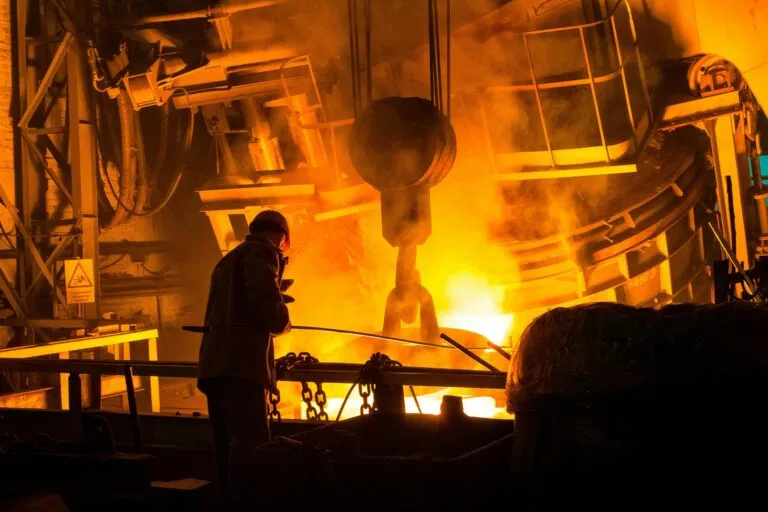
- A melting furnace for steel can use improved combustion control, oxygen enrichment, heat recovery and higher recycled-metal charge ratios.
- An aluminum melting furnace benefits from regenerative burners, improved furnace sealing and reduced dross formation.
- A metal recycling furnace supports the circular economy by converting scrap into useful production feedstock with lower embodied emissions.
- A hot dip galvanizing plant requires stable bath temperature, efficient preheating and reliable line controls.
- Wire and cable annealing lines need precise continuous heating, atmosphere control and minimal temperature variation to protect conductivity and mechanical properties.

The Continental Furnaces partnership model
Continental Furnaces brings more than 35 years of industrial furnace manufacturing experience to low-carbon thermal-processing projects. As an ISO-certified, customised solutions provider, we engineer energy-efficient systems for:
- CCR/CCM and steel rolling mills.
- Heat treatment and continuous annealing.
- Ferrous and non-ferrous melting.
- Recycling and remelting projects.
- Wire and cable industry production lines.
- Galvanizing and pickling operations.
- Furnace upgrades, controls and lifecycle support.
Our role extends beyond equipment supply. We support assessment, customised design, commissioning, performance optimisation and prompt service. Reliable thermal processing equipment is only valuable when it maintains production, protects quality and minimises downtime.
The next competitive advantage in metals manufacturing will belong to plants that combine lower energy intensity, flexible fuel capability, measurable emissions performance and dependable lifecycle support.
Contact Continental Furnaces to benchmark your current furnace, evaluate hydrogen-ready or hybrid options, and build a phased retrofit roadmap for sustained competitive advantage.