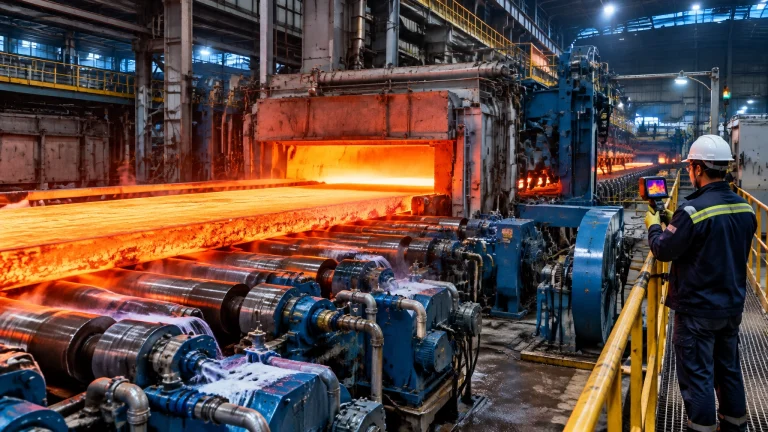
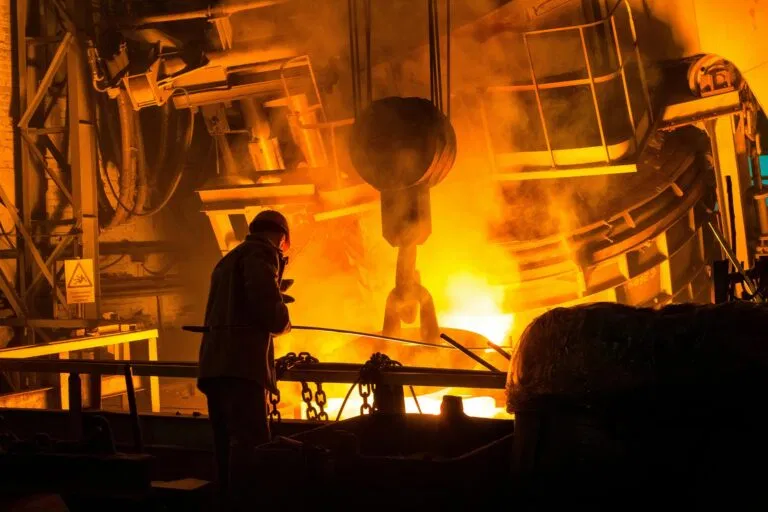
In 2026, melting efficiency is no longer measured only by furnace output. Plant leaders are evaluating the complete economic chain: specific energy consumption, metal recovery, dross generation, throughput, emissions compliance, labour requirements and downstream product quality.
For a foundry, recycling facility, steel plant or wire and cable industry operation, every avoidable kilogram of oxidation loss increases raw-material cost. Every additional holding minute consumes energy. Every unstable burner, refractory hot spot or inconsistent scrap charge creates risk for the next stage of production.
The most competitive plants are therefore treating the melting shop as the first control point for profitability across the entire thermal processing line.
The 2026 Melting Efficiency Challenge
Melting operations face five simultaneous pressures:
- Energy and fuel prices remain volatile.
- Customers demand lower embodied carbon and traceable recycled content.
- Scrap quality is increasingly variable.
- Skilled furnace operators and maintenance personnel are difficult to retain.
- Production schedules require higher throughput without compromising metallurgy.
The answer is not a single technology. It is an integrated programme combining furnace design, charge preparation, combustion control, automation, refractory management and disciplined molten-metal handling.
Technical benchmarks must always be validated against alloy, furnace size, charge mix, production rate and operating practice. However, current industry references indicate that induction systems for aluminum may operate in the range of 350–450 kWh per tonne, while medium-frequency steel induction furnaces commonly target approximately 500–600 kWh per tonne. Scrap-based electric arc furnace routes are often benchmarked around 600–650 kWh per tonne of liquid steel.
For context, AZoM’s induction melting overview demonstrates how power level, metal type and furnace capacity influence melting-system selection.
Furnace Design: Reverberatory, Induction or Stack Melter?
The correct furnace architecture depends on capacity, alloy flexibility, charge density, melt-rate requirements, available utilities and the required level of automation.
Reverberatory furnaces
A gas-fired reverberatory furnace remains valuable for large aluminum batches, high-volume secondary metal processing and applications where a large bath is required.
Its strengths include:
- High batch capacity
- Flexible charging arrangements
- Compatibility with diverse aluminum scrap
- Straightforward integration with holding and casting systems
- Lower electrical infrastructure requirements
Its main limitations are radiation and flue-gas losses, bath exposure and the possibility of higher oxidation when charging, stirring and temperature control are poorly managed.
A conventional system may achieve thermal efficiency in the broad range of 15–39%, while well-designed heat recovery and combustion upgrades can move performance toward approximately 50–55%, depending on duty and operating conditions.
Induction furnaces
Induction melting delivers direct electromagnetic heating, controlled stirring and rapid response. It is particularly effective where the plant requires:
- High temperature repeatability
- Low holding time
- Flexible alloy changeovers
- Compact installation
- Reduced direct combustion emissions
- Precise batch documentation
For aluminum, copper alloys and many ferrous applications, the business case becomes stronger when electricity is competitively priced or sourced from lower-carbon generation.
An induction melting furnace also reduces the need for open-flame contact with the charge. This can help control oxidation, although yield still depends heavily on scrap condition, charging discipline and melt-temperature control.
Stack or shaft melters
Stack melters use hot exhaust gases to preheat and melt descending charge material. They can deliver strong fuel utilisation where the charge is consistent, dry and correctly sized.
They are particularly suitable when the plant has:
- A continuous or semi-continuous charging requirement
- High-volume aluminum recycling
- Well-prepared scrap
- Stable alloy families
- Adequate material-handling infrastructure
A stack system can lose its advantage when the feed contains excessive fines, moisture, coatings or mixed contaminants. Furnace selection and scrap preparation must be engineered together, not specified as separate procurement packages.
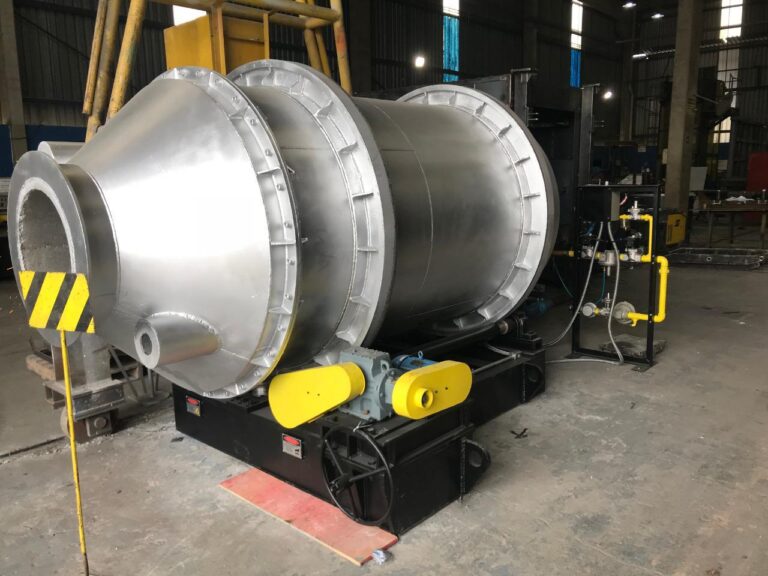
Modern Versus Traditional Melting Practice
The following comparison presents practical planning ranges. Actual performance depends on furnace configuration, alloy, charge mix, operating temperature and plant discipline.
| Performance area | Traditional melting practice | Modern integrated practice |
|---|---|---|
| Aluminum energy consumption | Often 500–800 kWh/t in inefficient gas-fired operations | Approximately 350–450 kWh/t for well-designed induction duty; gas systems improve through heat recovery |
| Steel induction energy consumption | Approximately 650–800 kWh/t | Target range of 500–600 kWh/t |
| Aluminum melt loss | Commonly 3–8% with poor scrap and exposed bath | Target 1.5–4% through clean charge, controlled temperature and rapid handling |
| Dross generation | Often 5–10%, depending on oxidation and contamination | Target 2–6% with decoating, dry charging and reduced holding |
| Burner fuel reduction | Baseline conventional burners | 30–40% reduction potential with regenerative burner retrofits in suitable gas-fired applications |
| Temperature control | Manual checks and operator judgement | Automated recipes, pyrometry and closed-loop control |
| Typical retrofit payback | Difficult to measure; often deferred | Approximately 18–36 months for well-selected energy projects |
| Maintenance approach | Reactive replacement | Condition-based maintenance and planned furnace spare parts inventory |
These figures are investment-planning benchmarks, not guaranteed results. A proper feasibility study must establish baseline energy per tonne, metal yield, dross composition and production availability before approving capital expenditure.
Reduce Melt Loss Through Charge Preparation
In aluminum melting and recycling, the furnace cannot compensate for poor feedstock preparation. Moisture, oil, paint, coatings, excessive fines and mixed alloys increase oxidation, fumes, slag and energy demand.
A high-performance charge-management programme includes:
- Segregating alloys before charging
- Removing excessive dirt, oil and moisture
- Controlling fines and lightweight scrap
- Using decoating or preheating where economically justified
- Standardising charge size and density
- Avoiding long exposure of hot metal to air
- Weighing incoming scrap and outgoing metal
- Tracking dross by batch, alloy and operator shift
The objective is to measure metal recovery yield, not only furnace melt rate. A faster furnace that generates excessive dross may produce less saleable metal per hour.
For a metal recycling furnace, the commercial KPI should therefore combine:
- kWh or fuel per tonne of saleable metal
- Melt loss percentage
- Dross percentage
- Net recovered metal
- Charge-to-tap cycle time
- Holding time per batch
- Unplanned downtime
Combustion Tuning and Burner Retrofits
Gas-fired systems can deliver substantial improvements without complete furnace replacement. The first step is disciplined combustion tuning.
Operators and maintenance teams should verify:
- Air-to-fuel ratio
- Oxygen concentration in flue gas
- Furnace pressure
- Burner flame stability
- Flame impingement on the bath or refractory
- Burner turndown performance
- Exhaust temperature
- Door and seal leakage
- Furnace-zone temperature balance
Recuperative burners transfer heat from exhaust gases to incoming combustion air. Regenerative burners use paired chambers or heat-storage media to recover and reuse exhaust heat cyclically.
When correctly applied, these technologies can reduce fuel consumption by approximately 30–40% compared with conventional burner arrangements. They also reduce flue-gas losses and can improve temperature uniformity.
However, a burner retrofit must include control logic, safety interlocks, gas-train review, combustion-air fans, refractory assessment and emissions analysis. Installing a high-efficiency burner on a leaking or poorly insulated furnace does not create a high-efficiency system.
Molten Metal Handling and Holding Discipline
Once metal is molten, unnecessary holding becomes an energy and yield penalty.
Efficient plants establish clear rules for:
- Maximum holding temperature
- Maximum holding duration
- Transfer-ladle preheating
- Skimming frequency
- Transfer route and ladle capacity
- Covering or flux practice
- Tapping temperature
- Delivery synchronisation with casting or downstream production
A reduction of only 15–30 minutes of unnecessary holding per heat can produce a meaningful annual saving when multiplied across multiple furnaces and shifts.
Temperature measurement should also be standardised. Overheating metal “for safety” often creates additional oxidation and energy use without improving final quality.
How Melting Performance Affects Downstream Operations
Melting efficiency directly influences the performance of the wider plant.
In a steel rolling mill, inconsistent chemistry or temperature increases reheating demand, scale formation, cobbles and product rejection. Better melt control creates a more stable feedstock for reheating, rolling and finishing.
For heat treatment furnaces, inconsistent upstream chemistry can result in variable hardness, distortion or cycle adjustments. Stable incoming material allows heat-treatment recipes to remain controlled and repeatable.
In a hot dip galvanizing plant, surface chemistry and steel cleanliness affect pickling behaviour, flux performance, coating adhesion and zinc consumption. Better upstream process control supports consistent coating quality and lower process waste.
The same principle applies to the wire and cable industry, where stable rod and wire quality is essential for drawing, annealing, conductivity and surface finish.

A Phased Roadmap for 2026 Melting Optimisation
Phase 1: Assessment and baseline
Measure the current operation for at least several representative production cycles:
- Energy per tonne
- Melt loss and dross percentage
- Furnace utilisation
- Cycle and holding time
- Scrap composition
- Flue-gas temperature and oxygen
- Refractory condition
- Labour hours per tonne
- Maintenance-related downtime
Phase 2: Operational stabilisation
Correct low-cost losses before purchasing major equipment:
- Repair doors, seals and refractory hot spots
- Standardise charge recipes
- Dry and segregate scrap
- Calibrate temperature instruments
- Tune burners and combustion air
- Reduce avoidable holding time
- Introduce shift-wise KPI reporting
Phase 3: Targeted retrofit
Evaluate the highest-return upgrades:
- Recuperative or regenerative burners
- Waste-heat recovery
- Automatic charging and tapping
- Induction power-control upgrades
- Furnace covers and improved insulation
- Fume extraction improvements
- Digital temperature and energy monitoring
- Critical furnace spare parts stocking
Phase 4: Integrated industrial furnace systems
Connect melting, holding, casting, rolling, heat treatment and galvanizing data. Industry 4.0 controls should make energy per tonne, melt yield, alarm history and maintenance condition visible to production and management teams.
This approach also supports decarbonisation reporting by linking fuel, electricity, recycled content and output quality in one operational record.
Why Continental Furnaces Is the Right Long-Term Partner
Continental Furnaces is an experienced industrial furnace manufacturer with more than 35 years of expertise in thermal engineering and industrial production environments.
Our capabilities include:
- Aluminum melting furnace and non-ferrous melting solutions
- Melting furnace for steel applications
- Metal recycling furnace projects
- Heat treatment furnaces
- Hot and cold dip galvanizing plants
- Pickling plants
- Furnace spare parts and accessories
- Customized thermal processing equipment
- Energy-efficient industrial furnace systems
- Prompt service designed to minimise downtime
Our ISO-certified quality approach combines application-specific engineering, robust construction, energy-efficiency planning and lifecycle support. Review the Continental Furnaces product portfolio, explore our industrial furnace solutions, or view our hot dip galvanizing plant gallery.
Conclusion: Convert Melting Efficiency into Competitive Advantage
In 2026, the best melting shops are not pursuing energy reduction in isolation. They are improving saleable metal yield, production stability, emissions performance, labour productivity and downstream quality at the same time.
The essential priorities are clear:
- Prepare scrap before it enters the furnace.
- Select furnace architecture according to actual production duty.
- Tune combustion before replacing equipment.
- Use recuperative or regenerative burners where the business case is strong.
- Control holding temperature and transfer time.
- Measure dross and melt loss as financial KPIs.
- Connect melting performance with rolling, heat treatment and galvanizing operations.
- Maintain an engineered inventory of critical furnace spare parts.
Consult Continental Furnaces for a plant-specific assessment of your melting operation, retrofit opportunities and long-term thermal-processing roadmap. Make the next furnace decision a strategic move toward lower cost, higher yield and sustained competitive advantage.