A furnace sized for a full production campaign can become a quiet fuel liability when the order book softens, a mill moves to one shift, or batches arrive intermittently. At 30-50% utilization, the furnace may still carry much of the heat loss, purge demand and standby burden associated with full production, while useful output has fallen.
For Indian manufacturers facing order volatility and energy-cost pressure, part-load weeks are a recurring operating condition. The answer is not automatically a capital rebuild. Better load matching, combustion hardware choices, operating discipline and spares readiness can control losses while protecting product quality and uptime.
Why furnaces lose efficiency at part load
Some furnace losses do not fall in proportion to throughput. Wall and roof losses continue, leakage paths remain open, and a minimum safe firing rate may be too high for the current heat demand. As a result, the system may cycle on and off rather than modulate smoothly.
Key losses include:
- Fixed air leakage: Uncontrolled infiltration can represent a larger share of total heat input when firing rates decline.
- Control limits: Valves and actuators near the bottom of their operating range can struggle to control flow accurately.
- Purge and draft losses: Prepurge and postpurge move relatively cool air through hot equipment. During off periods, natural draft through the stack can continue carrying heat away.
- Door and idle losses: Radiation and cold-air infiltration rise when doors stay open. NBS Handbook 124 emphasizes minimizing open-door time and unnecessary idle periods.
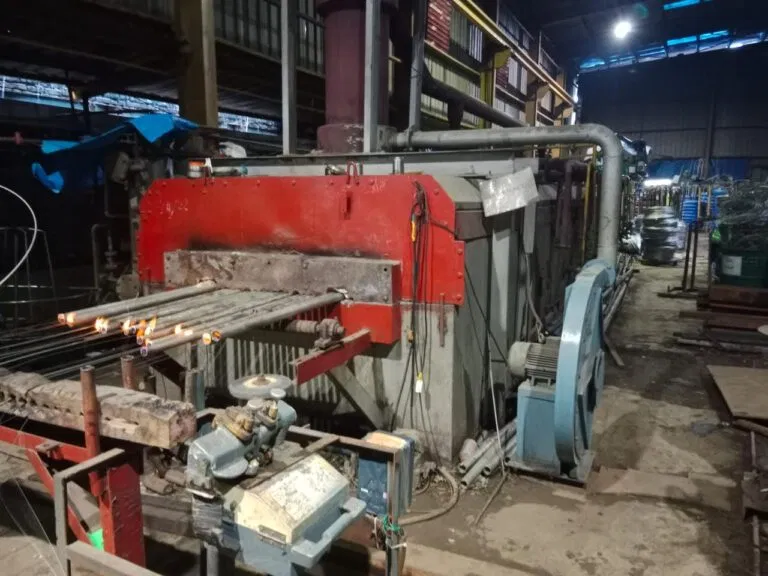
These effects matter across the full range of thermal processing equipment: in a steel rolling mill with a reduced reheat schedule, in heat treatment furnaces running shorter batches, and in melt shops where a metal recycling furnace waits between scrap campaigns.

Burner turndown: more is not automatically better
Burner-maker literature commonly describes turndown ratios of 10:1 or greater, with some burners rated as high as 35:1. A wider turndown range can help a furnace follow changing demand without shutting down. Fewer cycles mean fewer purge events and less time exposed to off-cycle stack draft losses.
But the lowest possible firing rate is not necessarily the most efficient operating point. The 1996 OSTI-indexed article The downside of a high turndown burner notes the trade-off: at very low firing rates, a burner may need more excess air to maintain flame stability or cool burner components. That additional air is heated and exhausted, increasing flue-gas loss. The benefit of high turndown depends on stable combustion and a suitable air-to-fuel relationship across the actual firing range.
Control design matters as much as the headline ratio:
- Single-point positioning moves fuel and air through a linked mechanism. It is relatively straightforward, but linkage accuracy and setup affect the mixture.
- Cross-connected control uses pressure relationships to coordinate air and fuel flows, with performance dependent on the installed control arrangement.
- Full metering control measures flows and adjusts them to demand. It can provide tighter control, but requires appropriate instrumentation, commissioning and maintenance.
The foundation is safe combustion across the load range. The US DOE’s Process Heating Tip Sheet #2 advises tuning to minimum safe excess air. It cites 10-20% excess air, often corresponding to about 2-5% oxygen in flue gas, as a typical process-heating range. These are benchmarks, not universal setpoints: burner design, fuel, furnace conditions and safety requirements determine the correct target. DOE guidance also gives a useful rule of thumb: at typical flue temperatures, reducing excess oxygen by 1% can save roughly 1% fuel, subject to operating conditions.
Hot standby or cold shutdown: run the break-even
There is no universal rule for whether to hold temperature or shut down. The decision depends on expected downtime, furnace thermal mass, insulation condition, pilot consumption and the energy required to return to production.
Compare:
- Standby fuel: Include main-burner input, pilot consumption and stack-draft losses for the expected idle period.
- Shutdown and restart fuel: Estimate cooling losses and the energy needed to reheat the lining, fixtures and furnace structure to operating conditions.
- Production consequences: Consider restart time, metallurgical requirements, quality risk and schedule certainty.
A high-mass furnace facing a short gap may favor controlled standby. A long, uncertain gap may make shutdown preferable. The best policy is a site-specific break-even calculation based on actual operating data, not a fixed rule based on the clock.
Door discipline is useful in either mode. Close doors during delays, inspect seals, and avoid opening the furnace before material handling is ready. This is especially important for batch annealing in the wire and cable industry, where a poorly timed door opening can add heat loss without advancing the batch.
Comparing part-load measures
The capex descriptions below are relative planning categories, not quoted prices. Actual costs depend on furnace size, controls, burner arrangement and installation scope.
| Option | Typical capex | Best fit | Principal risk or caveat |
|---|---|---|---|
| On-off cycling operation | Low initial cost | Simple loads with infrequent cycling | Repeated purges and off-cycle draft can increase losses |
| Modulating high-turndown burners | Medium | Variable loads where cycling is frequent | Low-fire stability and excess-air performance must be checked |
| Oxygen-trimmed metering control | Medium to high | Multi-zone or variable-load systems needing better measurement and control | Requires suitable analyzers, commissioning and upkeep |
| Oxy-fuel or fuel-rich retrofit options | High | Larger projects with a defined process and emissions case | Capital, fuel-system, safety and emissions implications need engineering review |
| Operating-discipline measures | Low | Any furnace with avoidable idle, door or scheduling losses | Requires consistent procedures and accountability |
Research examples help show the scale possible, but they are not promises of part-load savings. One walking-beam reheating-furnace case reported natural-gas reductions of about 3 Sm³ per tonne after combustion-system optimization; it was a specific case, not a universal part-load result. A 2025 MILD-oxyfuel study reported modeled fuel-intensity reductions above 1% per 1 percentage-point increase in oxygen concentration within its studied range and configuration. Separately, a 2020 steel reheating paper reported 20-25% fuel-consumption reductions for flameless oxy-fuel applications. These are larger technology or optimization cases, distinct from low-cost idle-period measures, and their results depend on site conditions.
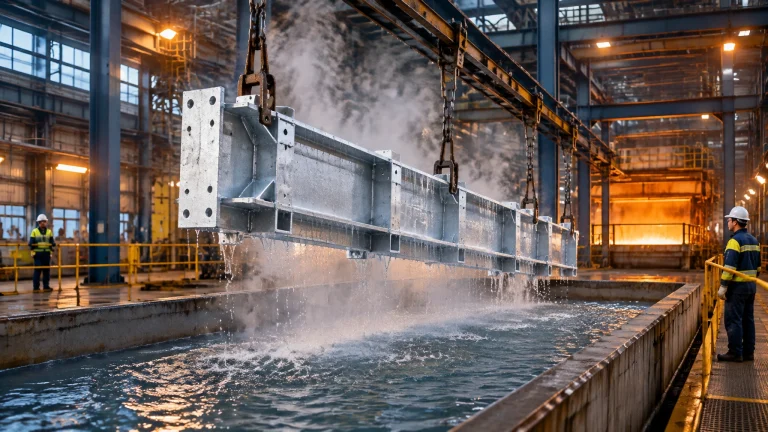
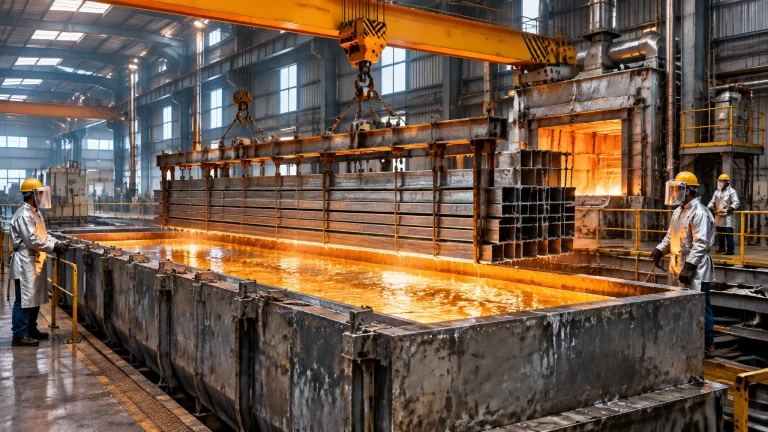
A melting furnace for steel or an aluminum melting furnace may have different load patterns and thermal requirements from a reheat furnace. The same is true for zinc-heating burners in a hot dip galvanizing plant. Evaluate each process on its real load profile.
A phased roadmap for part-load efficiency
Phase 1: Load-Profile and Loss Audit
Log firing rates, cycle counts, door-open minutes, idle hours and flue oxygen by zone. Record production alongside fuel use so the team can distinguish throughput changes from genuine efficiency changes.
Phase 2: Combustion Tuning and Control Upgrade
Check safe combustion across high and low fire. Review the control method, instrument condition and valve sizing. Consider oxygen trim briefly as a means of maintaining the intended air-to-fuel relationship, not as a substitute for burner stability or sound operating practice.
Phase 3: Hardware Selection and Sizing
Choose burner turndown to match the measured load histogram, not the maximum advertised ratio. Review valve authority, actuator range, seals and recirculation equipment where applicable.
Phase 4: Operating-Policy Deployment
Set a standby decision matrix using the site break-even calculation. Define idle-temperature setpoints, door rules and batch schedules that reduce unnecessary cycling.
Phase 5: Verification and Spares Readiness
Compare results against an agreed baseline such as kWh/kg or Sm³/t, with production mix and operating hours recorded. Confirm that critical components are available before failures disrupt control or restart.
Furnace spares that protect part-load performance
A control strategy only works when its components respond accurately. Keep critical furnace spare parts identified and serviceable, including:
- Flame detectors and UV scanners
- Modulating valve motors and actuators
- Pressure switches
- Oxygen analyzer cells
- Pilot igniters and electrodes
- Door seals
A failed detector, sticking actuator or degraded analyzer cell can force unstable operation, unnecessary cycling or an unplanned shutdown. A planned spares list and prompt service reduce downtime and help preserve the performance established during commissioning.

Make low-load efficiency a managed operating condition
Part-load efficiency is not a single burner specification. It is the combined result of stable minimum firing, appropriate controls, a deliberate standby policy, disciplined door operation and ready access to critical components. As an industrial furnace manufacturer with more than 35 years of experience, Continental Furnaces works with customers to align industrial furnace systems with their production pattern and lifecycle priorities.
For a part-load combustion audit or consultation, contact Continental Furnaces through the request-for-a-quote page. Our customized solutions, ISO-certified quality and prompt service support an enduring partnership focused on efficiency, reliability and sustained competitive advantage.
References
- US DOE ITP Process Heating Tip Sheet #2, “Check Burner Air-to-Fuel Ratios”
- NBS Handbook 124, Energy Management for Furnaces, Kilns, and Ovens
- Carpenter and Kissock, “Quantifying Savings From Improved Boiler Operation”
- OSTI, “The downside of a high turndown burner” (1996)
- MILD-oxyfuel reheating furnace study, Case Studies in Thermal Engineering (2025), DOI: 10.1016/j.csite.2025.107519
- Flameless oxy-fuel steel reheating paper, Metal (2020), DOI: 10.37904/metal.2020.3460