The economics of the wire and cable industry are being reshaped by three operational priorities: lower energy cost, consistently high metallurgical quality, and higher line availability. In 2026, furnace performance is no longer an isolated utility concern. It directly influences drawing speed, elongation, tensile strength, coating adhesion, scrap rate and delivery reliability.
For plant heads, maintenance managers and procurement teams, the correct question is not simply whether to replace an old furnace. The strategic question is how the complete thermal route, from upstream melting to downstream coating, can be engineered as one connected production system.
Modern industrial furnace systems now combine continuous annealing, in-line preheating, controlled atmospheres, efficient burners, improved insulation and digital process supervision. Properly configured, these measures can deliver 25–40% lower energy intensity compared with older, poorly insulated or manually controlled installations, subject to material grade, line speed and operating profile.
Why wire and cable furnace performance matters in 2026
Wire rod and non-ferrous rod pass through several energy-intensive operations before becoming finished cable. Each thermal stage must deliver the required temperature and metallurgical condition without creating surface oxidation, dimensional instability or unnecessary residence time.
The 2026 operating environment adds further pressure:
- Volatile electricity and natural-gas prices are increasing the importance of kWh or fuel consumption per tonne.
- Emissions norms are encouraging electrification, efficient combustion and lower-carbon fuel mixes.
- Customers in automotive, aerospace, construction and energy are demanding better traceability and lower embedded carbon.
- Digitalisation is connecting furnace data to production planning, quality systems and maintenance workflows.
- A single unplanned shutdown can interrupt drawing, coating and dispatch schedules across the entire plant.
Industry coverage of wire manufacturing trends increasingly identifies energy monitoring, automation and process optimisation as central competitiveness measures. Expometals’ overview of wire-industry automation and energy trends reflects this direction.
The complete thermal route: from melting to finished cable
A furnace audit must evaluate the process chain, not only the chamber temperature.
1. Upstream melting and casting
For aluminum conductors, an aluminum melting furnace must provide efficient melting, controlled holding and low metal loss. Charge quality, oxide formation, furnace loading and temperature uniformity affect the consistency of the rod entering the rolling or casting route.
For ferrous wire, a melting furnace for steel and upstream casting route determine the chemistry and cleanliness of wire rod. Scrap-based production is also strengthening the role of the metal recycling furnace, particularly as manufacturers pursue circular-economy targets and lower-carbon feedstock.
These systems may connect with:
- CCR and CCM lines for continuous casting.
- Steel rolling mill reheating and controlled-cooling sections.
- Rolling mills for ferrous and non-ferrous rod production.
- Billet, bloom and rod handling systems.
- Fume extraction, charging and material-tracking systems.

2. Wire preheating and continuous annealing
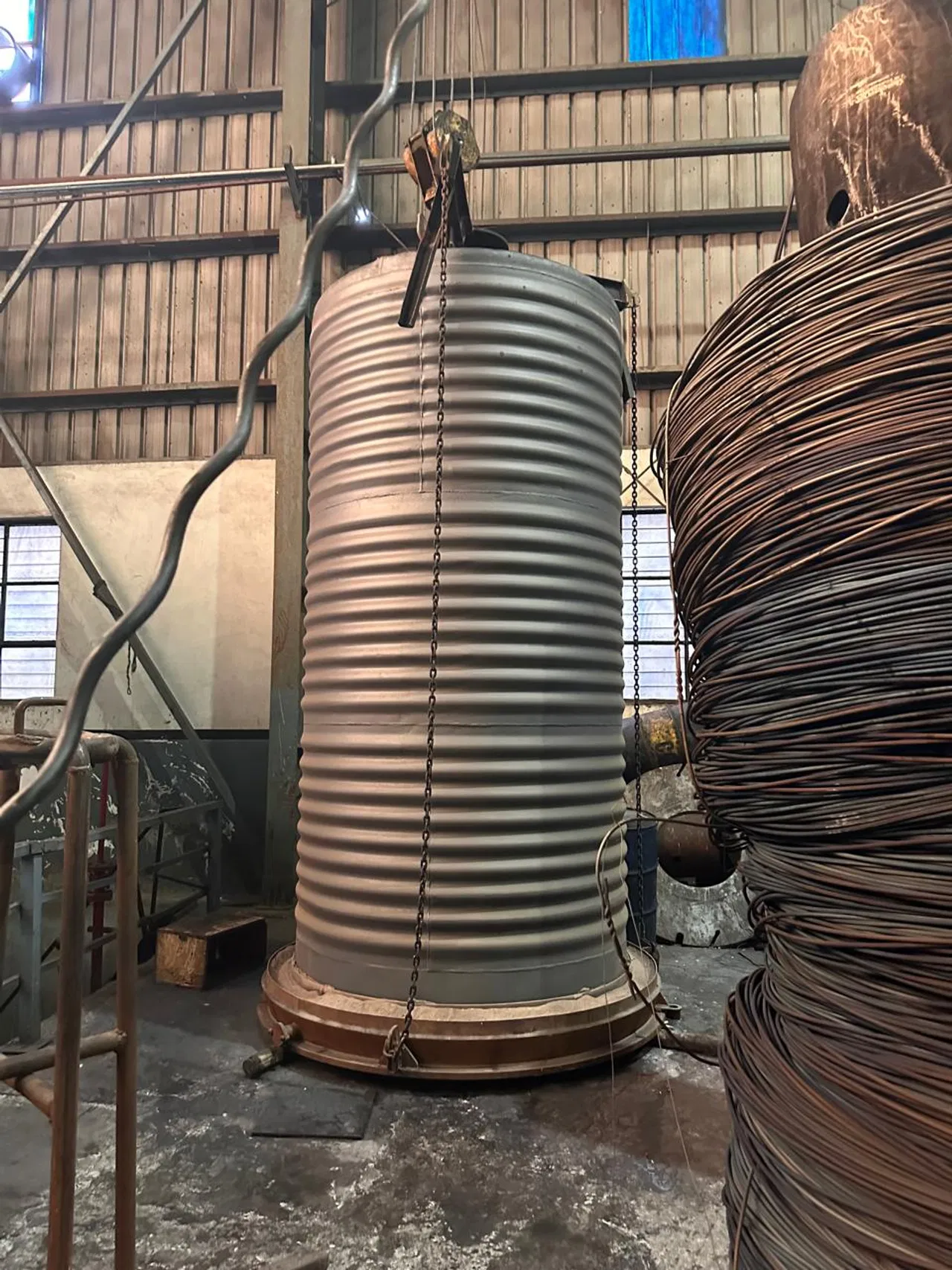
In-line preheating reduces the thermal load required inside the main annealing zone. It is particularly useful where wire enters the furnace at variable temperatures or where high line speeds demand rapid, uniform heat transfer.
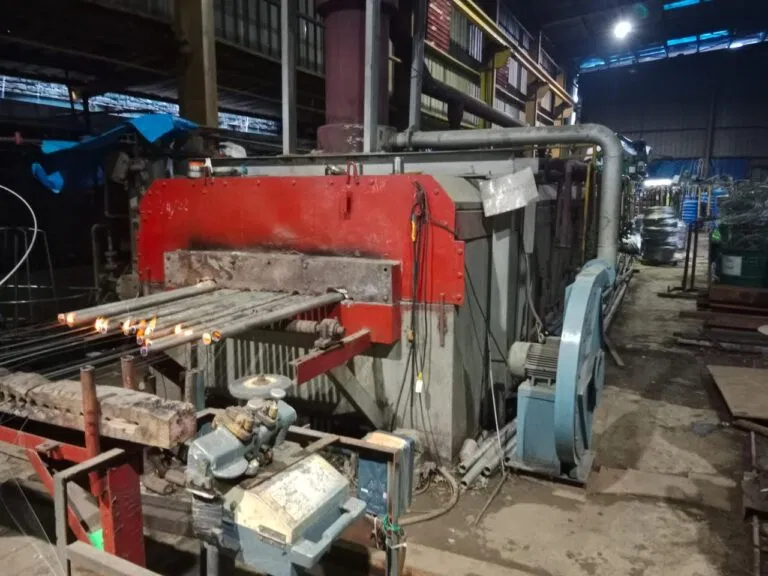
A continuous strand annealing system typically includes:
- Entry and exit sealing arrangements.
- Multiple controlled heating zones.
- Temperature sensors positioned for representative measurement.
- Protective or bright-annealing atmosphere management.
- Water, air or controlled cooling sections.
- Line-speed synchronisation with drawing and take-up equipment.
The objective is uniform metallurgical treatment at production speed, not simply achieving a nominal setpoint. Temperature overshoot, uneven wire spacing or unstable atmosphere flow can create inconsistent hardness, oxide formation and coating defects.
3. Tinning and coating line furnaces
Tinning and coating lines require thermal stability at the point where surface condition, wetting and coating adhesion are established. Furnace design must account for:
- Wire diameter and strand count.
- Coating material and operating temperature.
- Line speed and residence time.
- Atmosphere requirements.
- Entry moisture and surface cleanliness.
- Heat loss at openings and transfer zones.
A properly engineered furnace protects throughput while reducing the risk of surface discoloration, coating variation and rework.
Choosing the correct continuous furnace configuration
The furnace configuration should follow the product, line speed, loading method and available floor space.
| Configuration | Best suited to | Principal advantages | Key considerations |
|---|---|---|---|
| Continuous strand furnace | High-volume wire and cable lines | Constant production flow, automatic temperature control, low handling labour | Requires precise tension, sealing and line synchronisation |
| Belt furnace | Bundled wire, small components and controlled batch flow | Flexible loading, stable support, easy integration with cooling | Belt material and maintenance directly affect uptime |
| Roller hearth furnace | Rod, bars, coils and heavier products | Robust conveying, high throughput and strong integration with rolling operations | Roller alignment, refractory protection and drive reliability are critical |
| Electric continuous furnace | Clean local operation and renewable-electricity strategies | Precise zoning, rapid control response and no direct combustion emissions | Electrical capacity and power-quality planning are essential |
| Gas-fired or hybrid furnace | High-temperature duty and sites with established gas infrastructure | Strong thermal capacity and flexible fuel strategy | Burner tuning, exhaust management and combustion-air preheating are required |
For heavier products and associated steel processing, a roller hearth arrangement may integrate efficiently with a steel rolling mill, including CCR and CCM-connected production routes. For delicate, high-speed wire, strand-guiding and atmosphere-sealing design become the dominant engineering concerns.
Four engineering levers that reduce energy cost
1. Recuperative burners and efficient combustion
Where gas firing remains appropriate, recuperative burners can transfer heat from exhaust gases to incoming combustion air. Published industrial benchmarks commonly indicate 15–25% fuel savings from combustion-air preheating, with higher reductions possible when replacing obsolete burner systems and correcting excess-air losses.
The design must include:
- Correct burner turndown ratio.
- Stable flame pattern across each zone.
- Oxygen and pressure monitoring.
- Controlled exhaust temperature.
- Interlocks for safe start-up and shutdown.
- Easy access for inspection and tuning.
The goal is not maximum firing rate. It is stable heat delivery with the lowest practical excess air and the fewest uncontrolled losses.
2. Insulation and refractory upgrades
Insulation degradation is frequently overlooked because the furnace may continue operating while energy performance quietly declines. Hot spots, damaged lining, leaking doors and poor seals increase fuel or electricity consumption and can expose nearby equipment to excessive heat.
An insulation review should assess:
- Chamber lining condition.
- Door and vestibule sealing.
- Expansion joints.
- Roof and sidewall heat loss.
- Cooling-section losses.
- Thermal bridges around fixtures and access panels.
Improved insulation can reduce external surface temperature, stabilise zone control and lower the furnace’s base-load consumption during holding and idle periods.
3. Atmosphere control
Atmosphere control is essential for bright annealing, surface quality and repeatable mechanical properties. Excessive hydrogen or protective gas flow increases operating cost, while insufficient flow can produce oxidation and unacceptable surface finish.
A modern system should control:
- Gas flow by zone.
- Furnace pressure.
- Oxygen or dew-point indicators where applicable.
- Seal integrity at entry and exit.
- Purging and emergency procedures.
- Recipe-based atmosphere settings for each product family.
Recent technical material on advanced annealing concepts reports hydrogen and electrical-energy reductions of approximately 20% in suitable configurations. EBNER’s 2026 HICON technical material illustrates how thermal design, sealing and heat exchange can work together.
4. Digital controls and energy visibility
A furnace without reliable data is difficult to improve. Digital controls should connect PLC or SCADA logic with:
- Zone temperature trends.
- Line speed and residence time.
- Energy consumption per tonne.
- Atmosphere flow and pressure.
- Burner status and alarms.
- Product recipes and batch history.
- Maintenance alerts and downtime records.
The most valuable KPI is not furnace consumption in isolation. It is energy per acceptable tonne of finished wire, linked to yield, scrap and quality results.

The 2026 implementation roadmap
Phase 1: Assessment and baseline
Record at least four weeks of operating data:
- Fuel or electricity consumption.
- Production tonnes and line speed.
- Start-up and idle hours.
- Scrap and rework.
- Furnace stoppages.
- Atmosphere consumption.
- Temperature uniformity.
- Critical spare-part failures.
This baseline separates genuine efficiency opportunities from changes caused by product mix or operating discipline.
Phase 2: Retrofit feasibility
A retrofit is often the fastest route when the furnace shell, conveyor and production layout remain serviceable. Evaluate:
- Burner and control replacement.
- New insulation or refractory lining.
- Entry and exit sealing.
- Additional preheating.
- Sensor and instrumentation upgrades.
- PLC, HMI and data-logging improvements.
- Electrical conversion or hybrid heating.
Retrofit delivers value when downtime windows are controlled and the existing mechanical architecture can support the target throughput.
Phase 3: New-build engineering
A new furnace becomes essential when the existing system has structural deterioration, inadequate capacity, obsolete controls or persistent quality variation. New-build design should be based on lifecycle cost rather than purchase price alone.
Specify:
- Required throughput and product range.
- Heating method and energy mix.
- Temperature uniformity tolerance.
- Atmosphere and sealing requirements.
- Future line-speed expansion.
- Integration with upstream melting and downstream coating.
- Maintenance access and spare-part standardisation.
- Compliance and emissions requirements.
Phase 4: Commissioning and operator capability
Even the best thermal processing equipment will underperform without trained operators. Commissioning should include recipe validation, thermal mapping, atmosphere verification, safety testing and operator training.
The plant must also address the real operational risks:
- Shortage of skilled furnace operators.
- Long lead times for specialised components.
- Inadequate documentation from legacy equipment.
- Unplanned shutdowns caused by small but critical failures.
- Poor handover between production, maintenance and procurement.
Reliability depends on spares availability
Downtime risk is often determined by whether critical components are available when required. Furnace spare parts planning should cover heating elements, burners, thermocouples, refractory materials, seals, rollers, belts, drives, control components and safety devices.
Continental Furnaces supports furnace spares and accessories with quality components, customised specifications and responsive replacement services. This is particularly important for plants operating mixed fleets of imported and locally engineered furnaces.
A practical spare strategy classifies parts by:
- Criticality: failure stops production or creates a safety risk.
- Lead time: locally available, engineered-to-order or imported.
- Failure frequency: routine wear versus low-frequency catastrophic failure.
- Interchangeability: standard component versus proprietary design.
- Storage condition: shelf life, moisture control and calibration requirements.

Why Continental Furnaces is the right engineering partner
Continental Furnaces brings 35+ years of industrial furnace experience to ferrous and non-ferrous applications. As an ISO-certified industrial furnace manufacturer, the company develops customised solutions for wire and cable plants, foundries, steel producers, rolling mills, automotive suppliers, aerospace manufacturers and general industry.
Its capabilities include:
- Continuous and batch heat treatment furnaces.
- Wire annealing and preheating systems.
- Melting and recycling projects.
- Furnace upgrades and controls modernisation.
- Hot dip galvanizing plant integration.
- Furnace spare parts and accessories.
- Energy-efficient burners, insulation and digital controls.
- Engineering support for CCR, CCM and steel rolling mill operations.
The objective is an enduring partnership: higher yield, lower energy intensity, dependable compliance and prompt service that keeps downtime minimal.
Conclusion: engineer the furnace chain, not just the furnace
The 2026 wire and cable plant must connect melting, casting, rolling, drawing, annealing, coating and dispatch through measurable thermal performance. Continuous strand annealing, in-line preheating, controlled atmospheres, efficient combustion, insulation upgrades and digital supervision create a quantum leap in operational visibility and process stability when engineered together.
Begin with a furnace audit. Measure energy per acceptable tonne, identify the highest-risk components, compare retrofit and new-build economics, and define the production roadmap.
Contact Continental Furnaces for a consultation or request a quotation at confur.net. Make furnace modernisation a strategic move toward sustained competitive advantage, not a reactive response to the next shutdown.