For thirty years, a furnace team tracked two essential numbers: tonnes out and fuel in. From India’s compliance year 2026-27, an additional number comes into focus: tonnes of CO₂ equivalent per tonne of equivalent product. This intensity ratio is subject to third-party verification, and its associated Carbon Credit Certificates can be bought or sold. For furnace teams, CCTS is therefore an instrument-engineering problem: the numerator is a fuel bill supported by measurement and sampling records; the denominator is a production figure that plants already reconcile each month.
The 16 November Morning Edition covered CBAM embodied carbon as an EU border measure with product-level declarations; 15 November covered continuous emissions monitoring and EN 14181 calibration as permit-compliance disciplines; 14 November covered combustion air and flue-gas fan systems; 13 November covered refractory installation; and 26 October covered energy monitoring and measurement and verification for cost. CCTS is none of those: it is a domestic intensity obligation on a named plant, expressed per tonne of product, settled in tradable certificates, and dependent on a verifier’s opinion rather than a regulator’s continuous data stream. A plant can pass a stack test and still miss its intensity target. Lower production alone does not create credits: with the same fuel and fewer saleable tonnes, intensity worsens.
This article reads published notifications and procedures; the iron and steel target notification remains a draft. It is not legal or compliance advice.
What the compliance mechanism actually asks for
CCTS has a compliance mechanism and an offset mechanism. Under the compliance mechanism, the Ministry of Environment, Forest and Climate Change (MoEFCC) notifies greenhouse gas emission intensity targets for obligated entities under the Environment (Protection) Act, 1986. The Bureau of Energy Efficiency (BEE) administers the scheme.
Targets are expressed in tonnes of CO₂ equivalent per unit of equivalent product. They are set across a three-year trajectory period, with each year treated as a separate compliance cycle. An entity that beats its target is eligible for certificates calculated as:
(notified specific GHG emission − achieved specific GHG emission) × production in that compliance cycle
An entity that misses its target must buy the corresponding shortfall in certificates. The result is a verified annual performance obligation, not simply a furnace efficiency report.
Where Indian steel stands in November 2026
Revised draft notification G.S.R. 517(E), dated 26 June 2026 and gazette-published on 2 July 2026, proposes GEI targets for 255 iron and steel units, the largest sector by plant count under the scheme. Its baseline year is 2023-24. The 2025-26 target column is blank for every entity, indicating 2026-27 as the first proposed compliance year.
The draft schedule covers about 148.7 million tonnes of baseline output across 14 states, with combined baseline emissions of approximately 358.6 million tonnes CO₂e. The median reduction required from each plant’s own baseline is about 5.46%, with the schedule ranging from approximately 2.15% to 9.35%. The 60-day comment window closed on 31 August 2026; the final notification was still awaited as of this edition.
India’s average emission intensity in 2023-24 was about 2.54 tonnes CO₂ per tonne of crude steel, compared with a global average near 1.9. The Ministry of Steel’s stated aim is 2.2 tonnes CO₂ per tonne of crude steel by 2030.
The target is a ratio, and only one half is a combustion problem
A ratio can improve through lower emissions, higher output, or both. This reverses the usual order of plant priorities: production yield and boundary accounting now sit beside burner performance.
- If a furnace uses the same fuel but produces 3% fewer saleable tonnes, its intensity increases.
- If output grows without a proportional increase in fuel, intensity improves even if the burner is unchanged.
- Rejects, scale losses, rework and product-mix decisions can affect the denominator as surely as fuel tuning affects the numerator.
The denominator is not a clerical afterthought. Confirm what counts as equivalent product, reconcile it to production records, and resolve differences between gross output, saleable output and monthly reporting before a verifier asks.
The boundary is gate to gate, and the furnace sits in the middle of it
The boundary is gate to gate and includes direct energy, direct process and indirect energy emissions. Direct energy covers fossil fuel burned in stationary equipment such as furnaces, kilns, boilers and gas turbines. Direct process emissions arise from chemical reactions or material transformation rather than combustion. Indirect emissions include purchased grid electricity and imported electricity or heat.
Important trajectory detail: for 2024-27 targets, calculations use direct energy plus indirect energy emissions. Process emissions enter target calculations in subsequent periods, but must be identified, monitored and reported from the start.
The following are excluded from the declared number, subject to the required evidence and boundary treatment:
- Biomass or biogenic energy emissions, which are reported separately.
- Energy from renewable sources.
- CO₂ captured, transferred or utilised through CCUS, including CO₂ chemically bound in precipitated calcium carbonate, where permanence is demonstrated.
- Emissions from an attached colony, temporary or major construction, and outside transportation.
- Refrigerant leakage in office buildings and processes.
- Emissions from alternative fuel and raw material sourced from waste.
- Emissions from energy produced and exported outside the plant boundary.
If energy cannot be disaggregated, the whole quantity must be accounted for, and the entity must justify the lack of disaggregation in writing. That is an engineering decision with an emissions consequence, not a spreadsheet convenience.
The numerator is a fuel bill with a sampling plan stapled to it
Activity data comes either from continual measurement at the emission source or from quantities aggregated at regular intervals with stock changes. For an inventory method, the basic reconciliation is opening stock + receipts − closing stock. Fuel and material quantities are recorded by mass in tonnes or volume in kilolitres or cubic metres.
Where direct stock measurement is technically infeasible or unreasonably costly, estimates may use historic data correlated with output, or documented procedures supported by audited financial statements. The consequence is straightforward: the fuel flow meter and weighbridge are evidence. A drifting orifice plate is a compliance exposure, not a housekeeping item.
Combustion emissions are calculated using activity data expressed on a net calorific value (NCV) basis, multiplied by an emission factor and an oxidation factor. NCV must be determined through fuel analysis, with laboratory records retained. In the first trajectory period, if NCV is unavailable, a standard gross-to-net conversion may be used: 5% for solid and liquid fuels and 10% for gaseous fuels. Supplier NCV figures may also be used for liquid and gaseous fuels.
The first trajectory period uses default Type I factors from IPCC or Central Government publications, selected conservatively. If no oxidation factor is measured, the default is 1. That assumes complete oxidation; unburnt carbon leaving in CO, scale or dross does not reduce the calculated emissions in this first period.

Your own laboratory can now cost you money
For solid fuel, the procedure calls for as-fired samples from an auto-sampler at the feeding point. Coal must be sampled at least once a month or every 20,000 tonnes; raw material at least once a month or every 50,000 tonnes. Samples require internal laboratory testing and testing at a NABL-accredited external laboratory for NCV and proximate and ultimate analysis.
External laboratory analysis is required at least quarterly, and coal and material testing at the external laboratory at least monthly. Compare duplicate determinations from the same sample. The deviation should be under 71.7 kcal/kg for coal, as per ISO 1928, and within 2% for material. Where the difference exceeds the limit, the difference is added to the plant laboratory’s value for that quarter.
The implication is sharp: your own laboratory’s optimism is added back to your number. An in-house calorimeter with a bias is a self-inflicted penalty. Sampling locations, sample custody, preparation, storage, transport and laboratory procedures all need a written and auditable trail.
Purchased electricity in, exported power out
Purchased electricity uses the latest average grid emission factor in the CEA CO₂ Baseline Database for the Indian Power Sector, currently Version 22.0. A supplier-specific factor under a dedicated power purchase agreement may be used where supporting documentation is verified by an independent agency. Electricity exported through captive power, cogeneration or waste heat is subtracted using the weighted average net heat rate and fuel used; if that data is unavailable, the CEA grid average factor applies.
Combustion air fans, recirculation fans, pumps, hydraulic power packs and mill drives bring grid carbon into the numerator. The electrical side of the furnace is now a carbon item as well as a tariff item. A waste-heat recovery generator that exports power can improve the numerator through both reduced fuel use and the export adjustment for kilowatt-hours returned to the grid.

The renewable claim that does not survive verification
On-site renewable energy, off-site open access, a dedicated renewable PPA or a green tariff can be treated as zero-emission energy input, with contracts and documentation showing that the reduction is not double counted by the entity and generator. Buying Renewable Energy Certificates is not a valid claim under this mechanism. A REC purchase alone does not establish eligible renewable electricity for the CCTS calculation.
Three schemes, three denominators, one furnace
The same plant faces distinct accounting lenses. Yield improvement can influence all three; a fuel switch may move them by different amounts because their product definitions and boundaries differ.
| scheme | who imposes it | denominator | boundary basis | consequence of missing |
|---|---|---|---|---|
| CCTS compliance mechanism | Indian Government; targets notified by MoEFCC and administered by BEE | Tonne of equivalent product | Plant gate to gate, under the applicable trajectory rules | Buy certificates for a shortfall; non-compliance is subject to action under the Environment (Protection) Act |
| Green Steel Taxonomy rating | Ministry of Steel; certification through NISST | Tonne of finished steel | Emissions boundary as defined in the taxonomy notification | Above the 2.2 threshold, no green steel rating |
| CBAM definitive period | European Union; importer obligations under CBAM | Tonne of a specific CN-coded good | Product-specific embedded emissions under CBAM rules | Importer certificate and reporting obligations under EU rules |
India’s Green Steel Taxonomy, notified in December 2024, uses a threshold of 2.2 tonnes CO₂e per tonne of finished steel. Its bands are five-star below 1.6, four-star from 1.6 to 2.0 and three-star from 2.0 to 2.2, with thresholds subject to review every three years. NISST certifies the rating.
This is the article’s most useful operating insight: one furnace is now assessed against three denominators: equivalent product for CCTS, finished steel for the Green Steel rating and a specific CN-coded good for CBAM. Improving yield moves all three. Changing fuel alone can shift one measure more than the others.
Type I now, Type II later
For subsequent periods, Type II factors are derived from actual analysis, and the same factor type must be applied consistently to the baseline and assessment years. Obligated entities are directed to strive for Type II where one source or source stream contributes more than 10% of overall emissions. For solid fuel, this factor uses actual NCV and total carbon from ultimate analysis.
| dimension | default factors in the first trajectory period | analysed factors in later periods | what the furnace team should do now |
|---|---|---|---|
| Emission factor basis | Type I defaults from IPCC or Central Government sources, selected conservatively | Type II based on actual fuel or material analysis | Identify source streams above 10% of emissions |
| Net calorific value | Fuel analysis; first-period GCV-to-NCV conversion allowed if NCV unavailable | Actual analysed NCV supports Type II work | Keep laboratory records and supplier certificates |
| Oxidation factor and unburnt carbon | Default 1 if unmeasured | Use supported measurement and methodology | Document how unburnt carbon is assessed |
| Sampling burden | Written sampling plan and prescribed testing | Analysis quality becomes more consequential | Validate sampling and lab controls now |
| Effect on a gas-fired reheat furnace | Default factor basis; supplier NCV may be used | Actual NCV informs analysis under the procedure | Preserve gas quality and meter records |
| Effect on a coal or DRI-based plant | Conservative default factor basis | Solid-fuel factor uses actual NCV and total carbon | Prepare representative as-fired samples |
| Verifier evidence | Fuel records, factors, NCV basis and calculations | Analysis reports and consistent baseline comparison | Maintain traceable records from source to report |
| Timing | First trajectory period | Subsequent trajectory periods | Reconstruct baseline consistently and prepare for transition |
The monitoring plan is a drawing of your plant
In consultation with its Accredited Carbon Verification Agency (ACVA), an obligated entity must establish a monitoring plan and submit it to BEE within three months of the start of a compliance cycle. The plan must include:
- Plant activities, emission sources and source streams.
- A simple diagram locating sources, streams, meters, sampling points and metering equipment.
- Traceable references for activity data and conversion factors.
- Written data-flow and control procedures.
- Fuel and material sampling procedures.
- Internal and external testing procedures.
Quarterly and annual reporting covers plant and process performance, internal fuel audits, production, energy consumed, emissions, specific emissions, mitigation measures and emissions reductions, with Form 1 used for annual energy consumption and GHG emissions. The long-term action plan is due within three months of the first cycle, with annual planned activities thereafter and revisions when needed.
What the verifier will do on the day
The appointed ACVA conducts strategic analysis and prepares a verification plan covering scope, activities, schedule, team roles, records to review, data sampling, risk management and interviews. At least one site visit is mandatory. The verifier checks IT and data systems, data flow and controls, source coverage, calculations for NCV, emission factors, oxidation factors and energy consumption, fuel and material testing, and implemented measures.
Form A, the performance assessment document, and the verification certificate on Form B are due within three months of the end of the compliance cycle. Form A includes the entity registration number, proof of Form 1 submission, measures and investment details, photographs where feasible, baseline and achieved intensities, certified certificate calculations and energy manager particulars.
BEE may initiate a check-verification within six months of the compliance report submission or three months of certificate issuance, whichever is later. The entity and verifier have 10 working days to respond to a notice, and the review is performed by a different accredited agency. Where a complaint-led review finds false or incorrect Form A information, the entity bears the review cost.
After issuance, the entity registers on the ICM Registry within four weeks and trades certificates on power exchanges under CERC terms. Certificates issued to an entity may be banked for later cycles and sold; certificates bought from the market may only be used for compliance. Form D is due within two weeks of the final trading session. Compliance must be achieved within nine months after the cycle ends, through the action plan or purchase of certificates for a shortfall. Non-compliance is penalised under the Environment (Protection) Act, 1986; no penalty amount is stated here.

Where this lands across furnace applications
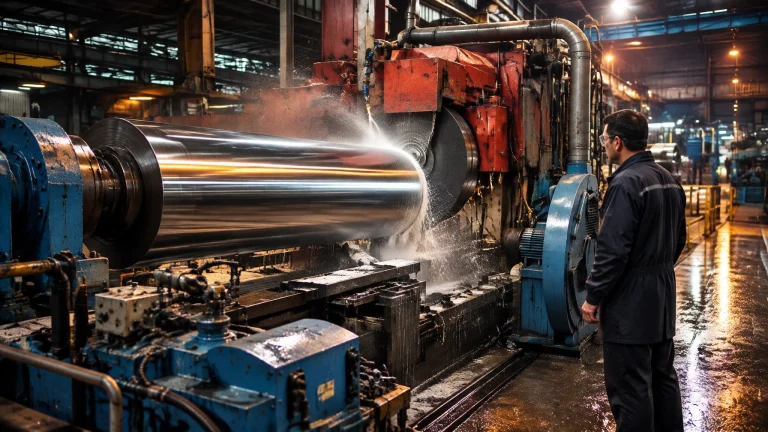
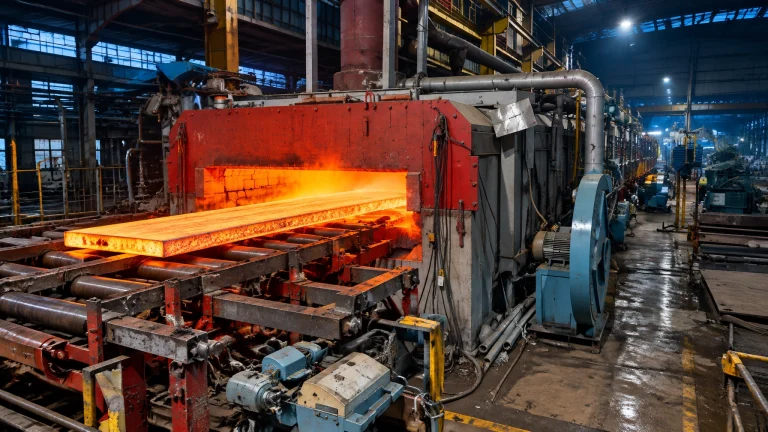
Across a steel rolling mill, yield loss at reheating and handling can shift the denominator as much as burner performance shifts fuel; in heat treatment furnaces, batch loading and throughput records need to align with the declared product basis. An aluminum melting furnace brings fuel quality and metal yield into the same operational conversation, while a melting furnace for steel places scrap, production and energy records under a common verification lens. For the wire and cable industry, and operators of a hot dip galvanizing plant, clear source boundaries and electricity data matter alongside thermal consumption. A metal recycling furnace must preserve distinctions in fuel and feedstock data. Each industrial furnace manufacturer and plant team works with different configurations, but the monitoring logic remains consistent across industrial furnace systems: reliable measurements, traceable production data and maintained furnace spare parts support the declared intensity. That is the practical connection between thermal processing equipment and carbon-market readiness.
Keep the sampling bench and fuel meter audit-ready
CCTS readiness depends on measurement and sampling hardware that supports a declared number. Continental Furnaces brings more than 35 years of industrial furnace engineering experience; the following equipment is among the instrumentation and maintenance items plant teams should review with their energy and compliance leads. The verifier will ask how each reading is taken, checked and retained.
- Calibrated fuel flow meters and orifice plates, with pressure and temperature compensation, support defensible fuel quantities.
- Gas chromatographs and calorimeters establish gaseous and liquid fuel NCV evidence.
- Automatic samplers, crushers and sample dividers at solid-fuel feeding points support representative as-fired samples.
- Bomb calorimeter consumables, certified reference standards, NABL-grade glassware and crucibles support repeatable laboratory results.
- Class 0.2S kWh meters, CTs and PTs on imported and exported feeders support electricity balances and export adjustments.
- Weighbridge load cells and indicators support fuel and material receipt records.
- Flue-gas oxygen and carbon monoxide analysers support combustion and oxidation-factor monitoring where applicable.
- Thermocouple and pyrometer spares, pressure and differential-pressure transmitters, damper linkages and actuator positioners help maintain process measurements and operating controls.
- Data loggers, historian storage, calibration gases and regulators preserve time-stamped records and instrument checks.
Review furnace spares and accessories alongside the instrument register. Continental Furnaces also supports tailored heat-treatment solutions and aluminium melting and holding configurations.
A five-phase readiness roadmap
- Phase 1: Scope and entity confirmation. Confirm the obligated entity, notified product basis, plant boundary, fuels, imported electricity and relevant production records.
- Phase 2: Metering and sampling gap assessment. Walk the fuel, power and material flows. Check calibration status, stock measurement, sampling points, laboratory capability and missing records.
- Phase 3: Monitoring plan and written procedures. Map sources and meters, define data owners, write sampling and testing procedures, and establish document control and reconciliation checks.
- Phase 4: Baseline reconstruction and Type II readiness. Reconcile baseline fuel, electricity, stock and production data. Identify major source streams and prepare for analysed factors without changing factor types between baseline and assessment years.
- Phase 5: Verifier dry run and margin capture. Trace sample data from meter or laboratory to report, test production reconciliation, validate renewable and export claims, and quantify yield and energy measures that protect intensity margin.
CCTS makes the fuel meter, sampling bench, production ledger and control room part of a single compliance system. Begin with a measured baseline and a documented boundary, then test the data path before the verifier does. For an enduring engineering partnership focused on reliable furnace performance, efficient operation and sustained competitive advantage, consult Continental Furnaces.
References
- Bureau of Energy Efficiency, Detailed Procedure for Compliance Mechanism under CCTS.
- Draft G.S.R. 517(E), 26 June 2026, iron and steel GEI targets.
- Ministry of Environment, Forest and Climate Change, Greenhouse Gases Emission Intensity Target Rules, 2025.
- Ministry of Power, Carbon Credit Trading Scheme, 2023.
- Central Electricity Authority, CO₂ Baseline Database for the Indian Power Sector, Version 22.0.
- Ministry of Steel, Green Steel Taxonomy for India; NISST, Green Steel Certification.
- Bureau of Energy Efficiency, Accredited Carbon Verification Agency register.
- Central Electricity Regulatory Commission, Terms and Conditions for Purchase and Sale of Carbon Credit Certificates Regulations, 2026.
- European Union, Regulation (EU) 2023/956 establishing a Carbon Border Adjustment Mechanism.