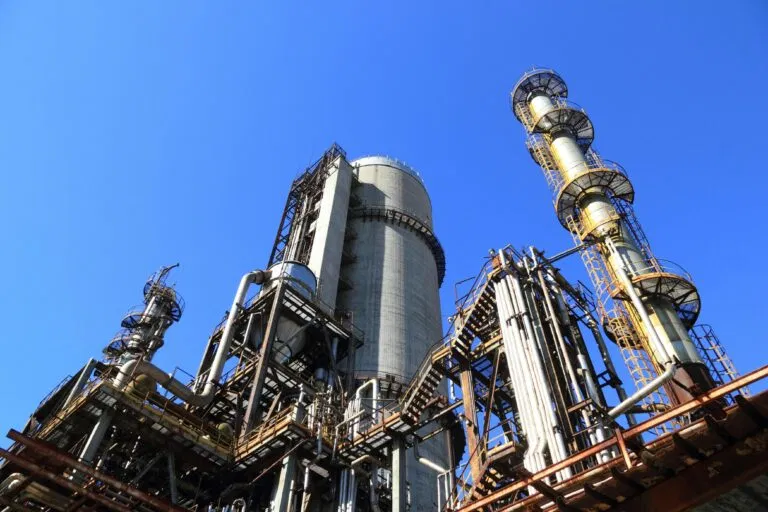
For plant managers, maintenance engineers, metallurgists, procurement heads, and operations leaders, furnace reliability is now a board-level business issue. A temperature excursion, refractory failure, burner fault, or control-system interruption can affect safety, yield, delivery performance, energy intensity, and regulatory compliance simultaneously.
In this Afternoon Edition of Industrial Insights, Continental Furnaces examines the maintenance strategies and technology updates shaping the industrial furnace sector through 2026. The focus is practical: how to combine preventive maintenance, predictive monitoring, energy management, automation, and critical furnace spare parts to protect uptime across a steel rolling mill, foundry, recycling facility, galvanizing line, or wire-processing plant.
Why furnace maintenance is becoming a strategic priority
Industrial furnaces operate under severe thermal, mechanical, and chemical conditions. Refractory linings, burners, heating elements, thermocouples, fans, rollers, seals, drives, and safety interlocks all deteriorate at different rates.
The cost of failure is rarely limited to the replacement component. A single unplanned stoppage can create:
- Lost production and missed dispatch commitments
- Scrap, scale loss, or metallurgical nonconformance
- Extended restart energy consumption
- Emergency labour and expedited freight costs
- Environmental reporting and emissions-compliance risks
- Damage to downstream equipment and customer confidence
Modern thermal processing equipment must therefore be managed as a lifecycle asset. The objective is not simply to repair a furnace after failure. The objective is to identify degradation early, schedule intervention during planned shutdowns, and maintain stable process performance throughout the campaign.
Preventive and predictive maintenance: the 2026 operating model
Preventive maintenance remains the foundation
Preventive maintenance uses time-, cycle-, or usage-based inspections and replacements. It establishes the discipline required for safe furnace operation and provides the historical data needed for predictive models.
A robust preventive programme should cover:
- Refractory cracks, spalling, hot spots, and insulation damage
- Burner flame shape, ignition performance, nozzle condition, and flame scanners
- Thermocouples, pyrometers, pressure sensors, and oxygen probes
- Doors, seals, rollers, chains, walking beams, and material-handling systems
- Fans, dampers, ducting, filters, and exhaust systems
- PLC logic, safety interlocks, emergency shutdowns, and alarm history
- Hydraulic, pneumatic, lubrication, and cooling-water systems
Maintenance intervals must be risk-based. A high-throughput continuous furnace, an aluminum melting furnace, and a batch heat-treatment furnace do not experience the same loading pattern or failure modes.
Predictive maintenance adds condition intelligence
Predictive maintenance combines sensor readings, inspection records, process data, and failure history to identify abnormal conditions before they become production failures.
Key monitoring inputs include:
- Vibration: fans, pumps, gearboxes, rollers, and drive motors
- Thermal imaging: refractory hot spots, shell temperatures, doors, and electrical panels
- Acoustic and ultrasonic inspection: leaks, bearing damage, valves, and compressed-air systems
- Electrical signatures: motor current, harmonics, power quality, and variable-frequency-drive loading
- Process data: zone temperature, fuel flow, furnace pressure, oxygen, exhaust temperature, and cycle time
- Oil analysis: critical gearboxes, hydraulics, and high-load drive systems
Industrial benchmarks indicate that well-designed predictive-maintenance programmes can reduce maintenance costs by approximately 25–30% and unplanned downtime by 35–50%, depending on asset criticality, data quality, and implementation discipline. These figures are benchmarks, not guarantees; the business case must be validated against the plant’s own downtime and maintenance history.

2026 technology updates for industrial furnace systems
1. Energy efficiency becomes a monitored KPI
In 2026, furnace efficiency is measured continuously rather than estimated from monthly fuel bills. Plant teams should track:
- GJ per tonne or kWh per tonne
- Energy consumption by product grade and shift
- Charging, soaking, and discharge temperatures
- Furnace residence time
- Exhaust temperature and oxygen concentration
- Scale formation and saleable yield
- Restart energy after unplanned interruptions
Combustion optimisation, improved insulation, tighter seals, variable-speed fans, and waste-heat recovery can deliver measurable reductions. Suitable recuperative or regenerative burner retrofits commonly target 10–30% fuel savings, while integrated hot-charging routes may reduce reheating fuel demand by 15–30% where process conditions permit.
The worldsteel energy-use resource provides useful industry context for tracking energy intensity in steel production.
2. Automation moves from control to optimisation
Traditional automation maintains setpoints. Advanced automation connects furnace operation with production scheduling, material handling, quality data, and maintenance alerts.
A modern control architecture may include:
- PLC and SCADA integration
- Recipe-based temperature and atmosphere control
- Automated charge tracking
- Real-time burner and fan performance monitoring
- Automatic alarm prioritisation
- Digital work-order generation through a CMMS
- Energy dashboards for operators and management
- Data exchange with MES and production-planning systems
This approach is especially valuable in a steel rolling mill, where furnace performance must remain synchronised with casting, reheating, rolling, and finishing operations.
3. Digital monitoring supports condition-based decisions
Digital monitoring allows maintenance teams to compare current behaviour with a verified baseline. A gradual rise in fan vibration, shell temperature, exhaust oxygen, or motor current can reveal degradation before the operator sees a visible failure.
For critical assets, plants should establish:
- An asset criticality ranking
- Normal operating envelopes
- Alarm thresholds and escalation rules
- Sensor calibration procedures
- A response workflow linked to maintenance planning
- A record of corrective actions and outcomes
Digital twins and machine-learning models are emerging for large and complex industrial furnace systems. Their value is strongest when they support practical decisions: when to inspect, which component to replace, and how to schedule the intervention without compromising production.
4. Emissions compliance is linked to equipment condition
Combustion instability, air infiltration, poor burner balance, fouled heat exchangers, and degraded exhaust equipment can increase fuel consumption and emissions simultaneously.
A compliance-oriented monitoring programme should include:
- Continuous or periodic O₂, CO, and NOx measurement where applicable
- Exhaust fan and damper performance
- Baghouse, filter, scrubber, or ESP pressure trends
- Gas-train leak detection
- Furnace pressure and infiltration monitoring
- Calibration records for emissions instruments
- Maintenance documentation for environmental audits
Keeping emissions-control equipment within its design operating range reduces the risk of exceedances, unplanned shutdowns, and regulatory penalties.
Conventional maintenance versus 2026 condition-based maintenance
| Metric | Conventional approach | 2026 condition-based approach |
|---|---|---|
| Inspection method | Fixed schedule and manual checks | Risk-based checks plus sensor data |
| Failure response | Reactive repair | Early intervention during planned downtime |
| Maintenance cost | Higher emergency and overtime exposure | Better control of labour and spares |
| Downtime | Unplanned stoppages | Predictive alerts and scheduled intervention |
| Energy performance | Periodic review | Continuous GJ/t and kWh/t monitoring |
| Emissions management | Compliance checked after events | Process and equipment trends monitored continuously |
| Spare-parts planning | Emergency procurement | Critical inventory and forecast demand |
| Decision quality | Experience-led | Engineering judgement supported by data |
Practical maintenance checklist
Daily or shift-level checks
- Confirm furnace temperature uniformity and recipe status.
- Review burner, heating-element, and flame-detector alarms.
- Check furnace pressure, fuel flow, oxygen, and exhaust readings.
- Inspect doors, seals, visible refractory, and access points.
- Listen for abnormal fan, pump, gearbox, or roller noise.
- Record energy consumption and production output.
- Verify that safety interlocks and emergency systems show healthy status.
Weekly checks
- Review vibration and motor-current trends.
- Inspect burner nozzles, ignition systems, and flame quality.
- Check thermocouple and pyrometer drift against reference instruments.
- Inspect fans, dampers, filters, and ducting for fouling or leakage.
- Review CMMS alerts and overdue corrective actions.
- Confirm availability of critical furnace spare parts.
Monthly or planned-shutdown checks
- Conduct infrared thermography of the furnace shell and electrical systems.
- Inspect refractory joints, cracks, spalling, and insulation loss.
- Check roller alignment, bearings, chains, walking beams, and drives.
- Test safety relays, limit switches, flame scanners, and emergency shutdowns.
- Calibrate temperature, pressure, flow, and emissions instruments.
- Review energy intensity, yield, downtime, and maintenance trends.

A phased roadmap for 2026 furnace reliability
Phase 1: Assessment and planning, 0 to 4 weeks
- Rank furnace and auxiliary assets by safety, production, quality, and emissions risk.
- Establish baseline GJ/t, kWh/t, downtime, cycle time, and maintenance cost.
- Review failure history and identify the ten most critical failure modes.
- Audit existing PLC, SCADA, CMMS, and sensor infrastructure.
Phase 2: Preventive-maintenance stabilisation, 1 to 3 months
- Standardise inspection checklists and work instructions.
- Correct recurring burner, seal, refractory, and calibration problems.
- Establish minimum stock levels for critical furnace spare parts.
- Train operators to record abnormal conditions consistently.
Phase 3: Predictive pilot, 3 to 6 months
- Instrument critical fans, drives, refractory zones, and combustion systems.
- Create condition baselines and alarm thresholds.
- Integrate alerts with maintenance planning.
- Measure avoided failures, response times, and maintenance ROI.
Phase 4: Scale and optimise, 6 to 12 months
- Extend monitoring across connected lines and auxiliary systems.
- Add energy and emissions KPIs to maintenance dashboards.
- Use findings to optimise burner settings, heat recovery, refractory life, and production scheduling.
Design, retrofit, and lifecycle support from Continental Furnaces
Continental Furnaces brings more than 35 years of expertise to the design and support of customised thermal processing solutions. Our portfolio includes:
- Heat treatment furnaces
- Melting furnaces and recycling projects
- Furnace spares and accessories
- Hot and cold dip galvanizing and pickling applications
- Energy-efficiency guidance for steel manufacturing
These capabilities support the full operating range: from a melting furnace for steel, metal recycling furnace, or aluminum melting line to heat-treatment equipment, galvanizing plants, pickling systems, and specialised equipment for the wire and cable industry.
Conclusion: make reliability a competitive advantage
In 2026, furnace maintenance is no longer a back-office activity. It is a direct contributor to yield, profitability, energy efficiency, safety, and regulatory compliance.
The winning strategy is clear:
- Build a disciplined preventive-maintenance foundation.
- Add predictive monitoring to critical assets.
- Track energy, emissions, and quality together.
- Maintain a strategic inventory of furnace spare parts.
- Modernise controls without compromising production continuity.
- Treat every retrofit as part of an enduring lifecycle partnership.
Contact Continental Furnaces to assess your furnace assets, define a phased maintenance roadmap, and convert reliability improvements into sustained competitive advantage.