As we cross the mid-point of 2026, the industrial landscape has reached a pivotal juncture where thermal efficiency and digital integration are no longer secondary objectives: they are the primary drivers of market survival. At Continental Furnaces, we have observed a decisive shift in how global manufacturers approach thermal processing equipment. The era of "install and ignore" has been replaced by a rigorous, data-driven methodology that prioritizes long-term yield over initial capital expenditure.
This Afternoon Edition of Industrial Insights explores the technical advancements reshaping the steel rolling mill sector, the critical role of predictive maintenance, and the strategic updates for the second half of 2026.
The 2026 Technical Shift: Electrification and Hybridization
The most significant transition this year has been the accelerated adoption of electric and hybrid heating technologies. Driven by stringent carbon mandates and the quest for superior temperature control, the market share for electric industrial furnace systems has surged to approximately 46% globally.
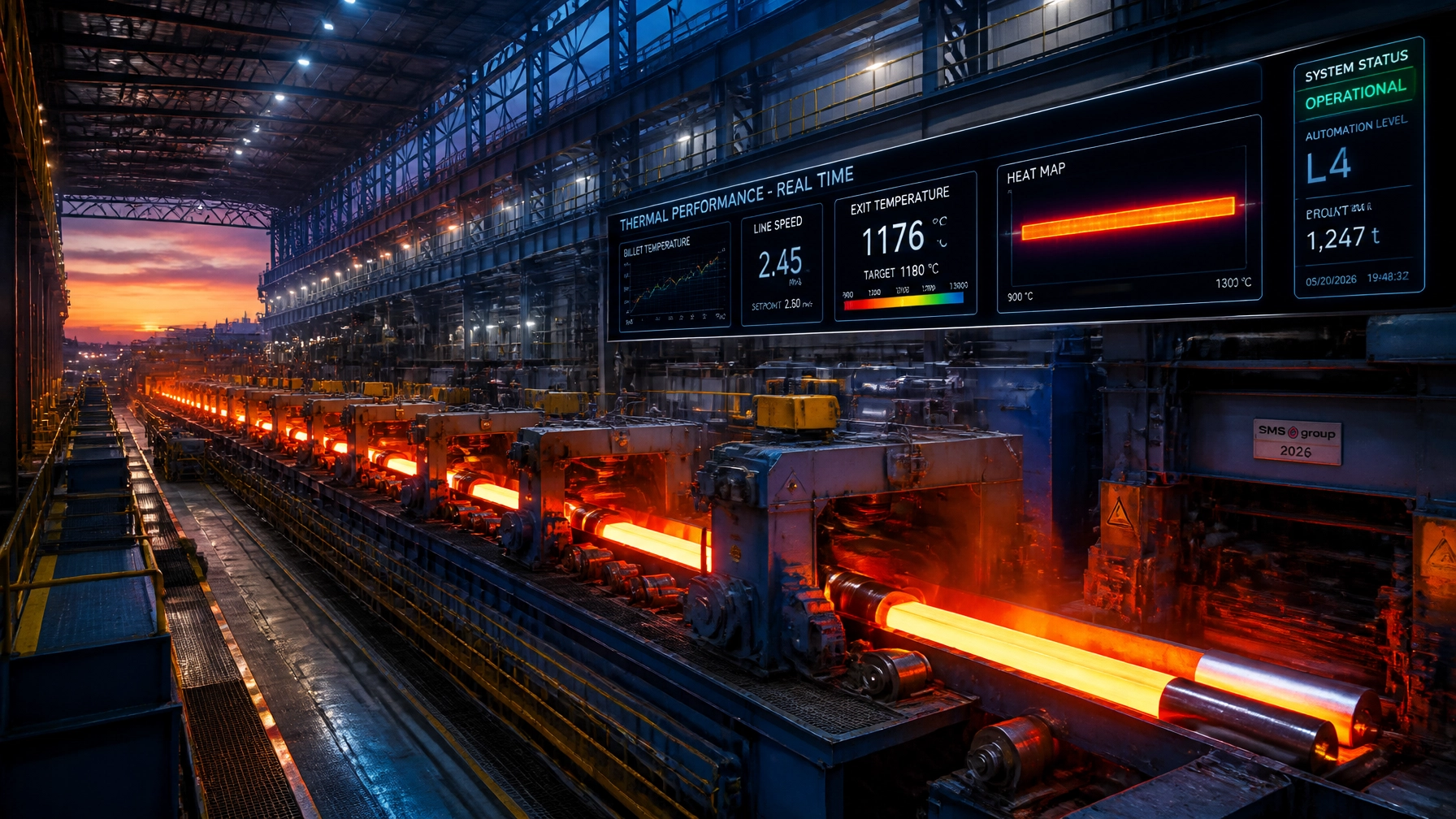
In the steel rolling mill industry, the move toward induction heating for reheating billets and slabs has demonstrated a quantum leap in efficiency. Conventional gas-fired systems typically operate at 45–55% efficiency; however, our latest induction-based melting furnace for steel and reheating platforms achieve benchmarks of 65–75% efficiency. This translates to a reduction in energy intensity of up to 20% per ton of rolled product.
Key Performance Indicators (KPIs) for Modern Rolling Mills
- Temperature Uniformity: ±5°C across the entire cross-section of the billet.
- Ramp-up Time: Reduction by 35% through low-mass refractory linings.
- Carbon Intensity: 0.15 tCO2/t of steel (in hybrid-hydrogen configurations).
Maintenance 4.0: Beyond Reactive Repairs
Downtime in a continuous production environment is the single greatest threat to profitability. A modern industrial furnace manufacturer must provide more than hardware; we provide a lifecycle assurance strategy. Our 2026 maintenance protocols focus on the Wire and cable industry and large-scale steel operations, where unplanned stops can cost upwards of $20,000 per hour.
The foundation of this strategy is the availability of high-precision furnace spare parts. Utilizing the right alloy for heating elements and high-grade ceramic for sensors ensures that the system maintains its "as-built" performance levels throughout its operational life.

Predictive Maintenance Roadmap
- Phase 1: Sensor Integration: Deploying IoT-enabled vibration and thermal sensors across the furnace shell.
- Phase 2: Digital Twin Modeling: Utilizing real-time data to simulate refractory wear and burner efficiency.
- Phase 3: Condition-Based Intervention: Scheduling component replacement based on actual performance degradation rather than arbitrary calendar dates.
Our data indicates that moving from reactive to predictive maintenance increases the Mean Time Between Failures (MTBF) from 4,200 hours to over 7,800 hours: a 42% improvement in operational uptime.
Specialized Solutions for the Circular Economy
As the industry pivots toward sustainability, the demand for high-performance recycling equipment has intensified. The metal recycling furnace is now at the heart of the modern foundry, designed to handle contaminated scrap with minimal metal loss.
Specifically, our aluminum melting furnace designs have been optimized for the 2026 market, featuring advanced dross-reduction technology and automated charging systems. By integrating oxygen-fuel combustion, we have successfully reduced fuel consumption by 15% while increasing the melting rate by 10%.

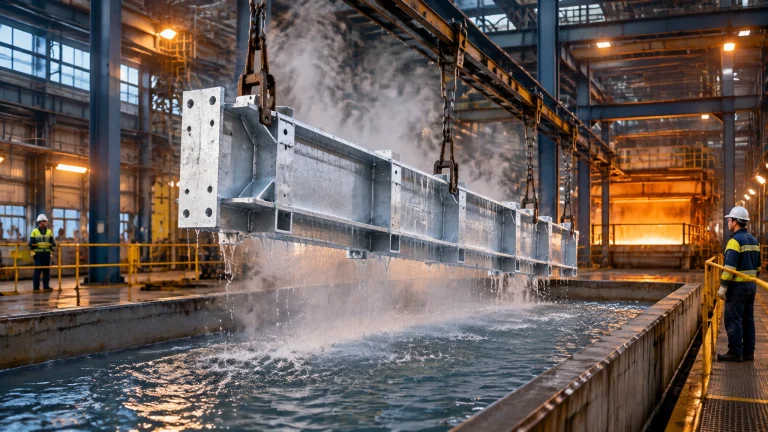
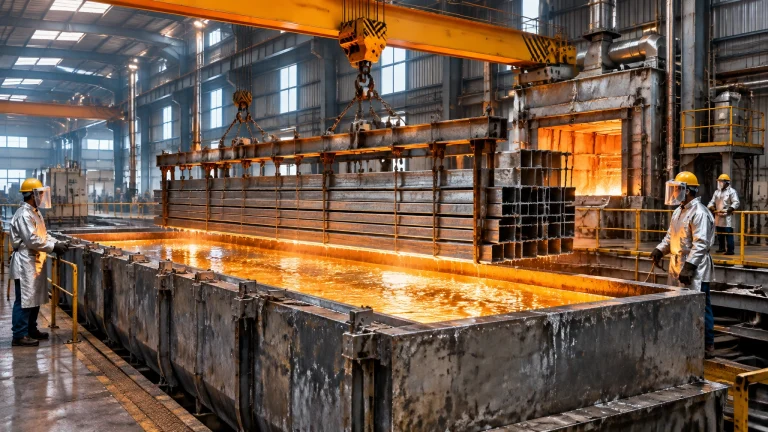
For those in the surface finishing sector, our Hot Dip Galvanizing Plants and Pickling Plants now incorporate closed-loop heat recovery systems. These systems capture waste heat from the furnace exhaust to pre-heat the pickling tanks, effectively "recycling" energy that was previously lost to the atmosphere.
Comparative Analysis: Traditional vs. 2026 Thermal Systems
| Feature | Traditional Systems (Pre-2022) | Continental Furnaces 2026 Edition |
|---|---|---|
| Control Accuracy | Analog / Basic Digital (±15°C) | AI-Driven Predictive (±3°C) |
| Fuel Source | Single Fuel (Gas/Oil) | Multi-Fuel / Hydrogen-Ready / Electric |
| Maintenance | Calendar-Based (Reactive) | IoT-Driven (Predictive) |
| Refractory Life | 3–5 Years | 7–10 Years (Low-Mass High-Alumina) |
| ROI Period | 48–60 Months | 24–36 Months (via Energy Savings) |
Strategic Advancements in Heat Treatment
For the Wire and cable industry, precision is paramount. Our Pit Type Annealing Furnaces and Bell Type Annealing Furnaces have been re-engineered to provide vacuum-tight sealing and inert atmosphere control. This prevents oxidation during the critical cooling phase, ensuring the high-conductivity properties required for next-generation 6G and power transmission infrastructure.

Furthermore, the integration of continuous furnace systems for high-throughput lines allows for seamless transition between different metallurgical recipes, a prerequisite for the agile manufacturing demands of the automotive and aerospace sectors.
The Path Forward: Enduring Partnership
The complexity of modern thermal processing equipment requires more than a vendor-customer relationship; it demands an enduring partnership. At Continental Furnaces, we don't just supply equipment; we consult on the entire thermal ecosystem. Whether you are upgrading a hot dip galvanizing plant or installing a new steel rolling mill, our engineering team provides the technical wisdom gained from over 35 years of industry tenure.

Phase 1: Diagnostic Assessment
We begin with a comprehensive audit of your current thermal intensity and throughput bottlenecks.
Phase 2: Custom Engineering
Our ISO-certified design team develops a solution tailored to your specific metallurgy: from non-ferrous aluminum melting furnace applications to heavy-duty steel processing.
Phase 3: Lifecycle Support
Beyond installation, we provide the furnace spare parts and technical expertise to ensure your facility maintains its competitive advantage well into the 2030s.
Direct Consultation
To ensure your facility is prepared for the regulatory and economic challenges of the coming years, we invite you to consult with our lead engineers. Explore our full range of furnace solutions or visit our blog for more technical updates.
Sustained competitive advantage begins with superior thermal engineering. Contact Continental Furnaces today.