Monday, September 14, 2026 | Afternoon Edition
Industrial furnace performance is entering a decisive technology cycle. Energy cost volatility, tighter emissions expectations, stricter quality requirements, and the demand for traceable production are redefining how thermal equipment is engineered and operated.
The next generation of industrial furnace systems is not simply more powerful. It is more measurable, more adaptive, more energy-efficient, and more tightly integrated with the production line.
For steel, non-ferrous metals, wire, cable, recycling, galvanizing, and precision heat treatment, the 2026 technology update centers on six priorities:
- Closed-loop combustion and atmosphere control
- Verified temperature uniformity
- Advanced refractory and insulation engineering
- IIoT connectivity, digital twins, and AI-assisted control
- Hydrogen-ready and electrified heating architectures
- Waste-heat recovery with measurable energy benchmarks
As an experienced industrial furnace manufacturer, Continental Furnaces approaches these developments as an engineering partnership. The objective is clear: improve yield, reduce fuel consumption, protect product quality, and build lifecycle value into every furnace project.
The 2026 Furnace Engineering Standard
Traditional furnaces often depend on fixed settings, periodic manual inspection, and operator experience. These methods remain useful, but they do not provide the continuous data or adaptive control required by modern plants.
A 2026-ready furnace is engineered around:
- Thermal efficiency of 75–85% or higher, depending on process and recovery configuration
- Work-zone temperature uniformity of approximately ±3–5°C for demanding heat-treatment applications
- Billet and slab discharge variation within approximately ±10°C in optimized steel reheating systems
- 5–15% excess-air control for gas-fired combustion applications
- 15–30% potential fuel reduction through combined burner, sealing, insulation, controls, and heat-recovery upgrades
- Continuous measurement of fuel per tonne, kWh per batch, exhaust temperature, cycle time, yield, scrap, and downtime
These are engineering benchmarks, not universal guarantees. Actual results depend on furnace geometry, material loading, operating temperature, fuel composition, production mix, and maintenance condition. A proper baseline study is therefore the first step toward credible ROI.

Combustion and Atmosphere Control: From Manual Adjustment to Closed Loop
Combustion quality determines far more than fuel consumption. It affects scale formation, surface quality, refractory life, emissions, and temperature uniformity.
Modern combustion packages combine:
- Oxygen-trim control
- Automated air–fuel ratio regulation
- Furnace-pressure control
- Variable-speed combustion-air fans
- Burner-zone balancing
- Exhaust oxygen and temperature monitoring
- Flame supervision and safety interlocks
For carburizing, annealing, bright treatment, and other controlled processes, atmosphere regulation must also monitor oxygen potential, dew point, CO, CO₂, hydrogen, and gas ratios.
The most advanced systems use recipe-based control to adjust atmosphere composition according to load, zone temperature, material grade, and process stage. This reduces operator dependency and helps maintain repeatable metallurgical results.
The business benefit is measurable: better combustion stability reduces fuel waste while atmosphere stability reduces rejection, rework, and surface-quality losses.
Temperature Uniformity and Refractory Engineering
Temperature uniformity is the bridge between furnace design and product quality. A furnace may reach its setpoint while still producing unacceptable variation across the working zone.
A reliable uniformity program includes:
- Multi-point thermocouple mapping
- Calibration across the actual operating range
- Top, bottom, corner, center, front, and rear measurement locations
- Periodic Temperature Uniformity Surveys
- Zone-by-zone burner balancing
- Load-specific recipes
- Continuous monitoring of recovery and soak periods
Refractory engineering is equally important. High-performance insulation, correctly selected hot-face materials, durable hearth systems, and low-infiltration doors reduce heat loss and stabilize the internal thermal profile.
A practical refractory strategy should address:
- Operating temperature and thermal cycling
- Chemical attack from slag, flux, salts, or process gases
- Mechanical impact from loading systems
- Expansion joints and anchoring
- Repairability during planned shutdowns
- Hot-spot detection through thermal imaging
Advanced insulation can reduce wall-related losses by approximately 20–30% compared with older constructions, while improved seals prevent uncontrolled air ingress and atmosphere instability.
IIoT, Digital Twins, and AI-Assisted Process Control
Digitalization is becoming a core engineering layer in thermal processing equipment. It begins with reliable instrumentation and ends with actionable operational intelligence.
An IIoT-enabled furnace can capture:
- Fuel consumption per tonne
- Electricity consumption per batch
- Zone temperature and uniformity
- Atmosphere composition
- Furnace pressure
- Exhaust temperature
- Burner status
- Cycle and holding time
- Alarm history
- Refractory and component condition
- Yield, scrap, dross, and production quality
A digital twin extends this capability by modeling the interaction between temperature, airflow, atmosphere, material loading, and process time. It allows engineers to test recipes, identify bottlenecks, and evaluate retrofit options before making physical changes.
AI-assisted control adds another layer. It can identify drift, recommend setpoint adjustments, flag abnormal burner behavior, and support predictive maintenance. It does not replace process engineers; it gives them faster and more accurate decision support.

Hydrogen-Ready and Electrified Furnace Systems
Decarbonization does not require a single technology pathway. The strongest 2026 projects are designed for fuel flexibility.
Hydrogen-ready engineering may include:
- Burner systems compatible with natural gas–hydrogen blends
- Flame-stability control
- Low-NOx combustion design
- Residual oxygen monitoring
- Hydrogen-compatible piping and safety systems
- Automated fuel-ratio adjustment
- Preheated combustion air from exhaust recovery
Electrification is also expanding, particularly for induction melting, precision heating, and hybrid process lines. In selected melting applications, induction systems can achieve approximately 65–75% efficiency, compared with 45–55% for conventional gas heating, although the comparison depends on system boundaries and electricity generation sources.
A practical plant roadmap may combine:
- Gas or hydrogen combustion for high-load heating
- Electric heating for precision temperature control
- Induction for selected melting stages
- Waste heat for preheating scrap, billets, combustion air, or process water
The correct choice depends on power availability, production profile, temperature requirements, emissions targets, and total cost of ownership.
Application Insights Across Key Industries
Steel Rolling Mill
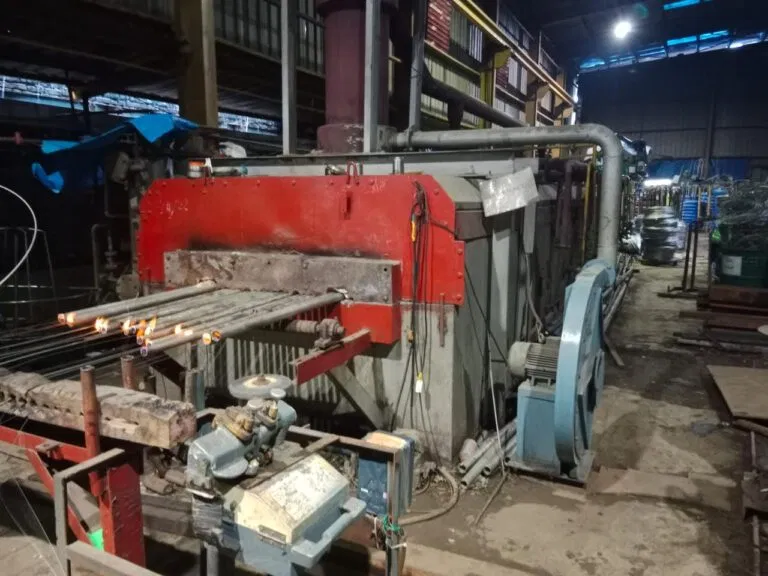
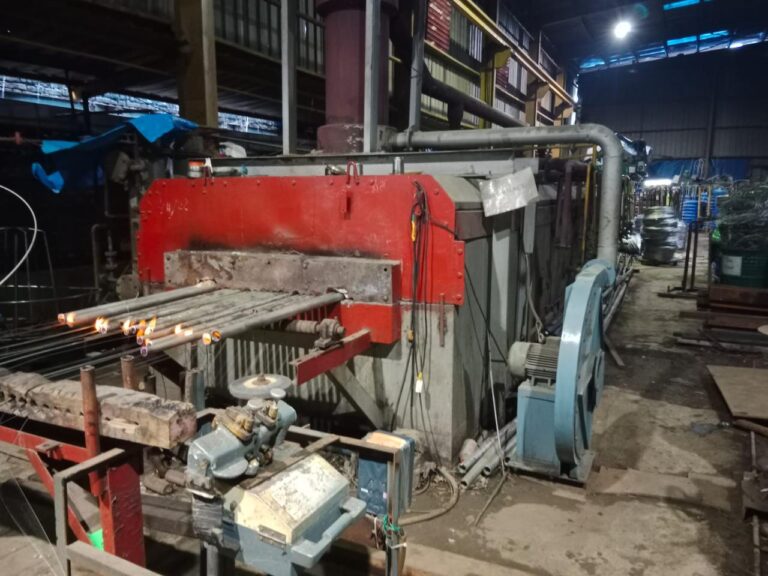
A modern steel rolling mill requires stable billet or slab discharge temperatures, high availability, and minimal scale formation. Zoned reheating, optimized burner placement, automatic charging, discharge pyrometry, and waste-heat recovery improve rolling stability and reduce off-gauge production.
Wire and Cable Industry
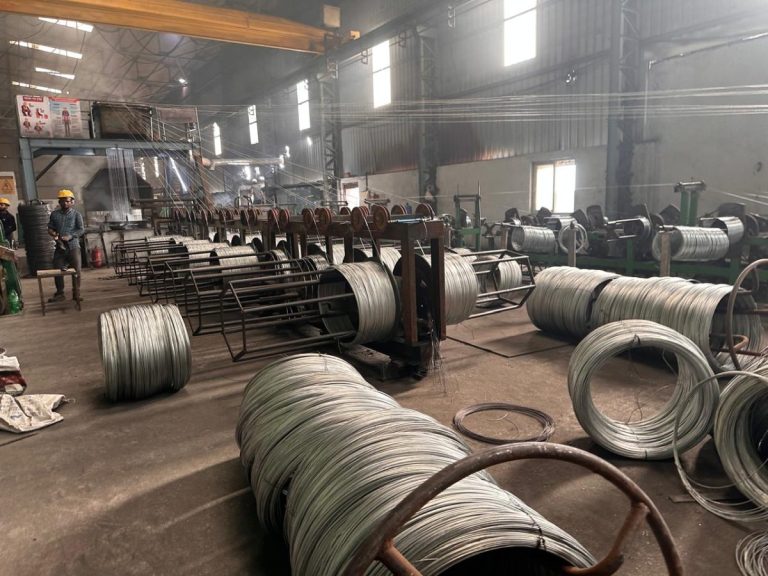
The wire and cable industry depends on continuous annealing, controlled cooling, surface quality, and line synchronization. Atmosphere stability and precise tension management are essential for consistent ductility and conductivity. Continuous annealing systems should also integrate recipe management and real-time alarms for production continuity.
Heat Treatment Furnaces
For hardening, tempering, annealing, normalizing, and stress relieving, heat treatment furnaces must provide repeatable thermal cycles. Uniformity verification, controlled atmosphere options, data logging, and batch traceability are essential for automotive, aerospace, tooling, and precision engineering applications.
Aluminum Melting Furnace Operations
An aluminum melting furnace must manage oxidation, dross formation, melt cleanliness, and energy consumption. Rotary furnace design, efficient burner placement, controlled charging, and exhaust recovery can improve metal yield while supporting circular-economy objectives.
Melting Furnace for Steel Applications
A melting furnace for steel must be engineered around scrap mix, charge density, melting rate, tapping temperature, refractory wear, and fume extraction. Digital energy monitoring is essential for tracking kWh or fuel consumption per tonne and identifying losses between charging and tapping.
Metal Recycling Furnace Lines
A metal recycling furnace converts variable-quality scrap into usable secondary raw material. Effective systems combine sorting, preheating, controlled melting, slag or dross management, emissions control, and material traceability. This approach improves resource utilization and supports the circular economy.

Hot Dip Galvanizing Plants
A hot dip galvanizing plant depends on stable zinc-bath temperature, surface preparation, line speed, and coating consistency. Furnace controls, pickling integration, bath monitoring, and exhaust management directly influence coating quality and operating cost.
Traditional vs 2026-Ready Furnace Technology
| Performance area | Traditional approach | 2026-ready approach |
|---|---|---|
| Control architecture | Fixed settings and manual adjustment | IIoT-connected SCADA, recipe control, and AI-assisted optimization |
| Atmosphere management | Periodic sampling | Closed-loop oxygen, dew-point, pressure, and gas-ratio control |
| Thermal efficiency | Approximately 50–60% in many legacy systems | Approximately 75–85% or higher with optimized recovery |
| Temperature uniformity | Infrequent or unverified | Engineered ±3–5°C work-zone targets where applicable |
| Refractory design | Conventional insulation and reactive repairs | Application-specific refractory, thermal imaging, and planned repair |
| Energy management | Monthly or manual review | Continuous fuel-per-tonne, kWh-per-batch, and exhaust monitoring |
| Decarbonization | Natural gas dependency | Hydrogen-ready, hybrid, and electrified architecture |
| Maintenance | Corrective response | Condition-based planning and strategic spare inventory |
| ROI visibility | Estimated after installation | Baseline, commissioning verification, and lifecycle KPI tracking |
A Maintenance Strategy Aligned with the 2026 Horizon
Advanced technology only delivers value when it remains calibrated, clean, sealed, and supported. The maintenance strategy should therefore evolve with the furnace architecture.
Phase 1: Establish the Baseline
- Record fuel or electricity consumption per tonne
- Verify thermocouple and oxygen-sensor calibration
- Measure exhaust temperature and furnace pressure
- Document refractory hot spots and door leakage
- Review alarms, downtime, and failure history
Phase 2: Protect Critical Assets
- Inspect burners, valves, fans, dampers, and control panels
- Check seals, expansion joints, hearths, and refractory linings
- Maintain calibrated pyrometers and atmosphere probes
- Keep critical furnace spare parts available
- Review cybersecurity and data-backup procedures for connected systems
Phase 3: Optimize and Verify
- Rebalance combustion zones
- Tune oxygen trim and pressure control
- Validate temperature uniformity after major repairs
- Compare actual performance against energy-per-tonne targets
- Use trend data to schedule condition-based interventions
Continental Furnaces supports customers beyond equipment delivery with customized engineering, responsive service, and lifecycle-focused component support.
The Continental Furnaces Partnership
The 2026 furnace is an integrated asset; not an isolated machine. Its value is created through the alignment of furnace design, production requirements, controls, maintenance, energy management, and future expansion.
Continental Furnaces brings more than 35 years of industrial expertise to the design and manufacture of customized industrial furnace systems for steel, non-ferrous metals, recycling, galvanizing, wire, cable, and advanced heat treatment.
Explore our heat treatment furnaces, melting furnaces and recycling projects, and industry applications to evaluate the right technical pathway for your operation.
Now is the time to benchmark your furnace against the 2026 standard. Contact Continental Furnaces for a structured assessment of combustion, temperature uniformity, refractory condition, digital readiness, energy recovery, and future fuel flexibility: and convert advanced furnace engineering into sustained competitive advantage.