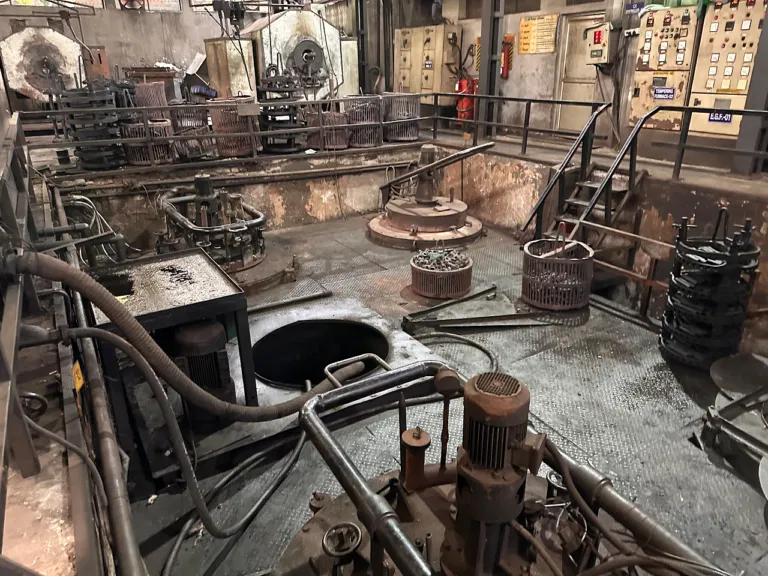
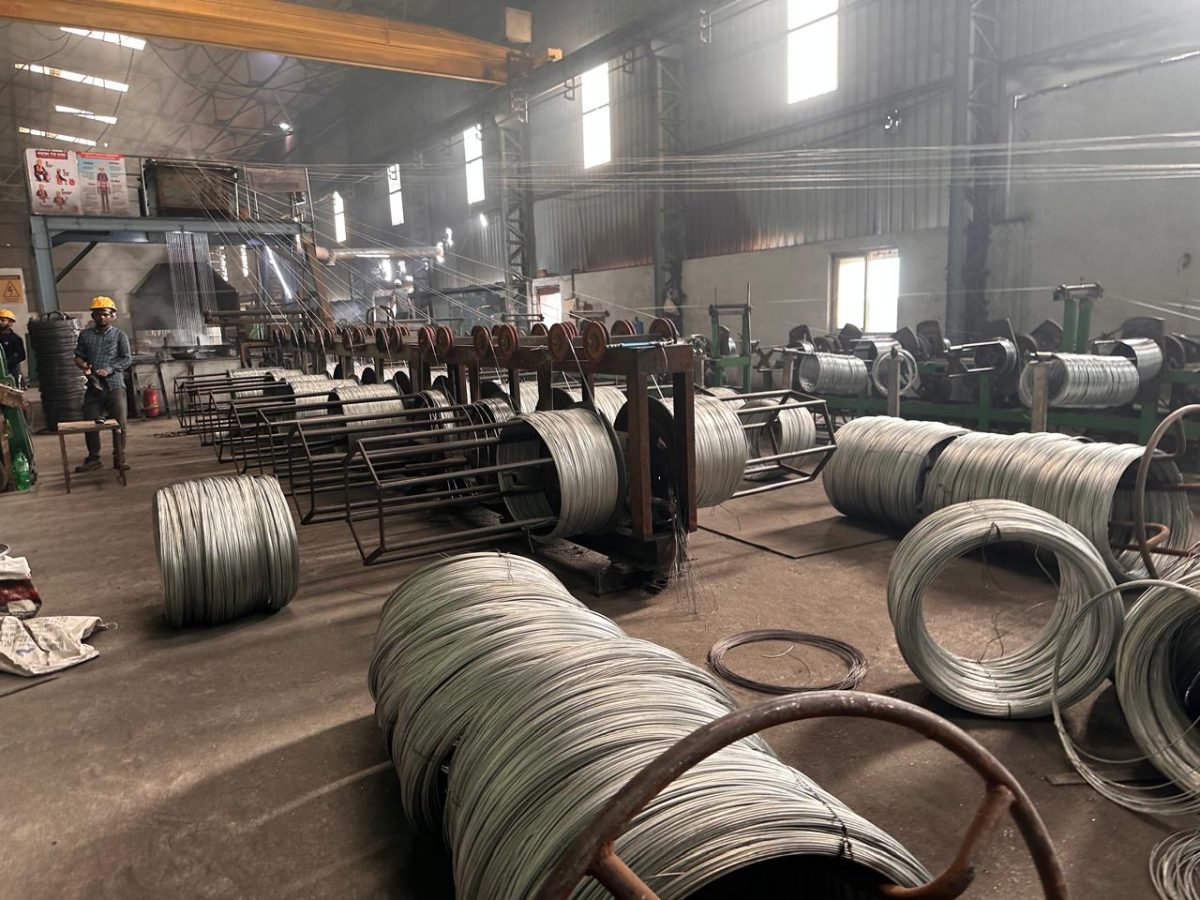
For the wire and cable industry, corrosion protection is no longer a downstream quality function. It is a strategic factor influencing product life, customer acceptance, material yield, energy intensity, and regulatory compliance.
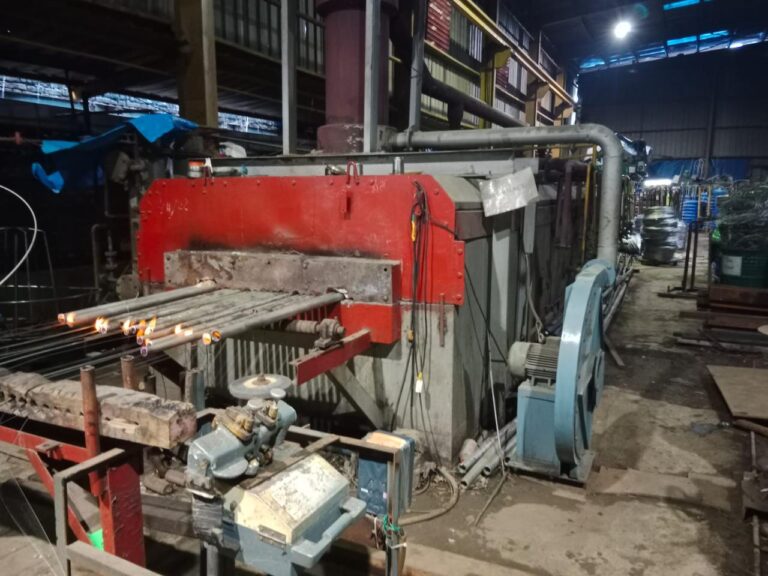
A modern hot dip galvanizing plant must deliver a stable zinc coating while managing thermal losses across pre-treatment, drying, galvanizing, wiping, cooling, and material handling. In 2026, the leading plants are combining high-efficiency burners, zinc-bath thermal management, waste-heat recovery, digital controls, and planned lifecycle maintenance.
This agenda also affects the wider steel supply chain. A steel rolling mill producing wire rod, structural products, or feedstock for cable manufacturing must deliver consistent surface quality and metallurgical properties before galvanizing begins. The result is a connected production system in which thermal processing equipment, pickling plants, galvanizing equipment, and maintenance support work together.
Why galvanizing efficiency matters in 2026
Hot-dip galvanizing typically operates with a molten zinc bath near 445–465°C, with approximately 450°C representing a common operating region. The exact setpoint depends on steel chemistry, zinc-bath composition, line speed, coating specification, and product geometry.
Energy consumption varies significantly between plants. Sector benchmarks commonly range from 300–800 kWh per tonne of galvanized product. Well-optimized facilities using heat recovery, improved insulation, efficient burners, and advanced controls can target approximately 300–400 kWh/t.
The commercial priorities are clear:
- Lower gas or electricity consumption per tonne
- Stable zinc-bath temperature and circulation
- Reduced dross, ash, and zinc loss
- Consistent coating thickness and adhesion
- Lower emissions and improved workplace conditions
- Fewer line stoppages and maintenance interventions
- Stronger lifecycle performance and customer traceability
Energy efficiency is now a coating-quality strategy as well as a cost-reduction strategy.
The thermal chain behind corrosion protection
A galvanizing line does not begin at the zinc bath. Each stage influences final coating performance.
1. Pickling and surface preparation
Pickling removes mill scale, oxides, and contaminants from steel wire or other products before fluxing and immersion. Poor acid control can create inconsistent surface activation, excessive chemical consumption, or coating defects.
Modern pickling integration focuses on:
- Acid concentration and temperature monitoring
- Automated replenishment and dosing
- Fume and mist extraction
- Rinse-water recovery and circulation
- Heat recovery for cleaning and pickling tanks
- Reduced drag-out between process stages
Recovered heat from furnace exhaust or zinc-bath hood systems can be transferred through heat exchangers to preheat water, cleaning solutions, or flux-related process baths.
2. Drying and preheating
Moisture entering the zinc bath creates safety risks and disrupts coating formation. Controlled drying is therefore essential for both productivity and quality.
For continuous wire lines, preheating must be coordinated with line speed, wire diameter, tension, and bath entry conditions. Excessive preheating wastes energy, while insufficient drying increases thermal shock and bath disturbance.
3. Zinc-bath thermal management
The zinc bath must maintain a narrow and stable operating range. Temperature variation causes changes in zinc fluidity, coating growth, dross formation, and coating thickness.
A modern plant should monitor:
- Bath temperature at multiple points
- Heating-zone output
- Zinc level and ingot charging
- Dross and ash generation
- Product entry temperature
- Line speed and immersion time
- Coating thickness and product temperature at exit
Advanced systems target bath fluctuations near ±2°C where the process design supports that level of control. For the wire and cable industry, stable conditions are particularly important because small changes in coating weight can affect flexibility, drawing performance, surface finish, and downstream handling.

Burner efficiency and electrification: the central 2026 decision
Gas-fired heating remains important across galvanizing and upstream thermal operations, but conventional combustion systems often operate with excessive air, poor burner balance, damaged refractory, or uncontrolled furnace pressure.
Efficiency upgrades should include:
- Automated air-to-fuel ratio control
- Oxygen and flue-gas monitoring
- High-velocity or recuperative burners
- Improved furnace insulation
- Low-leakage doors, seals, and covers
- Variable-speed combustion-air fans
- Automatic temperature recipes
- Low-NOx combustion technology
High-efficiency burner upgrades can reduce gas consumption by approximately 10–20%, while combined burner optimization and heat recovery can deliver 8–15% lower energy use in suitable installations. Actual performance depends on furnace condition, throughput, operating hours, and product mix.
Electrification is also becoming a practical option. Electric heating technologies can provide high thermal efficiency and precise control, particularly in applications where grid capacity and electricity cost are favorable. Some studies report direct-emission reductions from approximately 108 kg CO₂/t for conventional gas heating to around 15 kg CO₂/t with electrical heating, subject to the electricity mix and system boundary.
Hybrid gas-electric systems provide a controlled transition by allowing plants to balance:
- Fuel availability
- Electricity tariffs
- Renewable-power integration
- Peak-load requirements
- Emission targets
- Production continuity
Waste-heat recovery turns loss into operating value
Flue gas, furnace enclosures, drying ovens, and extraction systems contain recoverable thermal energy. In a properly engineered plant, this energy can support other process requirements rather than being discharged unused.
Potential applications include:
- Preheating incoming wire or steel products
- Heating pickling and cleaning solutions
- Producing hot water or low-pressure steam
- Preheating combustion air
- Heating flux or drying systems
- Supplying plant space heating
- Supporting nearby production areas
Heat-recovery systems can reduce overall fuel consumption by approximately 20–25% in well-optimized operations. One documented galvanizing application recovered approximately 80% of suitable exhaust heat for process use, with reported payback near five years. Larger, continuously operating plants can achieve stronger economics because their heat sources and demand profiles are more stable.
The correct feasibility study must measure:
- Exhaust temperature and flow
- Oxygen and contaminant levels
- Operating hours
- Available heat sinks
- Heat-exchanger pressure drop
- Corrosion and particulate risks
- Seasonal process demand
- Expected maintenance requirements
Conventional versus modern galvanizing operations
| Performance area | Conventional operation | Modern integrated operation |
|---|---|---|
| Zinc-bath control | Periodic manual checks | Multi-point monitoring and closed-loop control |
| Typical bath stability | Wider thermal fluctuation | Targeted control near ±2°C, application-dependent |
| Specific energy use | Approximately 600–800 kWh/t in less-optimized plants | Target range of 300–400 kWh/t |
| Heating technology | Standard gas burners | Recuperative, regenerative, electric, or hybrid systems |
| Waste heat | Discharged to atmosphere | Reused for air, water, pickling, or preheating |
| Coating control | Manual sampling | Online measurement and recipe-based adjustment |
| Maintenance | Reactive replacement | Planned service and condition-based intervention |
| Environmental performance | Higher fuel use and process waste | Lower emissions, improved water management, and zinc recovery |
These benchmarks are planning references rather than universal guarantees. Each plant requires a heat balance, production review, and equipment condition assessment.
Coating uniformity is a supply-chain advantage
For wire and cable manufacturers, galvanizing consistency affects more than corrosion resistance. It also influences:
- Wire drawing behaviour
- Surface friction
- Adhesion and finish
- Flexibility and bend performance
- Dimensional consistency
- Customer inspection results
- Rework and rejection rates
Coating uniformity depends on the complete process window:
- Steel chemistry and surface condition
- Pickling effectiveness
- Flux concentration and cleanliness
- Zinc-bath temperature
- Bath chemistry and circulation
- Line speed and immersion time
- Wiping or coating-control settings
- Cooling and handling conditions
A steel rolling mill supplying galvanized wire rod must therefore coordinate scale control, surface quality, dimensional tolerances, and dispatch scheduling with the galvanizing operation. Upstream instability creates downstream energy consumption and quality losses.
A practical modernization roadmap
Phase 1: Assessment and planning
Establish a verified baseline before approving capital expenditure.
Measure:
- kWh/t or fuel consumption per tonne
- Zinc-bath temperatures and deviations
- Line speed and throughput
- Coating thickness variation
- Dross and ash generation
- Pickling chemical consumption
- Exhaust temperature and heat-recovery potential
- Unplanned downtime and maintenance cost
Phase 2: Process optimization
Implement low-capital improvements first:
- Calibrate temperature and flow sensors
- Correct burner air-fuel ratios
- Repair furnace covers, doors, and refractory
- Optimize bath setpoints
- Reduce unnecessary holding and standby operation
- Improve pickling and rinsing control
- Synchronize wire speed with thermal conditions
Phase 3: Thermal retrofit and integration
Evaluate:
- High-efficiency burners
- Electric or hybrid zinc-bath heating
- Flue-gas heat exchangers
- Preheating systems
- Improved extraction and fume control
- Automated coating-thickness monitoring
- PLC, SCADA, and production-data integration
Phase 4: Lifecycle performance
A modernization project is incomplete without a service strategy. Critical furnace spare parts should be identified before commissioning and stocked according to lead time and failure risk.
Relevant spares and accessories may include:
- Burners, nozzles, and control valves
- Thermocouples and temperature sensors
- Heating elements
- Flame scanners and ignition assemblies
- Refractory components and seals
- Fans, drives, and variable-frequency drives
- PLC modules, relays, and safety components
- Pumps, valves, and extraction parts
Continental Furnaces supports lifecycle planning through its furnace spares and accessories portfolio and modernization approach.
Continental Furnaces: engineering for enduring performance
The 2026 corrosion-protection agenda is defined by energy efficiency, coating uniformity, circular-economy thinking, digital visibility, and uptime.
As an experienced industrial furnace manufacturer, Continental Furnaces designs customized industrial furnace systems for galvanizing, pickling, heat treatment, melting, recycling, and wire-processing applications. Our capabilities also extend across heat treatment furnaces, a melting furnace for steel, an aluminum melting furnace, and a metal recycling furnace, allowing customers to coordinate thermal assets across the wider manufacturing site.
With more than 35 years of expertise, ISO-certified quality, energy-efficient engineering, and prompt service support, Continental Furnaces approaches every project as an enduring partnership: not a one-time equipment transaction.
Review our hot-dip galvanizing plant solutions, explore our broader industrial applications, and contact Continental Furnaces to define your plant-specific energy and modernization roadmap.
Make thermal efficiency, corrosion protection, and lifecycle reliability the foundation of your sustained competitive advantage.