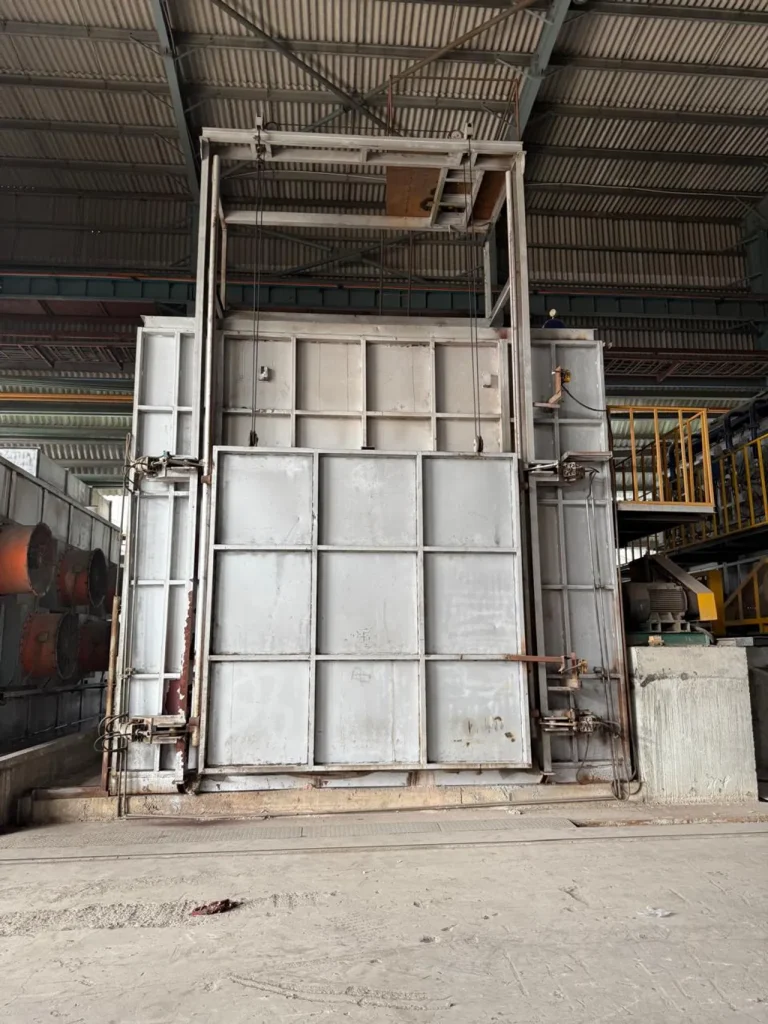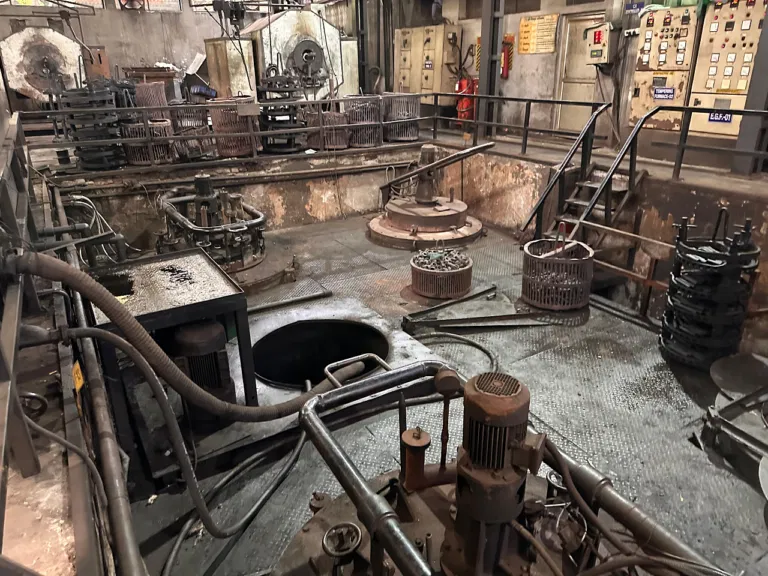
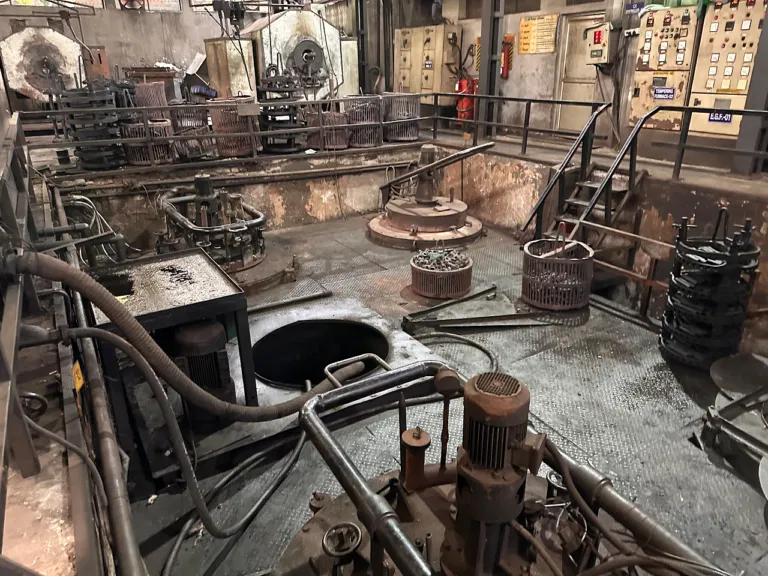
Thermal processing assets operate at the intersection of metallurgy, energy management, production continuity, and regulatory compliance. A furnace that loses temperature uniformity, develops refractory damage, or suffers an avoidable burner failure can reduce yield across an entire plant.
For a steel rolling mill, wire-processing line, foundry, or recycling facility, maintenance is no longer a secondary engineering activity. It is a direct determinant of throughput, energy consumption, product quality, and profitability.
In 2026, the leading maintenance model combines preventive discipline, predictive analytics, critical spares planning, and modernization-ready controls. Continental Furnaces applies this model across customized industrial furnace systems, supported by more than 35 years of engineering expertise, ISO-certified quality practices, and prompt service designed to minimize downtime.
Why Furnace Maintenance Has Become a Strategic Priority
Traditional maintenance schedules are based primarily on operating hours. This approach remains useful for routine inspections, but it does not identify every developing failure. Refractory hot spots, thermocouple drift, fan vibration, burner imbalance, and insulation deterioration can progress between scheduled shutdowns.
Modern maintenance programs therefore monitor the condition of the complete thermal process:
- Temperature uniformity across all zones
- Burner flame stability and air-to-fuel ratio
- Furnace pressure and exhaust performance
- Refractory surface temperature
- Electrical current and motor vibration
- Cooling-water flow and temperature
- Door, seal, and atmosphere integrity
- Energy consumption per tonne processed
- Product rejection, scale formation, and metallurgical variation
Industry research increasingly supports the use of IIoT sensors, machine learning, and condition monitoring for industrial assets. Resources from ABB on AI-enabled predictive maintenance and MDPI Sensors research illustrate how connected data can support earlier intervention and more reliable asset decisions.
The Three-Layer Maintenance Strategy
A high-performing furnace maintenance program does not replace preventive maintenance with software. It integrates three complementary layers.
1. Preventive Maintenance: Protecting the Baseline
Preventive maintenance establishes the mechanical and thermal foundation of reliability. Its purpose is to identify wear before it becomes a production interruption.
A practical preventive schedule should include:
- Daily inspection of flame patterns, unusual noise, leaks, and abnormal temperature readings
- Weekly review of burner condition, control alarms, fan performance, and door seals
- Monthly calibration checks for thermocouples, pyrometers, pressure sensors, and flow meters
- Quarterly inspection of refractory joints, insulation, hearths, rollers, and charging systems
- Planned shutdown inspection of electrical panels, PLC hardware, gas trains, safety interlocks, and exhaust systems
- Annual review of thermal uniformity, energy intensity, emissions, and process recipes
For heat treatment furnaces, temperature uniformity and recipe repeatability are central. For a melting furnace, refractory integrity, burner performance, charging systems, and bath-temperature measurement require greater emphasis.
2. Predictive Maintenance: Acting Before Failure
Predictive maintenance uses real-time or periodic condition data to identify deterioration before a component reaches functional failure.
Typical warning indicators include:
- A gradual increase in fan vibration
- Rising flue-gas temperature at a constant production rate
- Increasing fuel consumption per tonne
- Repeated deviation in one furnace zone
- Higher motor current during charging or material transfer
- Refractory exterior temperatures exceeding the established baseline
- Longer heat-up times or slower melting cycles
- Repeated PLC, thermocouple, or burner-control alarms
A connected system can route alerts into SCADA, a maintenance dashboard, or a computerized maintenance management system. This converts raw data into a planned work order, a spare-parts requirement, and a defined maintenance window.
The objective is not to collect data for its own sake. The objective is to protect production.
3. Spares Management: Turning Response Time into Competitive Advantage
A furnace can be technically repairable and still remain idle if the required component is unavailable. Effective spares management therefore forms a critical part of uptime strategy.
Continental Furnaces’ furnace spares and accessories range addresses components such as heating elements, refractory materials, and other replacement requirements across industrial furnace applications.
A critical-spares register should classify parts according to:
- Failure probability
- Lead time
- Safety or compliance impact
- Effect on production capacity
- Availability of an approved substitute
- Storage and shelf-life requirements
- Compatibility with the installed furnace design
The most important items often include:
- Thermocouples and temperature sensors
- Burner components and ignition assemblies
- Solenoid valves, regulators, and flame scanners
- Heating elements and electrical contactors
- PLC modules, relays, and control cards
- Door seals, refractory shapes, and insulation
- Fan bearings, belts, couplings, and motors
- Hydraulic or pneumatic components
- Charging, transfer, and extraction mechanisms
A planned spare is a maintenance asset. An emergency spare is a downtime expense.

Maintenance Technology: Traditional Versus 2026-Ready
| Maintenance factor | Traditional approach | 2026-ready approach |
|---|---|---|
| Inspection method | Periodic manual checks | Manual checks combined with sensors and condition monitoring |
| Failure response | Repair after breakdown | Planned intervention based on degradation trends |
| Temperature control | Fixed setpoints | Recipe-based, zone-level control with deviation alerts |
| Energy management | Monthly utility review | Energy per tonne tracked by batch, grade, or product |
| Spare-parts planning | Reactive purchasing | Criticality-based inventory and lead-time planning |
| Data management | Operator logbooks | SCADA, CMMS, dashboards, and historical trends |
| Refractory management | Visual inspection during shutdown | Thermal imaging, heat-loss trending, and planned repair |
| Business impact | Unplanned stoppage | Higher availability, lower scrap, and controlled maintenance cost |
Modern systems can deliver engineering targets such as 20–35% lower fuel consumption through effective waste-heat recovery, while regenerative designs may reach 85–92% thermal efficiency under suitable operating conditions. These figures are not universal guarantees; they are design and optimization benchmarks that must be validated against charge material, throughput, temperature, fuel, furnace configuration, and operating discipline.
The 2026 Technology Horizon
Smarter Combustion and Energy Recovery
The next generation of thermal processing equipment will increasingly combine:
- Automated air-to-fuel ratio control
- Oxygen and furnace-pressure monitoring
- Variable-speed combustion-air fans
- Low-NOx burner technology
- Recuperative or regenerative waste-heat systems
- High-performance refractory and insulation
- Automated billet, slab, or product-temperature measurement
- Flue-gas monitoring and energy dashboards
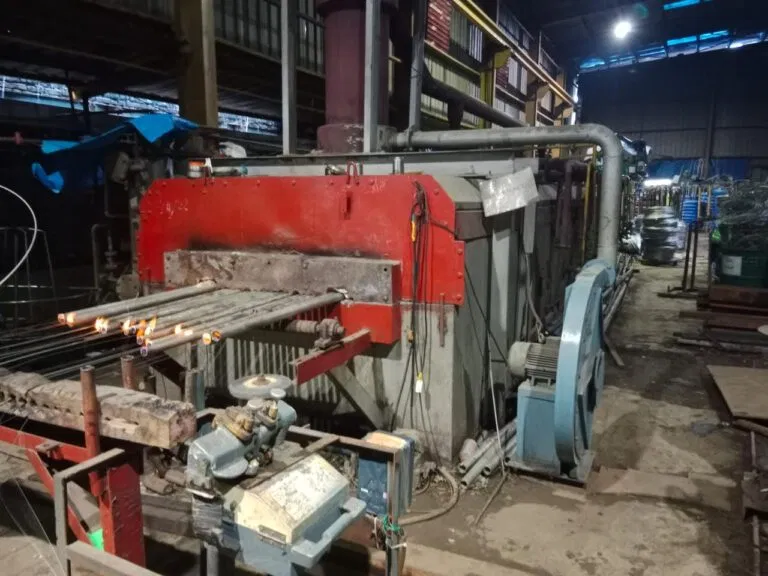
These technologies are particularly valuable in a reheating furnace serving a steel rolling mill, where a small temperature or timing deviation can affect rolling stability, surface quality, and downstream yield.
Digital Twins and Thermal Asset Analytics
Digital twins create a structured digital representation of the furnace, process conditions, maintenance history, and performance trends. In practical terms, this allows engineering teams to compare current behavior with a known healthy baseline.
Applications include:
- Estimating refractory remaining useful life
- Identifying burner imbalance
- Predicting fan or motor degradation
- Simulating production recipes
- Testing energy-saving modifications before installation
- Comparing retrofit economics against complete replacement
The broader movement toward performance intelligence is explored by Hatch in its furnace data analysis guidance.
Decarbonization-Ready Furnace Systems
The 2026 horizon also places sustainability at the center of furnace engineering. Plants are evaluating:
- Hydrogen-ready combustion systems
- Electrification for suitable melting and heating applications
- Oxy-fuel or hybrid combustion
- Waste-heat recovery
- Hot charging and direct rolling
- Lower-carbon production scheduling
- Improved scrap utilization through the circular economy
A modern aluminum melting furnace or metal recycling furnace must therefore be judged on more than melting capacity. Energy per tonne, metal recovery, dross generation, emissions, and compatibility with variable scrap feedstock are equally important.
For steel applications, selecting the right melting furnace for steel requires close evaluation of charge chemistry, output requirements, refractory performance, power or fuel availability, and integration with casting or rolling operations.

A Practical Maintenance and Modernization Roadmap
Phase 1: Assessment and Planning
Begin with a complete asset and process audit.
Document:
- Furnace age, design, and operating hours
- Current throughput and cycle times
- Energy consumption per tonne
- Frequent failure points
- Product rejection and quality deviations
- Existing sensors and automation
- Critical spare-parts exposure
- Compliance and emissions requirements
Phase 2: Baseline and Instrumentation
Establish reliable baseline data before making major changes.
Measure:
- Zone temperature deviation
- Heat-up and soak time
- Fuel or electrical consumption
- Exhaust temperature
- Furnace pressure
- Cooling-water performance
- Vibration and motor current
- Refractory exterior temperature
Phase 3: Targeted Reliability Improvements
Prioritize improvements that protect both uptime and yield:
- Repair leaking doors and degraded seals
- Recalibrate temperature instruments
- Balance burners and combustion air
- Replace damaged refractory
- Improve insulation
- Upgrade weak control components
- Standardize inspection and reporting
- Create a minimum stock of critical furnace spare parts
Phase 4: Digital Integration
Connect validated signals to the plant’s control and maintenance architecture.
- Integrate SCADA data with CMMS or EAM systems
- Set alarm thresholds based on operating conditions
- Build trend dashboards for energy and reliability
- Create automatic work orders for critical deviations
- Train operators to interpret early-warning indicators
Phase 5: Continuous Improvement
Review performance every month using defined KPIs:
- Availability percentage
- Mean time between failures
- Mean time to repair
- Energy per tonne
- Scrap and rejection rate
- Maintenance cost per operating hour
- Planned versus emergency maintenance ratio
- Critical-spares service level
Continental Furnaces: Engineering for Lifecycle Performance
Continental Furnaces is a leading industrial furnace manufacturer delivering customized solutions for heat treatment, melting, recycling, galvanizing, pickling, reheating, wire processing, and rolling mill applications.
Our experience covers demanding sectors including steel, automotive, aerospace, foundry, recycling, and the wire and cable industry. From a continuous annealing furnace to a hot dip galvanizing plant, each system is engineered around the customer’s component, charge, throughput, operating temperature, fuel, plant layout, and maintenance requirements.
Our lifecycle support includes:
- Design and consultation
- Detailed engineering
- Fabrication and refractory work
- Erection and commissioning
- PLC and automation integration
- Operator training
- Preventive maintenance
- Refurbishment and upgrades
- Responsive furnace spare-parts support
Explore Continental Furnaces’ heat treatment furnaces, melting furnaces and recycling projects, and broader industrial furnace systems. Our ISO-certified quality approach, 35+ years of expertise, and prompt service model are built around one objective: sustained production performance.
Protect Performance Before It Becomes a Production Problem
Maintenance is now an essential part of furnace profitability. Predictive analytics, preventive discipline, energy optimization, and spares readiness create a quantum leap in reliability when implemented as one coordinated strategy.
Do not wait for a refractory failure, burner trip, or obsolete control component to expose the weaknesses in your thermal processing line. Contact Continental Furnaces for a structured assessment of your furnace assets, maintenance risks, modernization opportunities, and 2026 technology roadmap.
Consult now and convert thermal reliability into sustained competitive advantage.