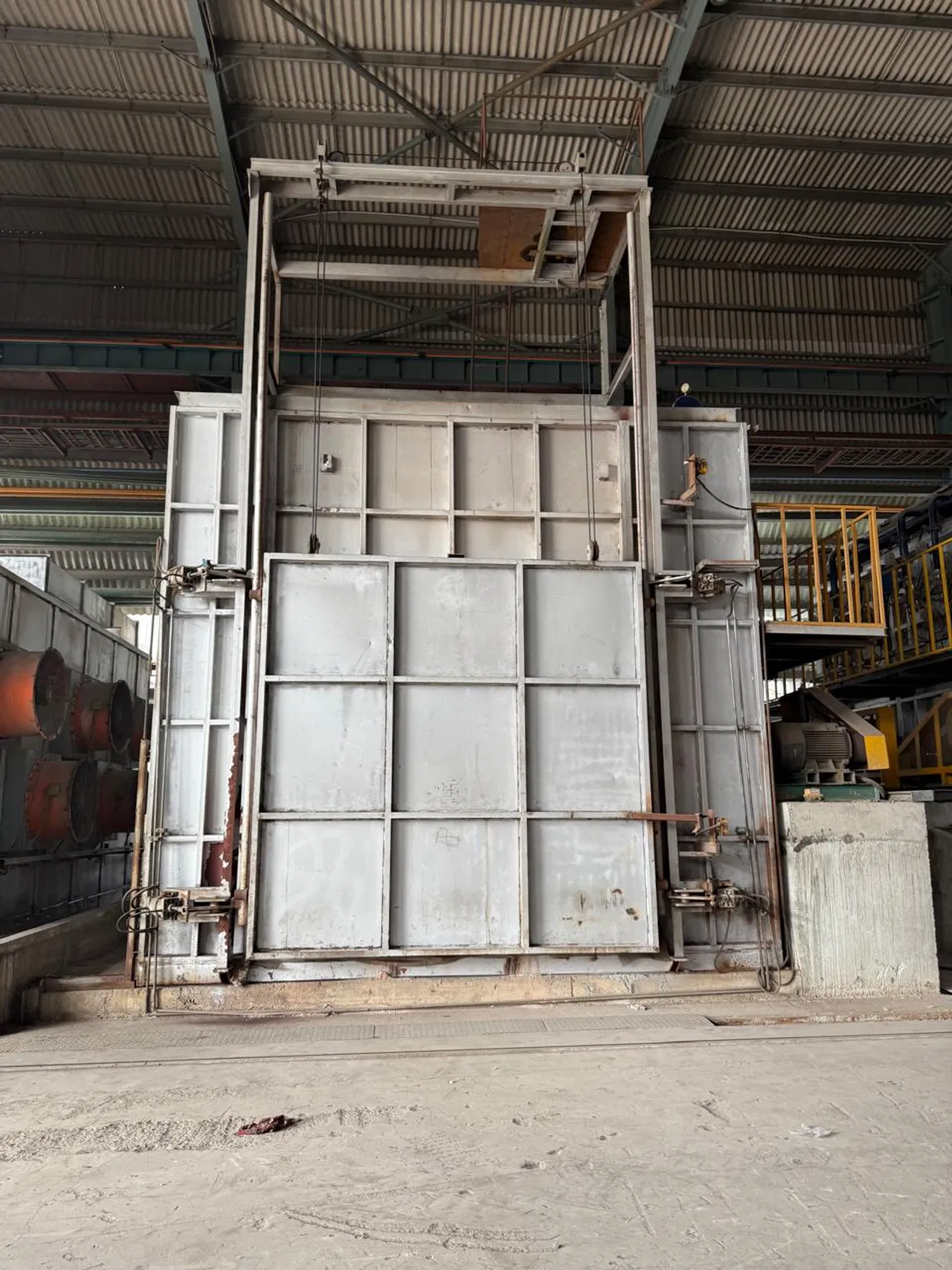
Continental Furnaces Industrial Insights | Morning Edition | September 2026
For plant heads, operations directors, and technical decision-makers, the 2026 energy-efficiency agenda is clear: thermal performance has become a direct determinant of profitability, yield, compliance, and operational resilience.
There is no single global furnace mandate. Requirements vary by region, industry classification, and plant energy consumption. However, the direction is consistent. Energy audits, carbon reduction targets, tighter operating benchmarks, electrification, waste-heat recovery, and intelligent controls are transforming the way industrial facilities evaluate thermal assets.
For every steel rolling mill, wire drawing line, foundry, galvanizing operation, and recycling plant, modern heat treatment furnaces are no longer isolated machines. They are the central components of an integrated thermal processing ecosystem.
The 2026 Energy Efficiency Mandate: What Industrial Plants Must Understand
The revised EU Energy Efficiency Directive requires large energy-consuming enterprises to adopt a more systematic approach to energy management.
From 2026 onward, EU companies consuming more than 10 terajoules of energy annually are required to conduct regular energy audits unless they operate a certified energy-management system. Enterprises exceeding 85 terajoules annually face stronger energy-management obligations.
Other industrial regions are also increasing pressure on energy-intensive operations through:
- Specific energy consumption targets
- Mandatory equipment upgrades
- Energy audits and reporting
- Electricity surcharges for inefficient assets
- Carbon-reduction programs
- Incentives for electrification and waste-heat recovery
- Tighter emissions and combustion-control requirements
For steel, non-ferrous metals, and the wire and cable industry, the commercial implication is decisive: furnace efficiency must be measured in GJ/t, kWh/t, material yield, cycle time, and downtime exposure.
Why Precision Thermal Processing Is the Backbone of Efficient Steel Manufacturing
A furnace consumes energy, but the process determines whether that energy becomes productive heat or avoidable loss.
Modern thermal processing equipment must deliver:
- Stable and uniform temperature distribution
- Repeatable heating and soaking profiles
- Controlled atmosphere where required
- Low heat loss through insulation and sealing
- Automated combustion and air-fuel management
- Accurate material tracking
- Minimal oxidation and scale formation
- Integration with plant-level production data
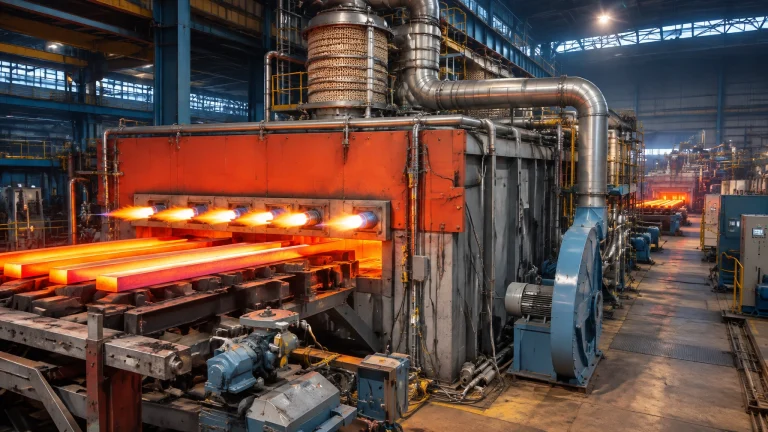
For many steel grades, reheating temperatures fall within approximately 1,100°C to 1,250°C, while hot charging from continuous casting can introduce material at approximately 600°C to 1,000°C, depending on the grade, transfer distance, and production route.
This creates a major efficiency opportunity. A well-designed hot-charging and direct-rolling strategy can reduce reheating fuel demand by approximately 15–30% in suitable installations, while also reducing scale formation and improving material yield.
The principle extends beyond reheating. Properly engineered heat treatment furnaces can reduce rework by delivering the metallurgical consistency required for hardness, ductility, tensile strength, and dimensional stability.

Application Spotlight 1: Steel Rolling Mill Efficiency
A modern steel rolling mill must manage the entire thermal route, from melting and casting to reheating, rolling, cooling, and finishing.
The most effective efficiency improvements include:
1. Hot charging and direct rolling
Avoiding unnecessary cooling and reheating can deliver:
- 15–30% lower reheating fuel demand
- Approximately 0.3–1.0 GJ/t energy savings, depending on plant configuration
- Lower oxidation and scale losses
- Shorter furnace residence time
- Improved throughput and yield
The hot charging and direct rolling approach requires coordination between the caster, transfer system, furnace, and rolling schedule. It is a process-integration decision, not simply a furnace replacement.
2. High-efficiency combustion
A modern furnace should continuously monitor:
- Furnace pressure
- Oxygen concentration
- Zone temperatures
- Fuel flow
- Burner status
- Flue-gas temperature
- Discharge temperature
Recuperative or regenerative burner systems can deliver approximately 10–20% fuel savings in suitable applications. Greater reductions are possible where an existing furnace suffers from excessive air, damaged refractory, uncontrolled infiltration, or poor burner balance.
3. Waste-heat recovery
Exhaust gases often leave the furnace at several hundred degrees Celsius. Recoverable heat can be used for:
- Combustion-air preheating
- Billet or scrap preheating
- Process-water heating
- Steam generation
- Adjacent plant operations
Projects combining combustion control, improved refractory, sealing, and heat recovery can achieve approximately 0.3–0.5 GJ/t savings, with indicative payback periods of 18 months to four years, depending on energy prices and operating hours.
Application Spotlight 2: Wire and Cable Industry
The wire and cable industry requires precise, repeatable thermal cycles. Inconsistent heating can affect conductivity, ductility, tensile performance, surface quality, and downstream drawing behaviour.
Typical priorities include:
- Continuous annealing
- Controlled cooling
- Atmosphere management
- Stable line speed
- Low oxidation
- Accurate temperature profiling
- Automated coil and wire handling
For continuous wire processing, the furnace must be designed around wire diameter, material grade, throughput, line speed, residence time, atmosphere, and cooling requirements.
A connected furnace system can record energy consumption per tonne, temperature deviation by zone, line speed, product recipe, and downtime events. This data provides the foundation for reducing energy intensity while protecting product quality.
The Integrated Thermal Processing Ecosystem
Energy efficiency improves substantially when equipment is designed as a connected production ecosystem rather than purchased as separate assets.
A complete industrial solution may include:
- A melting furnace for steel or non-ferrous alloys
- Continuous casting and transfer systems
- Reheating and equalization furnaces
- Precision heat treatment furnaces
- A hot dip galvanizing plant
- Pickling and surface-preparation systems
- An aluminum melting furnace
- A metal recycling furnace
- Automation, instrumentation, and energy monitoring
- Genuine furnace spare parts and lifecycle support
This integrated approach reduces duplicated handling, improves scheduling, and enables energy recovery between connected operations. It also supports the Circular Economy by increasing the productive use of scrap and recovered metals.
Continental Furnaces provides melting furnaces and recycling projects for efficient melting, material recovery, and customized metal-processing applications.
Traditional Versus Modern Furnace Operations
| Performance metric | Traditional operation | Modern integrated operation |
|---|---|---|
| Temperature monitoring | Periodic manual checks | Continuous sensor-based monitoring |
| Reheating fuel demand | Baseline | 15–30% lower with hot charging where suitable |
| Burner control | Manual or fixed settings | Automated air-fuel and oxygen control |
| Exhaust energy | Frequently lost | Recovered for air, material, or water heating |
| Maintenance approach | Reactive | Predictive and condition-based |
| Labour requirement | High manual intervention | Automated loading, tracking, and alarms |
| Downtime response | Unplanned stoppage | Critical spares and predictive alerts |
| Indicative retrofit payback | Not applicable | Approximately 1.5–4 years, site-dependent |
These are engineering benchmarks rather than universal guarantees. Actual results depend on furnace condition, product mix, utilization, energy pricing, operating hours, and plant integration.

Industry 4.0 and Furnace Performance
Industry 4.0 converts furnace data into operating intelligence.
A modern industrial furnace system should measure:
- GJ/t and kWh/t by product and shift
- Zone temperatures and discharge temperature
- Fuel flow and oxygen concentration
- Furnace pressure
- Burner and fan status
- Refractory hot spots
- Door leakage
- Scale formation
- Product yield
- Cycle time and downtime
When furnace data is connected to production scheduling and MES platforms, plant teams can compare performance by grade, shift, operator, recipe, and campaign.
Digital monitoring also strengthens regulatory compliance. Energy audits become more accurate, and technical directors can prioritize capital projects using measured losses rather than assumptions.
A Four-Phase 2026 Modernization Roadmap
Phase 1: Assessment and planning : 0 to 4 weeks
Establish a verified baseline covering:
- Current GJ/t and kWh/t
- Fuel and electricity consumption
- Charging and discharge temperatures
- Exhaust temperature and oxygen level
- Furnace residence time
- Material yield and scale loss
- Downtime and restart frequency
- Existing PLC, SCADA, and MES capability
Phase 2: Operational optimization : 1 to 3 months
Implement low-capital improvements:
- Calibrate sensors
- Balance burners
- Reduce excess air
- Correct furnace pressure
- Repair doors and seals
- Improve furnace recipes
- Eliminate unnecessary holding
- Synchronize caster and rolling schedules
These measures can produce payback in approximately 6–18 months when avoidable losses are significant.
Phase 3: Thermal retrofit : 3 to 12 months
Evaluate:
- Recuperative or regenerative burners
- Variable-speed combustion-air fans
- Refractory and insulation upgrades
- Exhaust heat recovery
- Automated temperature measurement
- Modern safety and control systems
- Hydrogen-ready gas trains
- Electric or hybrid heating options
Phase 4: Full process integration : 12 to 36 months
Integrate:
- Melting and casting
- Hot charging
- Insulated transfer routes
- Reheating
- Rolling
- Heat treatment
- Galvanizing
- Recycling
- Production planning and predictive maintenance
Genuine Furnace Spare Parts Protect Efficiency and Uptime
A furnace cannot remain efficient when critical components are degraded or incorrectly matched.
Genuine furnace spare parts support:
- Correct burner performance
- Accurate temperature measurement
- Reliable flame detection
- Safe combustion control
- Stable furnace pressure
- Proper insulation and sealing
- Faster maintenance response
- Lower risk of unplanned downtime
Critical inventories should include thermocouples, flame scanners, ignition electrodes, burner nozzles, control valves, PLC modules, safety relays, refractory components, door seals, bearings, fans, and variable-frequency-drive components.
Continental Furnaces provides furnace spares and accessories for industrial furnaces, heat treatment systems, melting equipment, and related thermal processing lines.
Continental Furnaces: An Enduring Engineering Partnership
The 2026 energy-efficiency mandate is not a single equipment purchase. It is a long-term modernization program covering energy, production, quality, maintenance, and compliance.
With 35+ years of expertise, customized engineering, energy-efficient technology, ISO-certified quality, and responsive service, Continental Furnaces supports customers across steel, non-ferrous metals, recycling, galvanizing, heat treatment, and the wire and cable industry.
As an experienced industrial furnace manufacturer, Continental Furnaces designs complete thermal processing solutions, including:
- Heat treatment furnaces
- Steel and non-ferrous melting systems
- Aluminum melting furnace solutions
- Metal recycling furnace projects
- Hot dip galvanizing plant equipment
- Pickling plants
- Industrial furnace systems
- Furnace spare parts and lifecycle support
The winning strategy for 2026 is decisive:
- Measure the baseline
- Optimize combustion
- Maximize hot charging
- Recover waste heat
- Electrify where technically and commercially appropriate
- Connect thermal data with production planning
- Protect uptime with genuine furnace spare parts
Contact Continental Furnaces to develop a plant-specific thermal efficiency roadmap and take the next strategic step toward sustained competitive advantage.