Process heat is among the hardest parts of a steel plant’s carbon problem, roughly a third of the challenge in many decarbonisation roadmaps. Furnaces installed decades ago now operate in a market shaped by carbon costs, disclosure requirements and changing energy supply. Hydrogen combustion, carbon capture on furnace flue gas and hybrid gas/electric retrofits are no longer just concepts: industrial demonstrations and engineering studies are testing all three.
The decision is not simply which technology to buy. It is how to sequence options without closing off future pathways. A fuel-flexible furnace, designed with suitable instrumentation and controls, preserves choices and can limit later retrofit costs. A furnace locked to one fuel may inherit the pathway that future prices or regulation force on it.
Benchmark caveat: All figures in this article are indicative benchmarks drawn from published studies, demonstration reports, supplier claims and regulatory references. They vary by furnace type, load, fuel, geometry, controls and jurisdiction; they are not site guarantees or quotations.
The Decarbonisation Menu: Three Pathways, One Decision Framework
Fuel switching: hydrogen blending
Hydrogen’s laminar flame speed can be roughly three times that of natural gas under relevant conditions, while its volumetric energy density is about one-third. Blending therefore changes fuel interchangeability, including the Wobbe index, flame stability and NOx behaviour. The 2025 flashback study in Scientific Reports and a Graz University of Technology blend assessment reinforce a practical rule: a blend fraction that works in one burner is not blanket approval for another.
Studies of natural-gas/hydrogen blends in heat-treatment-style equipment suggest that substantial blend fractions can be assessed without replacing every burner. But each burner family and firing position must be verified for flashback, turndown, light-off, NOx and heat distribution.
100% hydrogen and fuel-flex burners
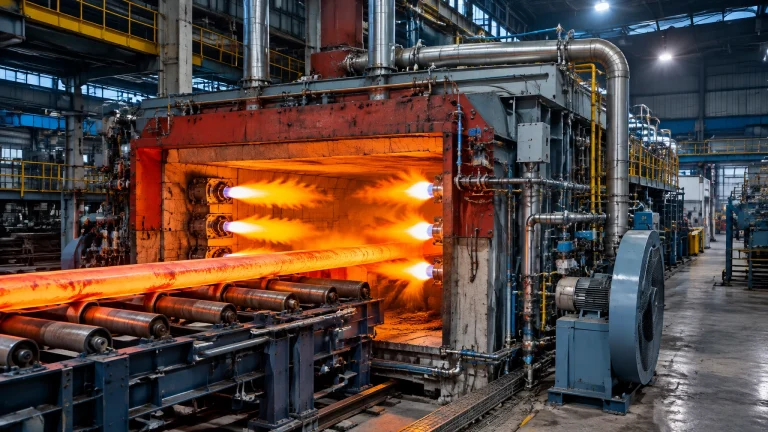
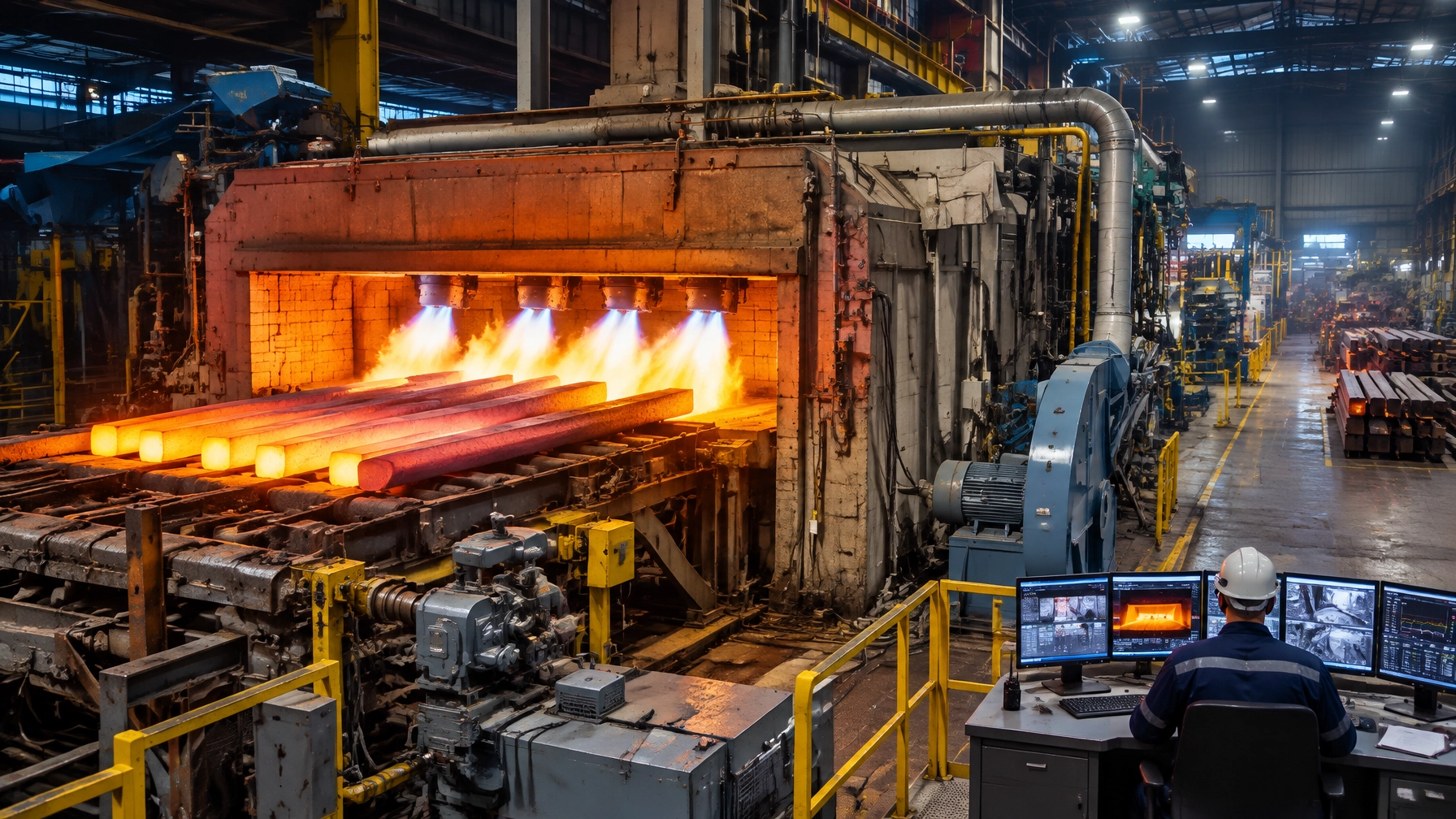
Pure hydrogen combustion requires deliberate redesign, not simply a change in gas supply. Burner nozzle aerodynamics, flashback protection, materials, fuel trains and control curves need review. The AIST paper on 100% hydrogen steel reheating documents permanent industrial-scale operation at Ovako. At ArcelorMittal Olaberria, a demonstration replaced two air burners on a walking-beam furnace with hydrogen-oxygen burners using 100% green hydrogen; the Nippon Sanso report and European Hydrogen Observatory coverage describe the trial.
The HyInHeat steel-use-case results, published in October 2026, examine hydrogen-air, hydrogen-oxygen, oxygen-enriched and hybrid strategies across furnaces and steel processes. A July 2026 review in Processes also surveys hydrogen substitution in high-temperature furnaces. However, green hydrogen at around US$4–6/kg remains well above the roughly US$1.75–2/kg often cited for parity with natural gas in industrial heating. These benchmarks are discussed in the review and the IEA Global Hydrogen Review 2026 cost-acceptability analysis. Prices, subsidies and regional power costs continually shift the calculation.
What the Trials Actually Measured
Modelling and pilot results
An August 2026 Applied Thermal Engineering CFD study modelled stepwise conversion of a natural-gas reheat furnace to low-NOx hydrogen oxy-fuel combustion. For its modelled 15 MW furnace, partial hydrogen-burner integration reduced CO₂ by up to about 21%, fuel consumption by about 3.8%, and NOx by up to about 34%. These are modelling results for one furnace geometry, not a site guarantee.
Flameless and oxy-fuel combustion: addressing NOx
Hydrogen’s high flame temperature makes thermal NOx a central design constraint. Flameless combustion and oxy-fuel arrangements can suppress temperature peaks and alter NOx formation, as discussed in the flameless hydrogen oxy-fuel paper and the Combustion Institute’s H₂-ready burner survey. Across trials, acceptance testing repeatedly focuses on:
- Turndown and light-off behaviour on hydrogen-rich fuels.
- Burner-specific flashback margins and stable flame detection.
- Instrumentation at each burner position.
- NOx monitoring across load points, not just at nominal firing.
Carbon Capture Moves onto the Furnace Flue
On 28 October 2026, ArcelorMittal, BHP, Mitsubishi Heavy Industries and Mitsubishi Development announced that the first phase of their Gent carbon-capture trial had succeeded. Phase 1 captured CO₂ from blast furnace gas at pilot scale; phase 2 is intended to test post-combustion capture on hot-strip-mill reheat furnace flue gas. See the ArcelorMittal announcement and MHI release. For rolling-mill operators, the significance is clear: the reheat stack is now an explicitly addressed capture source, although phase 2 results are not yet reported.
Study-level amine-capture estimates range roughly €28–126 per tonne of CO₂, depending on scale, capture rate and heat integration. Chalmers reports an €28–50/t band for excess-heat-driven configurations; a Luleå University evaluation of reheating-furnace cases reports higher costs, with transport and storage not included. These are study results, not turnkey quotations. Flue-gas CO₂ concentration, energy prices and site heat integration dominate actual economics. See the Chalmers cost study and Luleå University evaluation.
Capture tends to favour concentrated, steady flue gas. Another reason to understand air infiltration and excess air before sizing equipment. Solvent handling, emissions and reboiler duty are operating considerations; transport, storage or utilisation contracts determine whether the project is bankable.

Decarbonisation Pathways Compared
| Pathway | What it does | Indicative abatement effect | Indicative capital intensity | Main technical dependencies | Indicative best fit |
|---|---|---|---|---|---|
| Natural gas/hydrogen blending | Replaces part of gas input with hydrogen | Partial direct CO₂ reduction; depends on blend and energy basis | Low–medium | Burner validation, gas quality and controls | Staged transition where blend supply exists |
| 100% hydrogen or fuel-flex conversion | Converts burners and fuel train for hydrogen or mixed fuels | Can eliminate fuel-combustion CO₂ at point of use with low-carbon hydrogen | Medium–high | Burner redesign, supply, safety, NOx and product quality | Reheat furnaces with dependable hydrogen access |
| Hydrogen oxy-fuel/flameless conversion | Uses oxygen and combustion design to control heat release and emissions | High direct abatement potential, dependent on fuel and furnace arrangement | High | Oxygen supply, burner and refractory suitability, NOx validation | High-temperature processes with suitable infrastructure |
| Electric radiant-tube or hybrid section retrofit | Adds electric heat alongside retained gas firing | Variable; depends on electric share and power emissions | Medium–high | Grid capacity, tariffs, elements and controls | Zones/lines with viable electricity economics |
| Post-combustion carbon capture | Separates CO₂ from furnace flue gas | Often assessed at 50–90% of treated-stream CO₂; not whole-site abatement | High | Flue-gas profile, heat, solvent, compression and CO₂ route | Large, steady stacks with infrastructure access |
Pathway ranges include supplier claims and study scenarios. No guaranteed ROI follows from these benchmarks; site-specific engineering and commercial assessment are essential.
Hybrid and Electric Sections: The Second Skill Set
The SynErgie3 project combines electric resistance heating and regenerative gas burners in a radiant-tube system designed to switch between fully electric, fully gas or combined operation within seconds. Kanthal reports the system is intended to retrofit continuous annealing and galvanizing lines without replacing the furnace. Its project description details the concept.
Daido Steel’s D2-ERTH is a 45 kW electric radiant-tube heater intended to replace existing burners with limited equipment changes. Daido reports that the design can reuse radiant tubes and avoids local exhaust gas and NOx; the product announcement identifies an installed base of more than 350 STC furnaces. A June 2026 Journal of Sustainable Metallurgy comparison of induction and hydrogen billet reheating found costs in its model of about US$31/t for natural gas, US$41/t for induction and US$76/t for hydrogen. The conclusion is not universal ranking: region-specific electricity, hydrogen and carbon prices determine the pathway.
Hybrid economics depend on tariff arbitrage and demand response, part-load operation, power infrastructure and grid connection queues. Element and burner lifecycle, plus standardised furnace spare parts, also affect maintainability and downtime.

Pathway Fit by Furnace and Operation
| Furnace or operation | Dominant near-term pathway | Why | Main watch-outs |
|---|---|---|---|
| Walking-beam or pusher reheat furnace in a steel rolling mill | Hydrogen-ready fuel-flex burners; selective capture screening | High, continuous heat demand and major carbon-cost exposure | Temperature uniformity, scale, NOx and fuel availability |
| Radiant-tube batch/continuous heat treatment furnaces and bright annealing | Blend trials or electric/hybrid radiant tubes | Burner positions allow staged conversion | Atmosphere quality, tube life, control integration |
| Hot dip galvanizing plant kettle and preheat heating | Hybrid-electric sections where tariffs support them | Load profile may suit electricity price windows | Grid capacity and coating process temperature |
| Aluminum melting furnace and melting furnace for steel | Fuel-flex combustion or hybrid heat, selected by energy spread | High-temperature duty and varied feedstock | Melt quality, refractory compatibility, emissions |
| Metal recycling furnace operations | Fuel-flex planning and capture screening | Carbon intensity and fuel mix depend on scrap and site | Variable feed, flue composition and operating schedule |
The Four-Phase Decarbonisation Roadmap
Phase 1: Baseline (30–60 days)
Establish fuel-by-fuel energy balance, kg CO₂ per tonne by furnace, flue-gas composition, O₂/excess-air survey and NOx baseline. Record grid capacity, hydrogen or CO₂ infrastructure options, and current spend against plausible carbon-price scenarios.
Phase 2: Readiness (1–3 quarters)
Audit burner stock for blend and fuel-flex suitability. Review controls architecture, Wobbe-index compensation, materials and flashback protection; specify per-position temperature and flue-gas analysis. Standardise fuel-flex burner components, flame arrestors, radiant-tube elements and analytical sensors as furnace spare parts.
Phase 3: Pilot and select (3–12 months)
Run controlled blend trials at rising fractions; pilot a fuel-flex burner at one position; demonstrate a hybrid section where tariffs justify it; and complete capture FEED only where contracts and infrastructure exist. Define product-quality, safety and emissions acceptance criteria before each trial.
Phase 4: Execute and verify (12–36 months)
Assign KPI owners and escalation triggers for kg CO₂/t, NOx mg/Nm³ by load point, blend percentage, fuel-plus-carbon cost per tonne, availability impact, capture rate and solvent consumption. Re-test pathway economics annually as prices and policy move.
2026 Technology and Market Updates
Demonstration momentum
Olaberria’s November 2025 hydrogen-oxygen demonstration tested two replacement burners on a walking-beam reheat furnace, including temperature distribution and NOx suppression. HyInHeat’s steel-use-case results followed in October 2026.
Capture reaches the reheat stack
Gent’s October 2026 announcement moved the hot-strip-mill reheat flue gas into the planned second phase of a carbon-capture trial. The first phase concerned blast furnace gas; it is not evidence yet of completed reheat-stack capture.
Hybrid hardware advances
Kanthal’s SynErgie3 system and Daido’s D2-ERTH point to retrofit options for annealing and galvanizing lines. Switching speed, existing-furnace compatibility and power access matter as much as nominal electric capacity.
Economics continue to move
The IEA hydrogen cost-acceptability chapter, July 2026 Processes review, June 2026 induction-versus-hydrogen study and August 2026 CFD analysis add new evidence, not universal answers. All figures remain indicative and shift with energy prices, subsidies and carbon regulation.
Why This Belongs to the Furnace Engineer, Not Just the Energy Team
The same fuel flexibility that protects a steel rolling mill reheat furnace also protects radiant-tube heat treatment furnaces and bright-annealing lines serving the wire and cable industry. Kettle heating on a hot dip galvanizing plant can suit hybrid-electric operation where tariffs align. An aluminum melting furnace, melting furnace for steel or metal recycling furnace circuit faces economics shaped by electricity-versus-fuel spreads.
Furnace choices also affect adjacent operations, including pickling plants and downstream surface-treatment lines. Every industrial furnace manufacturer discussion about thermal processing equipment should now include a decarbonisation-readiness appendix. Specify industrial furnace systems with standardised furnace spare parts and documented upgrade paths so today’s retrofit does not foreclose tomorrow’s fuel.
Plan Your Decarbonisation Pathway with Continental Furnaces
Continental Furnaces brings 35+ years of expertise, ISO-certified quality, customised engineering and responsive service to an enduring partnership with industrial operators. We invite reheat-furnace, heat-treatment, galvanizing, melting and recycling teams to request a decarbonisation-readiness review covering burner-stock suitability, flue-gas and NOx baselines, hybrid and capture screening, and spare-parts standardisation.
Make the next step a strategic one: request a quote and begin building a staged pathway toward sustained competitive advantage.