Continental Furnaces Industrial Insights : Morning Edition
Steel manufacturers are entering 2026 under simultaneous pressure to improve energy efficiency, production yield, carbon performance, and uptime. Global steel demand remains highly competitive, while decarbonization policies, energy-price volatility, scrap availability, and customer sustainability requirements are reshaping investment decisions.
The latest worldsteel short-range outlook points to a market in which growth is measured and operating discipline is decisive. For every steel rolling mill, foundry, wire producer, and metal recycler, furnace performance now directly influences profitability and regulatory compliance.
As an experienced industrial furnace manufacturer, Continental Furnaces sees three priorities defining the next generation of industrial production:
- Lower specific energy consumption per tonne of output
- Higher metallurgical consistency and material yield
- Digitally connected industrial furnace systems designed for lifecycle reliability
Why Furnace Efficiency Is a Strategic Manufacturing Issue
Furnaces frequently represent one of the largest energy loads in a manufacturing plant. Inefficient combustion, poor insulation, uneven heating, excessive scale formation, and unplanned refractory failures create losses far beyond the utility bill.
They also affect:
- Product rejection and rework
- Throughput and cycle-time stability
- Labour requirements
- Carbon reporting and emissions compliance
- Maintenance costs and spare-parts consumption
- Overall equipment effectiveness (OEE)
A modern furnace upgrade must therefore be evaluated as a production and profitability project, not simply as equipment replacement.
2026 Trend One: Electrification and Flexible Thermal Processing
Electrification is moving beyond melting and is increasingly influencing reheating, annealing, tempering, and other thermal operations. Induction and resistance-based systems provide rapid heat transfer, precise control, and reduced direct emissions when powered by a lower-carbon electricity mix.
For selected applications, current project benchmarks show:
| Performance metric | Conventional gas-fired reheat | Induction/electric reheat | Commercial implication |
|---|---|---|---|
| Indicative thermal efficiency | 35–45% | 85–92% | Lower energy cost per tonne |
| Typical start-up period | 4–8 hours | 15–30 minutes | Faster production response |
| Oxidation/scale loss | 1.5–2.0% | 0.2–0.5% | Higher saleable yield |
| Direct CO₂ intensity | Approximately 0.20 t/t steel | Potentially below 0.02 t/t steel | Stronger decarbonization position |
| Main maintenance exposure | Burner fouling and combustion components | Coil, power electronics, and cooling systems | Different but more predictable maintenance profile |
These values are indicative engineering benchmarks, not universal guarantees. Actual results depend on steel grade, charge geometry, production rate, furnace atmosphere, electricity source, and operating discipline.
The strategic conclusion is clear: electrified thermal processing equipment can deliver a quantum leap in controllability where grid capacity, process temperature, and production economics support the transition.

2026 Trend Two: Smarter Heat Treatment for Rolling Mills
The modern steel rolling mill requires more than high temperature. It requires repeatable temperature profiles, controlled residence time, minimal oxidation, and reliable integration with upstream and downstream equipment.
Advanced heat treatment furnaces are being specified with:
- Multi-zone temperature control
- Automatic charging and discharge
- High-efficiency burners or electric heating elements
- Recuperators and regenerative heat-recovery systems
- In-line pyrometers and thermal imaging
- Recipe-based process control for multiple grades
- SCADA, MES, and ERP connectivity
- Remote diagnostics and predictive-maintenance capability
For rod, bar, strip, and wire applications, temperature uniformity is directly linked to mechanical properties and downstream processability. This is particularly important in the wire and cable industry, where inconsistent annealing can affect ductility, conductivity, tensile strength, and drawing performance.
In 2026, furnace control is becoming a competitive differentiator. A plant that can maintain a stable thermal profile while reducing fuel or electricity consumption will achieve stronger yield, fewer quality deviations, and better production planning.
2026 Trend Three: Circular Economy and High-Recovery Melting
Scrap utilization is no longer only an environmental initiative. It is a supply-chain and margin strategy. Electric melting routes, improved charge preparation, and advanced furnace control are enabling manufacturers to process a wider range of secondary raw materials.
A properly engineered metal recycling furnace can support:
- Ferrous scrap melting for steel production
- Aluminum and non-ferrous scrap recovery
- Internal return-scrap loops
- Processing of machining waste, runners, risers, and defective castings
- Reduced dependence on volatile virgin-material markets
For a melting furnace for steel, charge density, scrap chemistry, slag control, power input, and tapping practice determine both energy use and metal yield. For an aluminum melting furnace, controlled atmosphere, rapid charging, refractory selection, and dross management are essential.
Current project targets for advanced aluminum systems can include:
- 20–30% lower energy consumption through efficient burners and heat recovery
- More than 99% metal recovery in optimized applications
- 3–5% improvement in saleable yield compared with poorly controlled operations
- Potential investment recovery within 12–24 months, depending on operating hours, energy prices, throughput, and scrap value
These targets must be validated through a plant-specific feasibility study. The correct furnace is the one matched to the material stream, production schedule, alloy range, and quality specification.

2026 Trend Four: Digital Twins and Predictive Maintenance
Digitalization is becoming the intelligence layer across modern industrial furnace systems. Sensors capture temperature, vibration, pressure, power draw, gas composition, cooling-water performance, and refractory condition. That information can then be used to identify deviations before they become failures.
A practical digital strategy includes:
- Real-time monitoring of critical process variables
- Trend analysis for burner and heating-element performance
- Thermal imaging for refractory-health assessment
- Automated alerts for abnormal power or fuel consumption
- Remaining-useful-life estimates for critical components
- Production dashboards showing energy per tonne and furnace availability
The financial case is substantial. In a high-output plant, one hour of unplanned downtime can cost tens of thousands of dollars in lost production, labour, and restart activity. Predictive maintenance reduces this exposure by planning interventions around production windows.
The strategy must include furnace spare parts from the beginning. Critical burners, thermocouples, coils, refractory modules, seals, fans, control components, and safety devices should be classified according to:
- Failure consequence
- Supplier lead time
- Storage requirements
- Interchangeability
- Recommended inspection interval
A furnace is not fully optimized if one low-cost component can stop an entire production line.

Comparative Investment View: Retrofit or Replace?
| Decision factor | Targeted retrofit | New integrated furnace system |
|---|---|---|
| Initial capital requirement | Lower | Higher |
| Implementation period | Usually shorter | Requires detailed engineering and installation |
| Energy improvement potential | 10–25% in suitable cases | 20–40% or more in selected applications |
| Digital integration | Added through sensors and controls | Designed into the architecture |
| Production disruption | Limited when phased | Greater during installation |
| Best fit | Sound furnace shell with outdated controls or burners | High downtime, poor efficiency, capacity expansion, or process change |
| ROI evaluation | Often 12–36 months | Commonly 18–48 months, project-dependent |
The correct decision depends on furnace condition, remaining service life, production demand, and the value of improved yield. A professional industrial furnace manufacturer should assess the entire process rather than recommend a standard package.
A Four-Phase Roadmap for 2026 Furnace Modernization
Phase 1: Assessment and Planning : Weeks 1–4
Establish the technical and commercial baseline.
- Measure fuel and electricity consumption per tonne
- Audit temperature uniformity and cycle times
- Quantify scale, dross, scrap, and rejection losses
- Review refractory, burner, controls, and cooling systems
- Map critical furnace spare parts and maintenance history
- Define emissions, safety, and regulatory requirements
Phase 2: Design and Engineering : Weeks 5–12
Translate the audit into a bankable project.
- Select electric, gas, hybrid, or induction technology
- Size furnace capacity for current and projected throughput
- Engineer insulation, refractory, airflow, and heat recovery
- Define automation, SCADA, and data requirements
- Confirm plant layout, utilities, safety systems, and access
- Prepare an ROI model based on actual operating conditions
Phase 3: Implementation and Commissioning : Weeks 13–20
Protect production continuity during execution.
- Manufacture and inspect equipment
- Install mechanical, electrical, and control systems
- Complete cold and hot commissioning
- Validate temperature profiles and material quality
- Train operators and maintenance teams
- Establish baseline KPIs for energy, yield, availability, and throughput
Phase 4: Optimization and Expansion : Ongoing
Convert the installation into a long-term performance platform.
- Review monthly energy-per-tonne data
- Tune firing, loading, and scheduling strategies
- Implement predictive-maintenance routines
- Maintain strategic inventories of furnace spare parts
- Expand digital monitoring across connected processes
- Evaluate future electrification, waste-heat recovery, or capacity upgrades
The Continental Furnaces Partnership Advantage
Furnace performance depends on engineering quality, commissioning discipline, operator training, and responsive lifecycle support. Continental Furnaces brings more than 35 years of thermal-processing expertise to projects across steel, non-ferrous metals, recycling, galvanizing, cable, automotive, and other industrial sectors.
Our capabilities include customized:
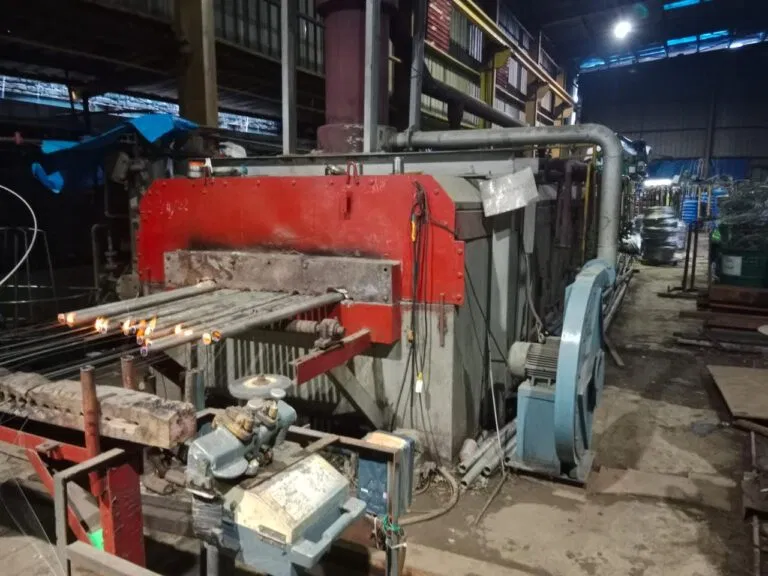
- Heat treatment furnaces
- Melting furnaces and recycling projects
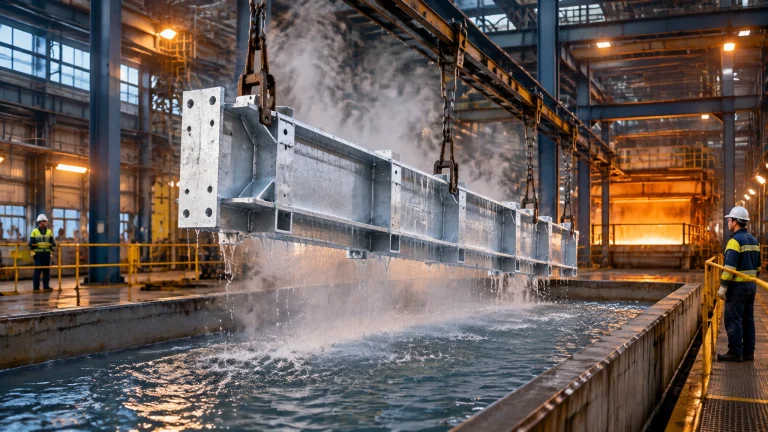
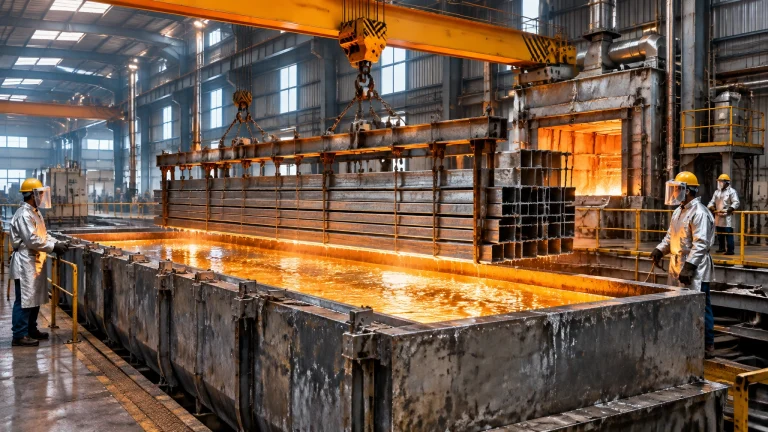
- Hot dip galvanizing plant solutions
- Pickling plants
- Furnace spares and accessories
- Automated and energy-efficient industrial furnace systems
Whether the requirement is a new aluminum melting furnace, a high-throughput steel reheating system, a hot dip galvanizing plant, or a modernization program for the wire and cable industry, the objective remains the same: higher yield, lower energy intensity, dependable uptime, and sustained lifecycle value.
Conclusion: Make Furnace Efficiency a Competitive Advantage
The 2026 steel sector will reward manufacturers that connect energy strategy with furnace engineering. Electrification, heat recovery, advanced controls, recycling, digital twins, and predictive maintenance are no longer isolated innovations. Together, they form the foundation of resilient and profitable industrial production.
Begin with a thermal audit. Establish measurable benchmarks. Build a phased investment roadmap. Then partner with an experienced industrial furnace manufacturer capable of supporting the project from feasibility and design through commissioning, spare-parts planning, and long-term optimization.
Contact Continental Furnaces for a strategic consultation and move decisively toward sustained competitive advantage in energy-efficient manufacturing.