The 2026 steel market is being reshaped by two forces: carbon accountability and electric steelmaking. From 1 January 2026, the European Union’s Carbon Border Adjustment Mechanism (CBAM) has entered its definitive regime. At the same time, electric arc furnace (EAF) capacity continues to expand, driven by scrap availability, renewable electricity, energy security and rising demand for lower-emission steel.
For plant directors, production heads and sustainability leaders, this creates a clear operational imperative: thermal processing must be measured, optimized and engineered for verified performance.
The furnace is not simply a heating asset. Whether it reheats billets, melts scrap, heat-treats high-value grades, maintains an aluminium bath or supports galvanizing, it directly influences:
- Energy intensity in MJ/t or kWh/t
- Embedded emissions and carbon reporting
- Yield loss, oxidation and scale formation
- Scrap and charge-material flexibility
- Product quality and customer acceptance
- Production uptime and profitability
Continental Furnaces approaches this transition as an enduring engineering partnership. Our objective is to help manufacturers build a carbon-aware, data-ready and commercially resilient thermal processing operation.
CBAM 2026: Compliance Now Depends on Plant-Level Data
Under the European Commission’s CBAM definitive regime, importers exceeding 50 tonnes per calendar year of covered CBAM goods, including iron, steel and aluminium, must be authorized CBAM declarants.
For 2026 imports, the first annual CBAM declaration and certificate surrender are due by 30 September 2027. Where actual emissions data is used, embedded emissions must be supported by independent third-party verification in accordance with CBAM requirements.
This changes the role of furnace data. A general statement such as “energy-efficient furnace” is no longer sufficient. Manufacturers and exporters need evidence that can connect:
- Fuel and electricity consumption to production output
- Charge material and scrap composition to each heat
- Furnace operating profiles to process batches
- Yield and scale loss to finished product
- Waste-heat recovery to measurable energy reduction
- Emissions data to verified production boundaries
The furnace may not represent the entire CBAM system boundary, but it is where many controllable energy and yield decisions are made.
EAF Growth Makes Thermal Efficiency a Strategic Advantage
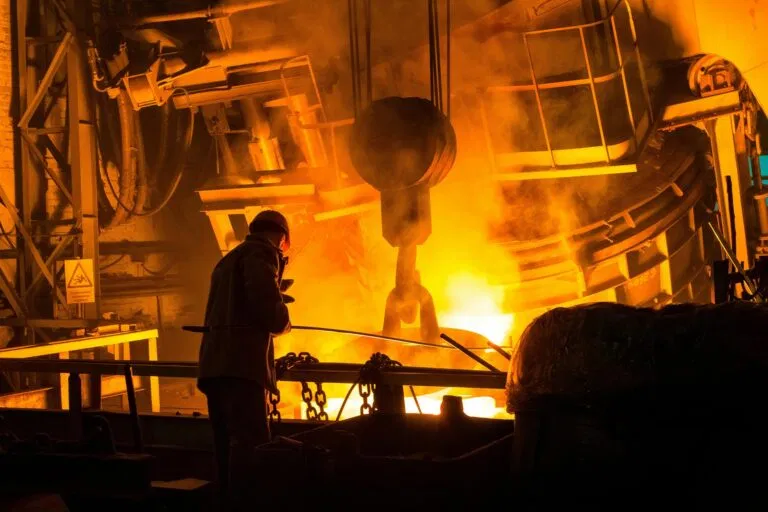
According to Global Energy Monitor’s Pedal to the Metal 2026, EAFs represent approximately 34% of global operating steelmaking capacity, equivalent to around 727 million tonnes per annum out of 2,216 million tonnes.
This is a structural shift, not a temporary technology cycle. Scrap-based EAF steelmaking typically requires substantially less energy than ore-based blast furnace–basic oxygen furnace production. Indicative industry benchmarks place scrap-EAF energy demand at approximately 2–10 GJ/t of crude steel, compared with roughly 21–23 GJ/t for BF-BOF routes. Carbon intensity varies widely with electricity supply, scrap quality, furnace design and operating discipline.
The commercial advantage of EAF is therefore not created by the arc alone. It is created by the complete thermal system:
- Correct scrap preparation and charging
- Charge-density optimization
- Scrap preheating using off-gas energy
- Stable arc and power-quality management
- Reduced tap-to-tap time
- Controlled slag practice
- Efficient fume and off-gas handling
- Accurate energy and emissions measurement
A planning benchmark used in advanced EAF optimization is that a 100°C increase in scrap preheating temperature may reduce electrical consumption by approximately 25 kWh/t, subject to furnace design, charge conditions and process configuration. This value must be validated through plant trials and metered production data.

Where the Thermal Processing Imperative Applies
Steel Rolling Mill Reheating Furnaces
Reheating furnaces for billets, blooms and slabs remain decisive to downstream yield. Poor temperature uniformity causes uneven rolling loads, surface defects and unnecessary scale formation.
A modern steel rolling mill reheating system should prioritize:
- Multi-zone temperature control
- Optimized soaking and discharge temperatures
- Recuperative or regenerative combustion
- Low-excess-air operation
- Waste-heat recovery
- Reduced furnace door opening and idle time
- Accurate billet tracking and discharge scheduling
Planning KPI: establish a baseline in MJ/t of charged steel, then correlate it with scale loss, throughput and product quality. A lower energy figure that increases rejection or yield loss is not a genuine efficiency gain.
Melting Furnace for Steel and Metal Recycling
The metal recycling furnace is central to the circular economy. Its performance determines how much value can be recovered from internal scrap, purchased scrap and mixed charge materials.
A carbon-aware recycling operation monitors:
- Scrap input by grade, origin and contamination
- Specific electricity or fuel use per tonne
- Melt recovery and slag generation
- Alloy additions and correction requirements
- Heat cycle duration
- Off-gas temperature and composition
- Furnace availability and unplanned downtime
Charge flexibility is becoming a competitive differentiator. Plants that can process a wider range of scrap without excessive energy penalties or quality variation can strengthen supply resilience and improve raw-material economics.
Aluminium Melting Furnaces
Non-ferrous operations require a separate efficiency strategy. Aluminium melting is energy-intensive, and oxidation, dross and poor charge handling can erode the value of every melt.
Continental Furnaces’ industrial aluminium melting furnace solutions support applications including automotive manufacturing and recycling. Published planning benchmarks for advanced systems include:
- Metal recovery rates of more than 99%, depending on scrap condition and process control
- Potential energy reductions of 20–30% through efficient burners, heat recovery and automation
- Investment payback commonly assessed over 12–24 months, subject to capacity, energy pricing and utilization
These figures are indicative planning values, not guaranteed results. The correct baseline must be established from the customer’s charge mix and production profile.
For lifecycle reliability, plants should also review aluminium melting furnace spare parts, crucibles, burners and accessories.
Heat Treatment Furnaces for Higher-Value Grades
Heat treatment is where metallurgical performance becomes commercial value. Temperature uniformity, atmosphere control and repeatable cycle execution are essential for automotive, aerospace, tool-and-die, wire and specialized steel products.
Continental Furnaces’ heat treatment furnaces are designed around:
- Consistent temperature distribution
- Customer-specific heating profiles
- Controlled loading and unloading
- Energy-efficient heating technology
- Repeatable process documentation
- Integration with quality and traceability systems
The objective is not simply to reduce energy consumption. It is to reduce energy per accepted tonne while protecting hardness, tensile strength, grain structure and dimensional stability.

Hot Dip Galvanizing and Wire & Cable Applications
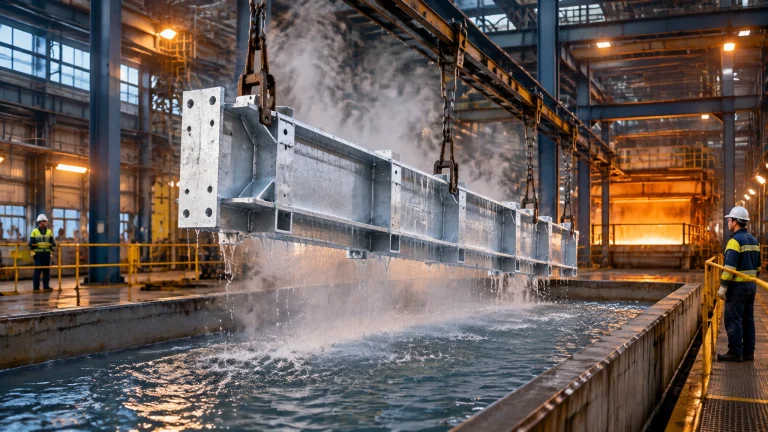
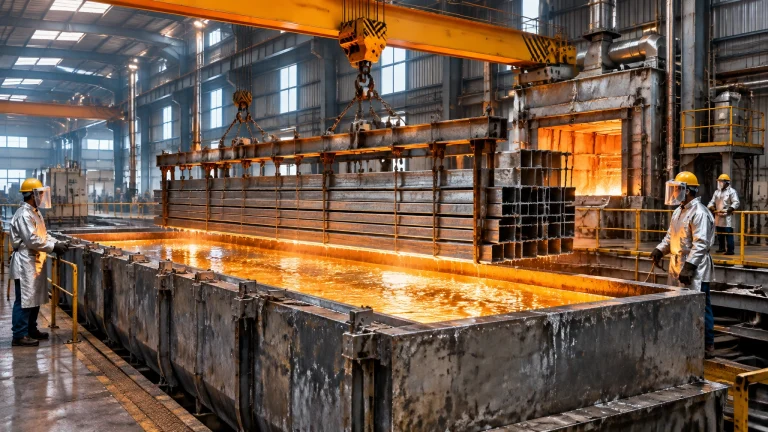
Hot dip galvanizing plants support low-carbon construction by extending steel service life and reducing replacement demand. Furnace and kettle systems must maintain stable bath temperatures, minimize dross and control zinc consumption.
In the wire and cable industry, annealing and thermal treatment are increasingly important because of demand from:
- Electric vehicles
- Charging infrastructure
- Renewable power systems
- Transmission and distribution networks
- Data centres and industrial electrification
Continuous annealing systems require dependable temperature profiles, precise line speed control and rapid maintenance response. Furnace spare parts are therefore performance assets, not merely replacement inventory.
Conventional Operation vs. Carbon-Aware 2026 Operation
| Performance area | Conventional operating model | Carbon-aware 2026 operating model |
|---|---|---|
| Energy measurement | Monthly fuel or electricity totals | Metered MJ/t, kWh/t and batch-level consumption |
| Charge management | Fixed recipe with limited flexibility | Scrap classification, preheating and charge optimization |
| Emissions reporting | Estimates based on averages | Traceable data linked to production and verified boundaries |
| Waste heat | Discharged through stack | Recovered for combustion air, scrap or process preheating |
| Yield control | Periodic scale and loss checks | Continuous correlation of scale, slag, dross and accepted output |
| Maintenance | Reactive repair after failure | Predictive monitoring and OEM-supported spare parts |
| Business outcome | Focus on throughput | Throughput, yield, compliance and lifecycle profitability |
A Four-Phase Roadmap for Furnace Decarbonization and CBAM Readiness
Phase 1: Assessment and Planning : Weeks 1–4
- Map all thermal assets and process boundaries.
- Establish baseline energy intensity in MJ/t or kWh/t.
- Record throughput, yield, scale, slag and dross losses.
- Identify CBAM-relevant product and export flows.
- Audit meters, sensors, PLC data and calibration status.
Phase 2: Engineering and Measurement : Weeks 5–12
- Install or upgrade fuel, electricity and production metering.
- Validate temperature profiles and combustion performance.
- Evaluate scrap preheating and waste-heat recovery.
- Define data ownership between production, quality and sustainability teams.
- Develop a verified emissions data trail suitable for external review.
Phase 3: Retrofit and Integration : Months 3–9
- Upgrade burners, recuperators, insulation and control systems.
- Improve furnace loading, charge sequencing and standby management.
- Integrate heat treatment, reheating, melting and rolling schedules.
- Introduce Industry 4.0 dashboards for energy and performance KPIs.
- Maintain critical furnace spare parts to protect commissioning and uptime.
Phase 4: Optimization and Continuous Compliance : Ongoing
- Compare actual performance against design and planning benchmarks.
- Review embedded emissions before each reporting cycle.
- Recalibrate instruments and maintain audit-ready records.
- Expand renewable electricity, electrification or hybrid-fuel options where viable.
- Convert efficiency gains into lower cost per tonne and stronger customer value.
The 2026 Competitive Advantage Is Measurable
The steel industry’s transition is not solved by selecting an EAF, replacing one burner or publishing a sustainability statement. It is solved through integrated thermal engineering.
A high-performance plant measures the complete relationship between:
- Furnace energy input
- Material quality and flexibility
- Temperature and atmosphere control
- Yield and finished-product acceptance
- Emissions and regulatory reporting
- Maintenance and production uptime
Continental Furnaces brings more than 35 years of industrial furnace expertise, ISO-certified quality practices, customized engineering and energy-efficient thermal processing solutions. Our portfolio spans steel rolling mill reheating, steel melting, metal recycling, aluminium melting, heat treatment, hot dip galvanizing, pickling plants and furnace spares.
The next step is strategic: contact Continental Furnaces for a plant-level assessment of energy intensity, yield, data readiness and thermal equipment performance. Build the evidence, efficiency and resilience required for CBAM compliance: and secure sustained competitive advantage in the 2026 steel landscape.