Steel manufacturers are entering a decisive phase in thermal modernization. Energy volatility, tightening emissions regulations, carbon-accounting requirements, and pressure from customers for lower-embedded-carbon products are transforming the definition of an efficient furnace.
The next benchmark is not simply lower fuel consumption. It is a flexible, integrated, emissions-aware thermal system capable of using hydrogen, electricity, recovered heat, and conventional fuels according to process requirements and energy availability.
For operators of a steel rolling mill, foundry, recycling plant, galvanizing line, wire facility, or heat-treatment operation, the strategic objective is clear: increase yield and throughput while reducing energy intensity, emissions exposure, and unplanned downtime.
As an experienced industrial furnace manufacturer, Continental Furnaces approaches this transition through engineered integration rather than isolated equipment upgrades.
Why Hydrogen-Ready Furnace Design Matters
Hydrogen is not a universal replacement for natural gas, and simply changing the fuel does not automatically improve thermal efficiency. Hydrogen has different combustion characteristics, including higher flame speed, different volumetric flow requirements, and increased sensitivity to burner design and flashback protection.
A hydrogen-ready furnace therefore requires more than a new burner. It should be engineered around:
- Hydrogen-compatible burners and gas trains
- Flame detection and combustion safety systems
- Modified piping, seals, valves, and pressure-control equipment
- Adequate ventilation and leak-detection provisions
- Low-NOx combustion strategies
- Revised heat-transfer and flue-gas calculations
- Control logic capable of handling multiple fuel blends
- Future integration with oxygen enrichment or oxyfuel operation
Indicative industry benchmarks show that 20% hydrogen by volume in natural gas can reduce combustion-related CO₂ emissions by approximately 7%, although the actual result depends on fuel composition, furnace loading, operating temperature, and measurement boundaries.
More advanced systems are being developed for operation across a range from natural gas to 100% hydrogen. Fives, for example, has reported prototype testing of a reheating burner designed for natural-gas and hydrogen mixtures up to 100% hydrogen, while maintaining productivity and required heating profiles. Read the Fives hydrogen burner test report.
Hydrogen combustion must remain emissions-aware
Conventional air-fired hydrogen combustion can increase local flame temperatures and potentially raise NOx. The solution is not to reject hydrogen; it is to engineer the combustion system correctly.
Relevant technologies include:
- Flameless combustion
- Staged fuel injection
- Exhaust-gas recirculation
- Oxyfuel combustion
- Distributed burner arrangements
- Closed-loop oxygen and temperature control
Indicative high-performance benchmarks reported in industry demonstrations include NOx levels of approximately 80 mg/Nm³ at 5% oxygen and 1,250°C for advanced hydrogen-capable combustion systems. These values are project-dependent and must be validated through site-specific testing and applicable regulatory protocols.
Waste-Heat Recovery: The Fastest Route to Measurable Savings
Hydrogen and electrification attract attention because of their decarbonization potential. However, waste-heat recovery often delivers the quickest financial return because it reduces energy consumption without requiring a complete change in the production route.
A modern thermal system should map every heat source and heat demand across the plant. Recoverable streams may include:
- Furnace exhaust gases
- Cooling-water circuits
- Quench systems
- Ladle and crucible preheating
- EAF off-gases
- Compressor heat
- Hot product discharge
- Regenerative burner exhaust
- Galvanizing-bath exhaust
Recovered heat can be directed toward:
- Combustion-air preheating
- Scrap or billet preheating
- Feedwater and hot-water generation
- Pickling or cleaning processes
- Building and utility heating
- Preheating charge materials for a melting furnace for steel
- Thermal storage for intermittent production schedules
In well-designed continuous systems, combustion-air preheating can support indicative fuel reductions of 15–35%, depending on exhaust temperature, furnace loading, insulation quality, operating hours, and heat-exchanger effectiveness.
The strongest projects do not treat heat recovery as an accessory. They incorporate it into the original furnace design and plant-wide energy balance.

Electrification: Apply It Where the Process Benefits
Direct electrification is highly effective where heat must be precise, rapidly controllable, or localized. It is not automatically the best solution for every high-temperature process.
Induction heating, resistance heating, and electric arc technologies are already established across many metal-processing applications. Fraunhofer ISI reports that electrification can deliver efficiency gains ranging from approximately 5% to more than 30% in selected metal-processing applications, while the benefit of switching from natural gas to hydrogen alone is generally limited unless additional process improvements are introduced.
Electrification is particularly valuable for:
- Billet and bar heating
- Wire annealing
- Localized strip heating
- Aluminum melting and holding
- Small and medium batch operations
- Heat-treatment zones requiring rapid temperature changes
- Processes where low scale formation is commercially important
An electrically heated system can offer:
- High controllability
- Fast start-up and shutdown
- Reduced direct emissions at the workpiece
- Lower scale formation in suitable applications
- Easier integration with renewable electricity
- Improved response to variable production schedules
However, the electrical infrastructure must be designed alongside the furnace. Transformer capacity, harmonics, switchgear, cable routing, cooling systems, and backup power requirements can materially affect project cost and schedule.
Comparative View: Legacy Gas Systems vs Integrated Thermal Platforms
The following comparison provides indicative planning benchmarks. Actual performance depends on furnace geometry, product mix, operating cycle, maintenance condition, energy prices, and local regulations.
| Performance area | Conventional gas-fired system | Hydrogen-ready or hybrid system | Integrated electric and heat-recovery system |
|---|---|---|---|
| Primary energy flexibility | Natural gas | Natural gas, hydrogen blends, potentially 100% H₂ | Electricity, with optional hybrid fuel |
| Indicative direct fuel reduction | Baseline | 5–20% with burner and recovery upgrades | 15–35% in suitable applications |
| Direct combustion CO₂ | High | Reduced according to hydrogen share | Zero at point of use |
| NOx management | Conventional low-NOx design | Requires advanced combustion engineering | Generally lower direct combustion emissions |
| Start-up response | Moderate to slow | Similar to gas unless redesigned | Fast in induction and resistance systems |
| Heat-transfer profile | Stable and familiar | Requires validation for fuel blend | Highly controllable but application-specific |
| Infrastructure requirement | Existing gas network | Gas and hydrogen-compatible systems | Upgraded transformers and electrical distribution |
| Typical project approach | Replacement or maintenance | Phased retrofit | New installation or major modernization |
| Best-fit applications | Continuous high-temperature duty | Reheating, heat treatment, hybrid transition | Induction, wire, billet, aluminum and localized heating |
All figures are indicative and project-dependent. A reliable investment case must use measured plant data rather than generic technology averages.
Process Integration Across Diverse Furnace Applications
The next efficiency benchmark will be achieved at the plant level, not by optimizing one furnace in isolation.
For example:
- A steel reheating furnace can recover exhaust heat for billet preheating.
- A metal recycling furnace can use preheated scrap to reduce melting demand.
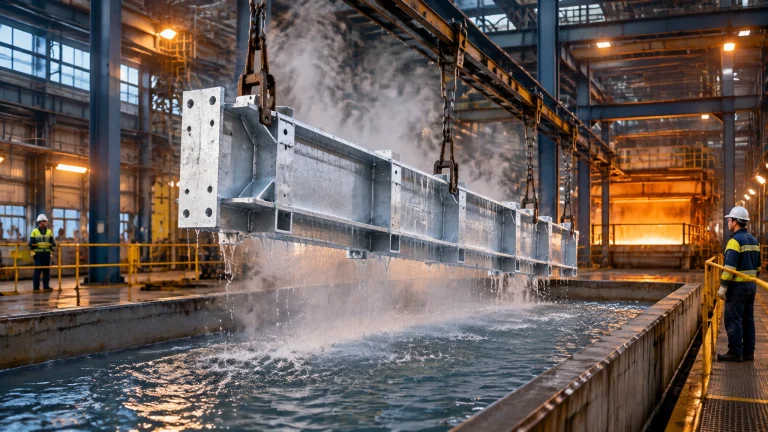
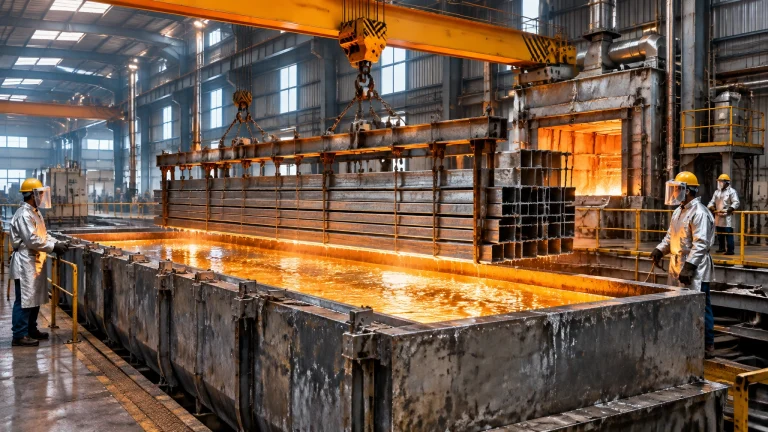
- A hot dip galvanizing plant can integrate bath heating, exhaust recovery, and line-speed control.
- A wire annealing line can combine electric heating zones with heat recovery from cooling sections.
- A heat treatment furnace can share utilities with quenching, washing, and tempering systems.
- An aluminum melting furnace can incorporate charge preheating, combustion optimization, and improved metal-recovery controls.
- A pickling plant can use recovered low-temperature heat for chemical-bath management.
Continental Furnaces supports applications spanning steel, non-ferrous metals, recycling, galvanizing, and the wire and cable industry. This breadth is essential because the best solution depends on the interaction between material, temperature, residence time, atmosphere, throughput, and downstream handling.
The Four-Phase Roadmap to a Future-Ready Furnace
Phase 1: Assessment and Energy Mapping
Begin with a measured baseline covering:
- Energy consumption per tonne
- Furnace availability and utilization
- Stack temperature and oxygen levels
- Product yield and scale loss
- Cycle time and loading efficiency
- Emissions profile
- Cooling-water demand
- Maintenance history
- Existing electrical and fuel infrastructure
This phase establishes the commercial case and identifies the highest-value intervention.
Phase 2: Immediate Efficiency Upgrades
Implement improvements that reduce consumption without disrupting production:
- Burner tuning and combustion balancing
- Improved insulation and refractory maintenance
- Recuperators or regenerative burners
- Waste-heat exchangers
- Better door and opening management
- Variable-speed fans and pumps
- Charge preheating
- Genuine furnace spare parts for critical components
These upgrades typically offer lower risk and faster payback than full furnace replacement.
Phase 3: Hydrogen-Ready and Electric Integration
Once the baseline is established, engineer the transition pathway:
- Replace burners with hydrogen-capable units
- Verify gas-train and piping compatibility
- Install appropriate safety systems
- Evaluate electric heating for selected zones
- Assess transformer and switchgear requirements
- Integrate recovered heat with adjacent processes
- Define fuel-switching and operating procedures
A hybrid configuration can provide an essential bridge between current production requirements and future low-carbon energy availability.
Phase 4: Performance Validation and Lifecycle Optimization
Commissioning must verify more than furnace temperature. Confirm:
- Product metallurgical properties
- Temperature uniformity
- Fuel and electricity consumption
- NOx and other emissions
- Throughput and cycle time
- Scale formation and yield
- Safety-system response
- Maintenance intervals
- Payback against measured operating data
Long-term value depends on service support, operator training, refractory planning, controls maintenance, and rapid access to replacement components.
Continental Furnaces: Engineering the Enduring Partnership
Hydrogen-ready combustion, electrification, and waste-heat recovery are not standalone products. They are elements of a wider transformation in industrial furnace systems and thermal processing strategy.
Continental Furnaces combines more than 35 years of experience with customized engineering, ISO-certified quality, energy-efficient technologies, and responsive lifecycle support. Our scope includes heat treatment furnaces, melting and recycling projects, galvanizing and pickling plants, furnace accessories, and specialized thermal processing equipment for ferrous and non-ferrous manufacturing.
Whether your priority is a new steel rolling mill furnace, a lower-emission recycling line, a hydrogen-ready reheating system, or a more efficient hot dip galvanizing plant, the correct starting point is a plant-specific technical and economic assessment.
Contact Continental Furnaces through our consultation and quotation page to evaluate your furnace energy baseline, waste-heat opportunities, electrification potential, and hydrogen-readiness roadmap. Make the next thermal investment a strategic move toward higher yield, stronger regulatory compliance, and sustained competitive advantage.