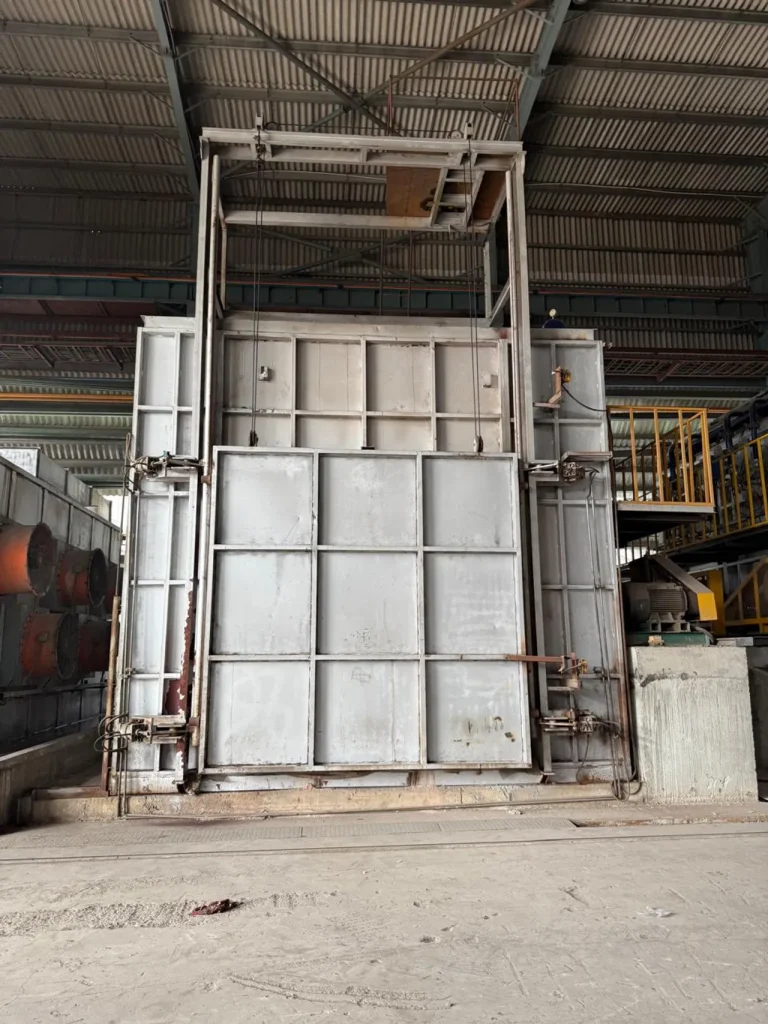
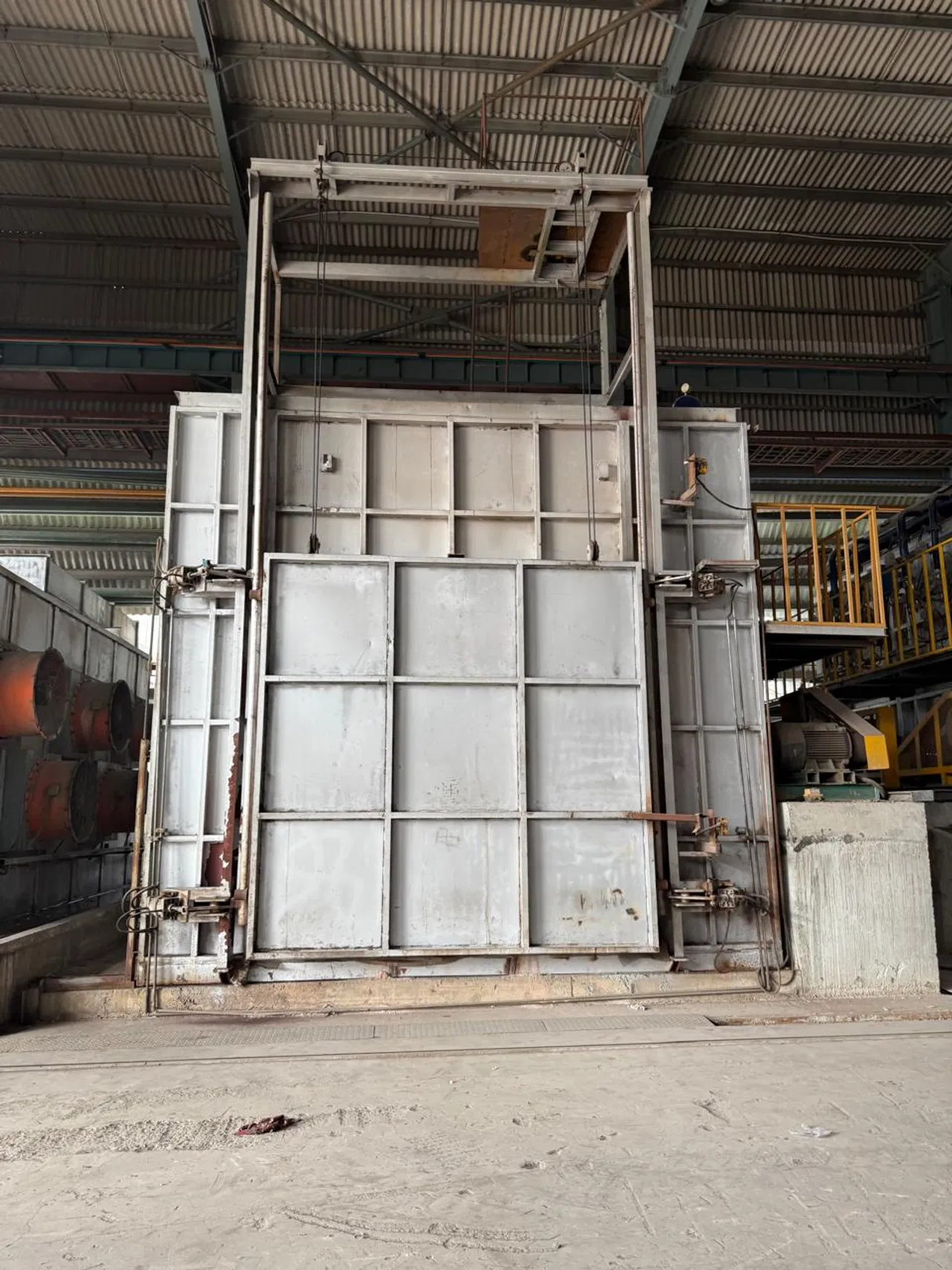
Industrial plants entering 2026 face a clear investment decision: replace an ageing furnace or modernize the asset already integrated into the production line. For most facilities, retrofit delivers the stronger commercial case.
A carefully engineered upgrade can preserve the existing furnace shell, loading system, foundations, utilities and production layout while improving combustion efficiency, temperature uniformity, emissions performance and maintenance visibility. It also reduces the outage window and accelerates payback.
For heat treatment furnaces, a steel rolling mill, an aluminum melting furnace, a metal recycling furnace or a hot dip galvanizing plant, the objective is the same: convert a legacy thermal asset into a connected, efficient and maintainable industrial furnace system.
Why Retrofit Beats Replacement in 2026
Full replacement remains appropriate when the furnace structure is unsafe, the process duty has fundamentally changed or capacity expansion cannot be achieved through modification. However, many plants continue to operate mechanically sound furnaces with obsolete burners, degraded refractory, inefficient controls and limited instrumentation.
A retrofit addresses those constraints without restarting the entire capital project.
The business case for modernization
- Lower capital expenditure: Existing shells, foundations, conveyors and material-handling systems may remain in service.
- Shorter outage windows: Work can be sequenced around planned turnarounds rather than a complete plant rebuild.
- Faster payback: Combustion tuning, O₂ trim, sealing and heat recovery commonly create measurable savings within the first operating year.
- Reduced execution risk: The plant team retains familiar loading, unloading and material-flow arrangements.
- Improved regulatory readiness: Low-NOx burners, safety interlocks and digital emissions monitoring can be integrated into the upgrade.
- Higher lifecycle value: Modern controls and sensors extend the useful life of the asset while creating a pathway to future automation.
Typical retrofit programmes recover 5–12% fuel consumption through combustion tuning and O₂ trim. Improved refractory and seal integrity can reduce shell and radiation losses by 8–15%. When these measures are combined with recuperation, burner replacement and heat recovery, total energy improvement can reach 15–30%, depending on furnace condition, duty cycle and baseline performance.
Establish the Baseline Before Specifying Equipment
A retrofit must begin with measurement, not assumptions. The first step is a thermal and combustion audit covering at least one representative production cycle and, preferably, multiple operating loads.
Record:
- Fuel or electrical consumption per tonne and per batch
- Furnace temperature by zone
- Product temperature and soak time
- Flue-gas O₂, CO and NOx
- Furnace pressure and draft
- Burner firing rates and air-flow stability
- Shell temperatures and refractory hot spots
- Product rejection and rework rates
- Planned versus unplanned downtime
- Current spare-parts availability and lead times
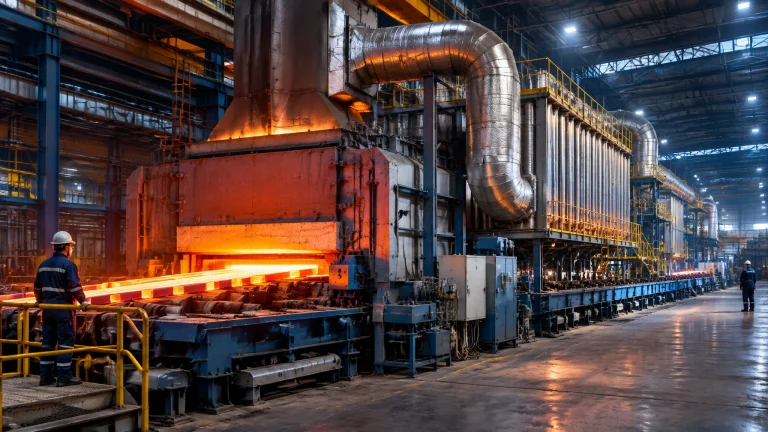
For a steel rolling mill, billet reheating may require temperatures around 1,200–1,250°C, with uniform heating across the billet cross-section. In heat treatment, the critical requirement may be a tightly controlled soak profile rather than maximum temperature. In galvanizing, strip speed, furnace atmosphere and coating temperature must remain synchronized.
The retrofit specification must therefore be based on the process outcome, not simply the age of the furnace.
Five-Phase Retrofit Roadmap
Phase 1: Thermal and Combustion Audit
The first phase establishes the technical and commercial baseline.
The audit should identify:
- Excess-air losses and unstable air-to-fuel ratios
- Burner deterioration and poor flame patterns
- Inaccurate thermocouples, pyrometers or pressure transmitters
- Door, peep-hole and expansion-joint leakage
- Refractory cracks, spalling and exposed metal
- Inefficient flue-gas discharge
- Obsolete PLC, HMI and safety-control hardware
- High-risk components without stocked furnace spare parts
Combustion tuning should cover the full firing range, from low fire to maximum production load. O₂ trim then maintains the target air-to-fuel ratio as fuel quality, combustion-air temperature and furnace draft change.
The target is not simply lower oxygen. The target is stable combustion with low CO, controlled NOx and repeatable heat transfer.
Phase 2: Combustion System and Control Upgrades
Legacy burners often operate with fixed air settings or mechanical linkages that cannot respond accurately to changing production conditions. Modern retrofit packages replace this weakness with automated control.
Potential upgrades include:
- High-velocity burners for improved circulation and temperature uniformity
- Low-NOx burners using staged combustion or optimized mixing
- Recuperative burners that preheat combustion air using waste heat
- Variable-speed combustion-air fans
- Automatic O₂ trim
- Electronic air and fuel ratio control
- Flame scanners and improved ignition systems
- New burner management systems and safety shut-off trains
- Flue-gas heat recovery systems
Low-NOx burner retrofits can reduce NOx substantially while improving efficiency. In suitable applications, burner modernization has delivered 8–15% fuel savings and thermal efficiencies in the 85–92% range. Actual performance must be validated against fuel type, furnace geometry, firing profile and local emissions requirements.
A retrofit must also comply with applicable industrial furnace safety practices, including verified flame failure protection, emergency shut-off, purge sequences and interlocks.

Phase 3: Refractory, Insulation and Thermal Enclosure
Combustion upgrades cannot compensate for a deteriorated thermal enclosure. Cracked refractory, damaged burner blocks and leaking doors force the furnace to consume more energy while creating temperature gradients.
The refractory survey should map condition by zone:
- Hearth and hearth transitions
- Roof and sidewalls
- Burner quarls and blocks
- Door surrounds
- Charging and discharge openings
- Slag lines in melting applications
- High-wear areas exposed to mechanical impact
Use infrared thermography during operation to locate hot spots. Where access permits, combine thermography with refractory thickness mapping and visual inspection during the turnaround.
Seal integrity is equally important. Door gaskets, inspection ports, expansion joints and charging openings should be inspected against a documented leakage standard. Improved refractory and sealing can cut shell losses by 8–15%, extend campaign life and reduce the risk of uneven heating.
For a pit-type annealing furnace, for example, enclosure integrity directly influences vertical temperature distribution, cycle time and treatment consistency, especially for wire coils and long components.
Phase 4: Automation, Sensors and Digital Monitoring
The 2026 furnace is not defined only by its burner or heating element. It is defined by the quality of its data.
An Industry 4.0 retrofit can introduce:
- Recipe-based heating and soaking
- Closed-loop zone temperature control
- Product-temperature measurement
- Fuel, air and electrical energy meters
- Flue-gas O₂, CO and NOx monitoring
- Vibration and bearing-temperature sensors
- Cooling-water flow and pressure monitoring
- PLC/SCADA connectivity
- OPC UA or equivalent open communications
- Energy dashboards showing kWh per tonne or fuel per batch
- Automatic alarm classification and maintenance notifications
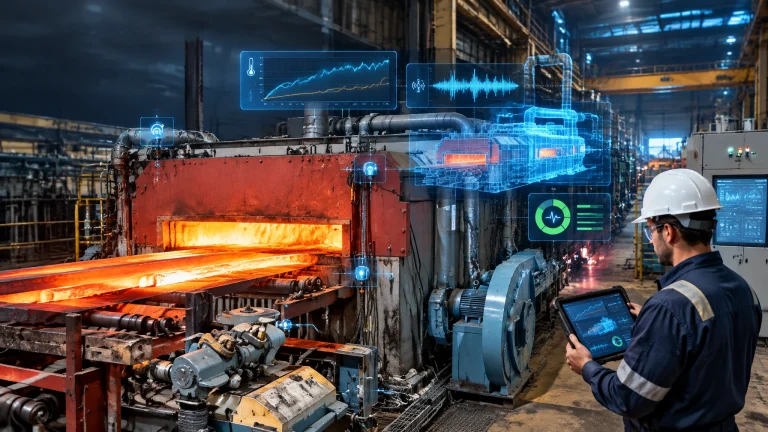
A digital twin can begin as a practical operating model rather than a complex simulation. It should compare expected and actual performance, identify drift and show how changes in throughput, charge mix or recipe affect energy use and quality.
For an aluminum melting furnace or metal recycling furnace, digital monitoring can connect charge weight, melt temperature, dross generation, holding time and metal recovery. For the wire and cable industry, it can correlate line speed, residence time, atmosphere, heating load and product temperature.
Phase 5: Verification, KPIs and Lifecycle Partnership
Commissioning is complete only when the modernized furnace demonstrates performance under production conditions.
Verify:
- Temperature uniformity across the qualified work zone
- Product metallurgical or coating quality
- Specific energy consumption
- Burner stability and air-to-fuel ratio
- O₂, CO and NOx performance
- Safety-interlock operation
- Cycle time and throughput
- Rejection and rework rate
- Planned and unplanned downtime
Review KPIs weekly during the first 90 days and monthly thereafter.
Legacy Furnace vs. Modernized Furnace
The following values are indicative engineering benchmarks, not guaranteed results. Final targets must be established through the baseline audit and process qualification.
| Metric | Legacy furnace | Modernized / retrofitted furnace |
|---|---|---|
| Specific fuel consumption | Baseline, often 100% | 5–30% lower, depending on scope |
| Temperature uniformity | Approximately ±15–30°C | Approximately ±5–15°C |
| Product rejection rate | 3–8% in unstable processes | 1–3% after process stabilization |
| Refractory campaign life | 12–24 months | 18–36 months with improved materials and maintenance |
| Unplanned downtime | 100–250 hours/year | 30–100 hours/year |
| Controls | Manual or obsolete PLC | Recipe-based, networked and traceable |
| Emissions control | Fixed excess air, limited monitoring | O₂ trim, low-NOx control and trend analysis |
| Typical retrofit payback | Not applicable | 12–36 months, project-dependent |
Maintenance Strategy: Condition Before Failure
A modernized furnace requires a modern maintenance system. Condition-based maintenance should replace calendar-only servicing for critical assets.
Prioritize:
- Thermography of furnace shells, doors and refractory zones
- Burner flame-pattern and air-fuel verification
- Thermocouple calibration and drift analysis
- Fan, blower and motor vibration monitoring
- Gas-train and valve inspection
- Refractory thickness mapping
- Electrical-panel thermal scanning
- Cooling-water flow verification
- Alarm-history review
Criticality-classify furnace spare parts by safety impact, failure probability, lead time and production consequence.
Maintain ready-to-use kits for:
- Thermocouples and sensors
- Burner tips and ignition assemblies
- Solenoid valves and regulators
- Gaskets and door seals
- PLC, HMI and communication modules
- Fuses, relays and critical drives
- Refractory repair materials
Turnaround planning should begin months before the outage. Scope freeze, kitting, contractor access, refractory dry-out and commissioning documentation must be coordinated as one project.
Retrofit Applications Across the Plant
The same modernization principles apply across Continental Furnaces’ thermal processing portfolio:
- Heat treatment furnace systems for ferrous and non-ferrous components
- Hot dip galvanizing plants requiring stable furnace atmosphere and coating consistency
- Pickling plants requiring reliable process control and corrosion-resistant equipment
- Melting systems for steel, aluminum and recycled metal
- Continuous thermal processing equipment for rolling mills
- Annealing systems for the wire and cable industry
- Industrial furnace systems requiring controls, refractory and service upgrades
The circular economy also depends on efficient equipment. A well-controlled metal recycling furnace improves recovery, reduces oxidation and turns scrap into a more predictable raw-material stream.
Conclusion: Modernize for Sustained Competitive Advantage
In 2026, replacing a furnace is no longer the default response to declining performance. A structured retrofit can deliver a quantum leap in fuel efficiency, temperature control, product yield, compliance and uptime while protecting capital and shortening the outage window.
Continental Furnaces combines more than 35 years of industrial furnace expertise with customized engineering, energy-efficient technology, quality-focused execution and responsive lifecycle support. Our engineering team can audit your existing heat treatment furnaces, steel rolling mill equipment, melting furnace, galvanizing line or other thermal processing equipment and convert the findings into a phased modernization plan.
Review our industrial furnace technology insights and contact Continental Furnaces to schedule a plant audit.
Do not allow an ageing control system, leaking enclosure or poorly tuned burner to erode your margin. Consult Continental Furnaces now and engineer your existing furnace into a source of sustained competitive advantage.