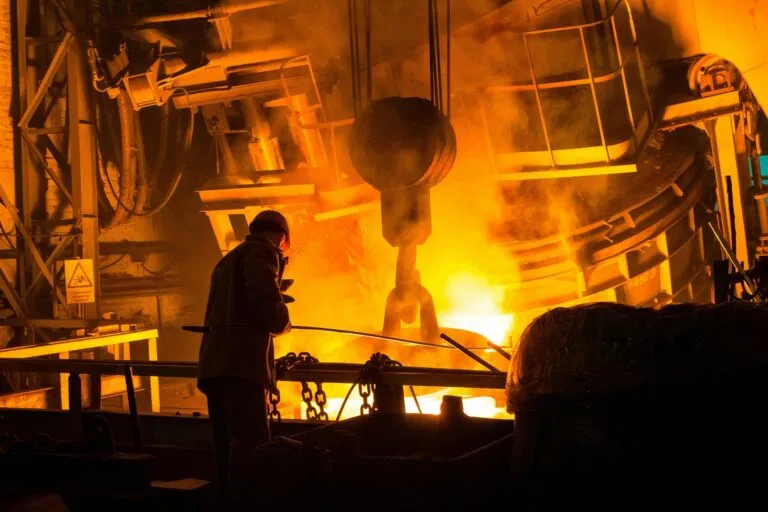
For plant heads, energy managers, and maintenance leaders, furnace performance is no longer measured by temperature alone. The decisive metrics are specific energy consumption, yield, thermal efficiency, uptime, compliance, and lifecycle cost.
A structured furnace energy audit converts operating data into a reliable total cost of ownership (TCO) model. That model then provides the business case for modernization, whether the correct investment is burner optimization, waste heat recovery, digital controls, a new steel rolling mill furnace, or a complete replacement.
The U.S. Department of Energy identifies process heating as one of the largest energy-consuming areas in manufacturing and recommends a systems approach covering heat generation, containment, transfer, recovery, and controls. The same principle applies across steel rolling mill, recycling, wire and cable, automotive, foundry, galvanizing, and heat-treatment operations.
Planning principle: Do not approve a furnace project on CAPEX alone. Approve it on verified energy savings, production value, reliability improvement, compliance exposure, and 10-year TCO.
The 2026 benchmark framework
The following figures are practical engineering planning ranges, not substitutes for plant-specific measurement:
- Modern fuel-fired furnace thermal efficiency: approximately 80–92%
- Best-practice combustion/available-heat performance: approximately 90–92%
- Flue-gas oxygen target: generally 2–3% O₂, dry basis, for clean natural-gas firing; heat-treatment atmospheres may require 3–4%
- Stack exit temperature with effective heat recovery: typically 200–300°C
- Legacy furnace stack temperature: often 400–600°C or higher
- Hot-rolling/reheating SEC benchmark: approximately 1.28 GJ per tonne at best-available-technology level
- Aluminum melting SEC: approximately 500–650 kWh per tonne for an optimized system
- Electric arc steel melting: approximately 400–500 kWh per tonne, depending on charge, productivity, and auxiliary systems
- Refractory campaign planning range: approximately 1,500–3,000 heats or 18–36 months
- Critical furnace package MTBF target: approximately 8,000–12,000 operating hours
- Typical energy-efficiency project payback: 12–36 months, with some burner-tuning and control projects returning value within 6–12 months
Actual performance depends on furnace type, charge density, fuel, production schedule, atmosphere, refractory design, and plant utility costs.
Phase 1: Baseline Audit and Measurement
An energy audit begins with measurement, not assumptions. The audit team should establish a furnace-level baseline over representative production conditions, including normal throughput, product mix, startup, idle, and shutdown periods.

Measure the complete thermal system
For each furnace, record:
- Fuel or electricity consumption per hour and per tonne
- Actual throughput, loading factor, and cycle time
- Furnace-zone temperatures and load temperature
- Flue-gas temperature at the furnace exit and stack
- Flue-gas oxygen, carbon monoxide, and unburned hydrocarbons
- Furnace pressure and air infiltration points
- Door-opening time and idle duration
- Refractory condition and heat loss from furnace skin
- Burner, heating-element, fan, drive, and sensor failures
- Scrap, scale, dross, rejection, and rework rates
- Planned and unplanned downtime
For a steel rolling mill, the baseline should connect billet or slab reheating to rolling output. For heat treatment furnaces, it must connect the thermal cycle to hardness, tensile strength, dimensional stability, and rejection. For a metal recycling furnace, the audit must include charge contamination, melt loss, dross, and tapping efficiency.
Phase 2: Loss Quantification and Benchmarking
Once measurements are available, the engineering team can build a heat balance. This quantifies where purchased energy is going and separates technical losses from production losses.
Common loss categories include:
- Flue-gas and excess-air losses
- Wall, roof, floor, and door radiation losses
- Air infiltration caused by negative furnace pressure
- Heat stored in furnace structure and fixtures
- Cooling-water or cooling-air losses
- Unnecessary holding and idle firing
- Poor heat transfer caused by scale, soot, or damaged surfaces
- Overheating, uneven temperature distribution, and rework
Combustion and exhaust targets
Excess air is one of the fastest ways to increase fuel consumption. A practical target for clean fuel-gas firing is 2–3% O₂ in dry flue gas, with carbon monoxide controlled at safe, low levels. Readings above 5–6% O₂ often indicate avoidable excess air, leakage, or poor burner control.
A modern system should target:
- 200–300°C stack temperature after recuperation or regeneration, where process and corrosion constraints permit
- 90–92% thermal efficiency in a well-designed, properly loaded fuel-fired furnace
- Stable furnace pressure with minimal uncontrolled air infiltration
- Consistent zone-to-zone temperature variation within the process specification
A recuperative burner continuously transfers heat from exhaust gas to combustion air and commonly delivers 10–30% fuel savings compared with cold-air firing. A regenerative burner alternates paired ceramic heat-storage chambers and can deliver 25–50% fuel savings, with heat recovery commonly in the 60–80% range.
The U.S. Department of Energy process-heating sourcebook identifies combustion-air preheating, load preheating, pressure control, insulation, and waste heat recovery as core improvement opportunities.

Phase 3: TCO Modelling and Technology Selection
A furnace investment should be evaluated over a 10–15-year lifecycle, not a one-year budget cycle.
A practical model is:
TCO = CAPEX + Energy + Maintenance + Downtime + Compliance − Residual Value
Include:
- Furnace, burners, heating elements, refractory, controls, and auxiliaries
- Installation, commissioning, civil work, and operator training
- Fuel, electricity, cooling water, compressed air, and consumables
- Planned maintenance, refractory relining, and component replacement
- Lost production from unplanned downtime
- Scrap, rework, scale, dross, and quality claims
- Emissions monitoring and future regulatory requirements
- Upgrade potential, residual value, and end-of-life costs
| Metric | Legacy furnace operation | Modern industrial furnace systems |
|---|---|---|
| Thermal efficiency | 45–70% | 80–92% |
| Specific energy consumption | 1.5–3.0 GJ/t in inefficient reheating service | Approximately 1.28–1.6 GJ/t for efficient reheating applications |
| Flue-gas exit temperature | 400–600°C+ | Approximately 200–300°C with heat recovery |
| Excess oxygen | Often 5–10% O₂ | Typically 2–3% O₂ for clean gas firing |
| Scrap, scale, or rework | 2–5% or higher | Approximately 0.5–2%, process-dependent |
| Unplanned downtime | 100–250 hours/year | 30–100 hours/year with predictive maintenance |
| Refractory campaign | 500–1,500 heats | 1,500–3,000 heats |
| Critical asset MTBF | 3,000–7,000 hours | 8,000–12,000 hours |
| Typical project payback | Not applicable or extended | 12–36 months |
Select technology by operating profile
- Steel rolling mill: evaluate regenerative burners, walking-beam or pusher-furnace optimization, scale reduction, billet tracking, and synchronized charging.
- Heat treatment furnaces: prioritize atmosphere control, temperature uniformity, precise recipes, low thermal mass, and reliable quench integration.
- Aluminum melting furnace: evaluate charge preheating, separate melting and holding zones, reduced door-opening losses, dross control, and regenerative combustion.
- Melting furnace for steel: compare induction, electric arc, and fuel-fired configurations using electricity tariffs, charge mix, tapping schedule, and capacity requirements.
- Wire and cable industry: assess continuous annealing, line-speed synchronization, atmosphere stability, and digital recipe control.
- Hot dip galvanizing plant: include bath heating, pre-treatment drying, fume extraction, zinc yield, and line availability in the TCO model.
Hydrogen-ready combustion systems should also be evaluated where fuel decarbonization is part of the plant roadmap. The correct approach is to specify compatible burners, controls, flame supervision, NOx management, materials, and future fuel-mixing capability without compromising present-day reliability.
Phase 4: Implementation and Verification
A successful project moves through controlled execution rather than an equipment handover.
Implementation sequence
- Freeze the baseline using verified production and energy data.
- Approve the business case using energy, yield, downtime, and compliance benefits.
- Engineer the selected solution around capacity, material, fuel, atmosphere, and space constraints.
- Schedule installation with planned shutdowns to protect delivery commitments.
- Commission at multiple loads, not only at rated capacity.
- Validate temperature uniformity, combustion, emissions, throughput, and product quality.
- Track savings for at least 8–12 weeks against the baseline.
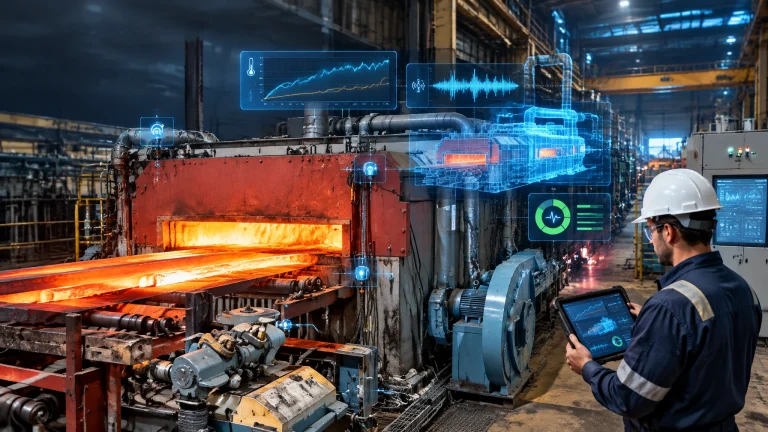
- Integrate the furnace with IIoT, SCADA, energy dashboards, and CMMS.
Industry 4.0 monitoring should trend:
- GJ/t or kWh/t
- Furnace-zone temperature
- Flue-gas O₂ and temperature
- Burner firing rate and cycling
- Refractory-wall temperature
- MTBF and mean time to repair
- Alarm frequency
- Product rejection and rework
- Spare-part consumption
Genuine OEM furnace spare parts protect efficiency
Efficiency gains disappear when critical components are replaced with poorly matched alternatives. Genuine OEM furnace spare parts preserve burner geometry, sensor accuracy, refractory fit, sealing performance, and control response.
Maintain a risk-ranked inventory of:
- Burners, nozzles, valves, and flame scanners
- Thermocouples, pyrometers, and oxygen probes
- Heating elements, radiant tubes, and electrical connectors
- Door seals, expansion joints, and refractory modules
- Fans, dampers, drives, sensors, PLC modules, and safety relays
OEM parts are not merely maintenance consumables. They sustain the designed thermal profile between major overhauls, reduce troubleshooting time, and protect the furnace’s MTBF.
Turning the audit into sustained competitive advantage
The circular economy and sustainability agenda make furnace efficiency a commercial priority. Lower SEC reduces operating cost and emissions. Better yield reduces virgin-material demand. Higher availability protects customer delivery. Digital traceability strengthens regulatory compliance and quality assurance.
Continental Furnaces combines more than 35 years of expertise, ISO-certified quality, customized engineering, energy-efficient technology, and prompt service across heat treatment, melting, recycling, galvanizing, rolling mill, and wire-processing applications.
Review your furnace data, quantify the losses, and build the investment roadmap with an experienced industrial furnace manufacturer. Explore furnace spares and accessories, review hot dip galvanizing plant solutions, or contact Continental Furnaces to convert audited performance into sustained competitive advantage.