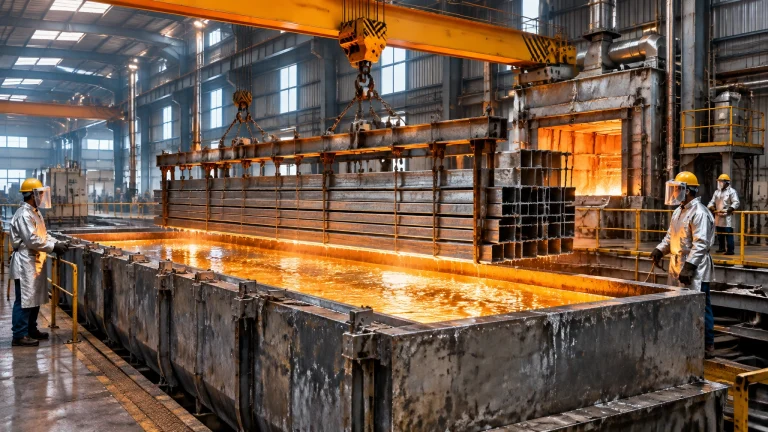
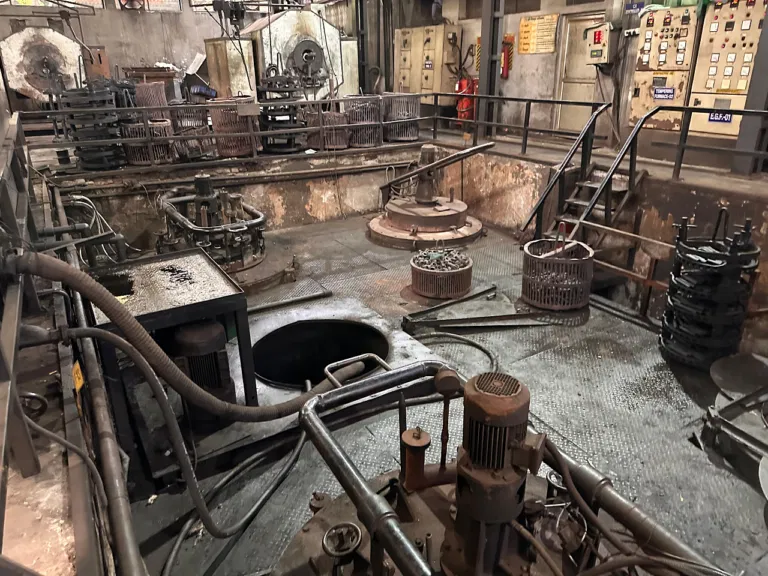
In 2026, furnace performance is no longer measured only by maximum temperature or production capacity. Repeatable thermal profiles, validated temperature uniformity, controlled combustion, documented energy intensity, and audit-ready records now determine yield, customer approval, and long-term profitability.
For every steel rolling mill, foundry, aerospace supplier, automotive plant, and wire-processing facility, the central question is clear:
Can the furnace prove that every component, billet, coil, or batch received the correct thermal treatment?
The answer depends on the quality of the complete control architecture: not merely the furnace chamber.
Continental Furnaces brings more than 35 years of engineering experience to this challenge. As an industrial furnace manufacturer, we design thermal processing equipment around the metallurgical requirement, production rate, atmosphere, fuel source, plant layout, and compliance obligations of each customer.
Why Thermal Process Control Defines Furnace Profitability in 2026
Thermal variation creates costs that are often hidden until final inspection:
- Non-uniform hardness or tensile strength
- Excessive scale formation and decarburisation
- Rework, scrap, and customer complaints
- Higher fuel consumption caused by over-heating
- Unstable galvanizing or coating quality
- Incomplete melting and metal oxidation
- Audit findings caused by missing or unreliable records
A modern furnace must therefore manage five linked variables:
- Temperature setpoint and ramp rate
- Temperature uniformity throughout the qualified work zone
- Atmosphere composition and pressure
- Fuel-to-air ratio and combustion stability
- Energy consumption per tonne or per production unit
These variables apply across a wide operating envelope. Continental Furnaces’ published system capabilities include heat-treatment ranges of approximately 650–1,150°C, melting and recycling applications around 700–1,200°C, reheating and rolling mill applications around 900–1,250°C, and galvanizing processes around 420–470°C.
The Engineering Foundation: Temperature Uniformity
Temperature uniformity is the difference between a furnace that reaches temperature and a furnace that delivers a controlled metallurgical result.
A single control thermocouple can show an acceptable setpoint while cold zones, hot spots, door areas, hearth corners, or product-shadow regions remain outside specification. This is why a Temperature Uniformity Survey (TUS) must be treated as a production-quality exercise rather than an occasional compliance formality.
What a robust uniformity programme includes
- Defined qualified work zone
- Survey points covering the furnace volume
- Calibrated survey thermocouples and instruments
- Corrected readings and documented offsets
- Temperature data recorded throughout the survey
- TUS at the required operating temperatures
- Re-survey after major rebuilds or changes affecting heat flow
- Formal review and approval of the survey report
For reference, typical AMS 2750 furnace-class tolerances range from ±5°F for Class 1 to ±50°F for Class 6. CQI-9 process requirements commonly use process-specific limits such as ±15°C for ferrous austenitising and tighter limits for selected aluminium solution-treatment applications. The applicable customer specification, process table, furnace class, and instrumentation type remain controlling.
Temperature uniformity must also be protected during production. Poor loading patterns, excessive charge density, damaged refractory, blocked burners, leaking doors, and unbalanced circulation can invalidate an otherwise acceptable survey.

Combustion and Atmosphere Control: From Setpoint to Process Stability
Temperature control without combustion control is incomplete.
In gas-fired systems, the burner train must maintain a stable relationship between fuel flow, combustion air, furnace pressure, and exhaust flow. Excess air increases stack losses and oxidation; insufficient air creates incomplete combustion, carbon monoxide risk, flame instability, and inconsistent heat transfer.
A 2026-ready combustion strategy should monitor and control:
- Gas pressure and fuel-flow stability
- Combustion-air pressure and flow
- Air-to-fuel ratio or lambda
- Furnace pressure and exhaust damper position
- Flue-gas oxygen and, where appropriate, carbon monoxide
- Flame supervision and burner interlocks
- Atmosphere dew point, carbon potential, or gas composition where required
- Alarm history and operator acknowledgement
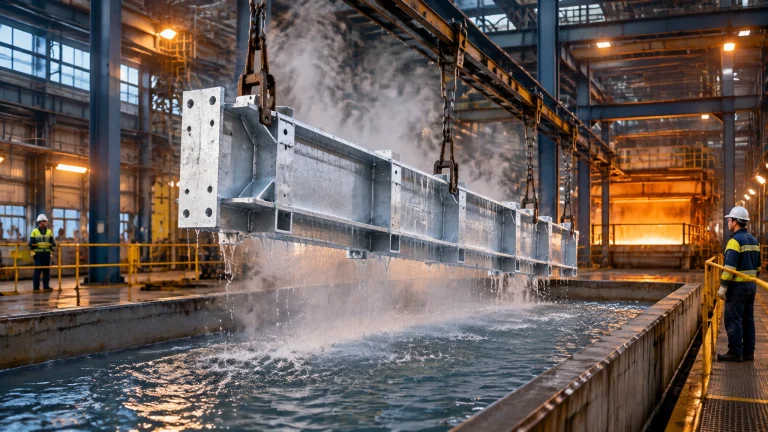
For heat treatment, atmosphere control directly influences surface chemistry and metallurgical consistency. For a hot dip galvanizing plant, stable pre-treatment, bath temperature, withdrawal speed, and coating conditions determine adherence and corrosion resistance. For the wire and cable industry, atmosphere stability is essential for repeatable annealing, surface quality, and mechanical performance.
Conventional Control vs 2026-Ready Control
| Control dimension | Conventional approach | 2026-ready approach |
|---|---|---|
| Temperature measurement | One or limited control points | Multi-zone measurement with validated qualified work zones |
| Uniformity verification | Periodic survey treated as paperwork | Planned TUS, SAT, correction factors, trend review, and requalification triggers |
| Combustion | Fixed air settings and manual adjustment | Ratio control, oxygen trim, pressure monitoring, burner interlocks, and alarm history |
| Atmosphere | Operator judgement or infrequent checks | Continuous or scheduled monitoring of dew point, carbon potential, pressure, or gas composition |
| Production records | Paper charts and fragmented files | Time-stamped digital records linked to batch, recipe, operator, and furnace identity |
| Energy reporting | Monthly utility bill only | kWh or fuel per tonne, batch, coil, billet, or production unit |
| Compliance readiness | Reactive document collection | Controlled procedures, calibration records, audit trails, and defined ownership |
| Corrective action | Adjust setpoint after defects appear | Identify the process variable, contain affected product, and document disposition |
The objective is not automation for its own sake. The objective is repeatable output with defensible evidence.
The 2026 Compliance Roadmap
Phase 1: Assessment and Process Mapping
Start by mapping every thermal process and its acceptance criteria.
Document:
- Furnace type, instrumentation type, and furnace class
- Product families and approved recipes
- Heating, soaking, cooling, and atmosphere requirements
- Qualified work zones and loading patterns
- Fuel, electricity, compressed air, and gas consumption
- Customer standards and export-market obligations
This assessment must include reheating furnaces in a steel rolling mill, an aluminum melting furnace, a melting furnace for steel, continuous annealing lines, and any downstream coating or galvanizing operation.
Phase 2: Instrumentation and Uniformity Validation
Build a controlled pyrometry register covering:
- Control and recording instruments
- Field-test instruments
- Thermocouples and sensor wire
- Calibration intervals and due dates
- Standards traceability
- As-found and as-left results
- Correction factors
- SAT and TUS reports
For aerospace work, align the programme with the current applicable AMS 2750 revision and customer requirements. The SAE AMS 2750H reference provides the governing framework for pyrometry requirements for metallic thermal processing.
For automotive operations, use the AIAG CQI-9 Heat Treat System Assessment as the primary reference and monitor AIAG revision announcements during 2026.
Phase 3: Compliance Integration
Nadcap preparation requires more than a functional furnace. It requires evidence that procedures, personnel, instruments, external laboratories, TUS activities, SATs, and records are controlled. Review the current PRI requirements and applicable Nadcap heat-treating resources before an audit cycle begins.
Integrate the following into the quality system:
- ISO 9001 process controls and documented information
- ISO 14001 environmental performance monitoring
- ISO 50001-style energy performance indicators where energy management is strategic
- Customer-specific requirements
- Nonconformance and corrective-action workflows
- Record retention and traceability
ISO 9001 supports process consistency; ISO 14001 supports environmental monitoring; ISO 50001 provides the most direct structure for energy performance management.
Phase 4: CBAM-Adjacent Energy Reporting
The EU Carbon Border Adjustment Mechanism entered its definitive regime from 1 January 2026 and covers selected carbon-intensive sectors, including iron and steel and aluminium. Importers must address embedded carbon obligations under the applicable rules.
Even where a plant is not directly responsible for the declaration, suppliers increasingly need to provide credible production data. Furnace systems should therefore capture:
- Fuel consumption by batch or production period
- Electricity consumption by furnace or line
- Tonnes processed
- Product and alloy identity
- Direct emissions calculations
- Relevant indirect electricity emissions
- Production dates and installation identity
A controlled energy dataset gives commercial teams stronger evidence for export customers and gives plant managers the information required to reduce energy intensity.

Maintenance Strategies That Protect Uniformity
This edition is focused on process control, not predictive maintenance. However, selected maintenance actions are essential because equipment condition directly affects thermal uniformity.
Prioritise inspection of:
- Burner nozzles, flame shape, and ignition systems
- Thermocouple position, sheath condition, and mounting
- Refractory hot spots, cracks, and insulation compression
- Door seals, hearths, rollers, fans, and circulation paths
- Exhaust dampers and furnace-pressure controls
- Atmosphere injection points and gas analysers
- PLC inputs, data loggers, alarms, and recipe security
Maintain a controlled inventory of furnace spare parts for high-consequence components. Heating elements, thermocouples, refractory materials, burner components, seals, sensors, and control accessories should be specified against the actual furnace design: not purchased as generic substitutes.
Applying the Roadmap Across Industrial Furnace Systems
The same control philosophy scales across different operations:
- A metal recycling furnace requires stable melting conditions, charge control, oxidation management, and energy-per-tonne reporting.
- A steel reheating furnace requires reliable zone control, scale reduction, and temperature consistency before rolling.
- A melting furnace for steel requires robust thermal measurement, refractory protection, and safe high-temperature operation.
- An aluminum melting furnace requires tight control of melt temperature, holding time, oxidation, and dross generation.
- Heat treatment furnaces require validated cycles, calibrated instrumentation, and documented product traceability.
- The wire and cable industry requires continuous control across annealing, patenting, galvanizing, and line-speed changes.
Conclusion: Make 2026 Readiness an Engineering Project
Temperature uniformity, combustion control, atmosphere stability, and compliance documentation are now one integrated business requirement. A furnace that produces heat but cannot demonstrate controlled, repeatable performance creates avoidable risk.
Continental Furnaces combines custom design, automation, commissioning, service, and lifecycle support to deliver measurable thermal performance. Whether you are upgrading an existing line, specifying new thermal processing equipment, or planning a complete industrial furnace systems project, the next step is a structured engineering assessment.
Contact Continental Furnaces today through our consultation and contact page to map your process, compliance requirements, energy data, and upgrade priorities. Build the control architecture that protects yield, strengthens regulatory compliance, and creates sustained competitive advantage.