
The 2026 imperative: reduce GJ/t, emissions and production risk
For every steel rolling mill, combustion efficiency has become a strategic performance indicator. Fuel consumption now affects conversion cost, product yield, carbon exposure, regulatory compliance and the long-term competitiveness of the plant.
Reheating furnaces commonly consume approximately 1.0–2.0 GJ/t of product, while total hot-rolling energy intensity often falls within the 1.8–2.5 GJ/t range. Modern integrated operations are targeting approximately 1.3–1.8 GJ/t through hot charging, direct rolling, advanced combustion and waste-heat recovery.
The 2026 agenda is being accelerated by:
- Volatile natural-gas and electricity prices
- The growth of electric arc furnace (EAF) production and scrap-based steelmaking
- CBAM emissions reporting and certificate obligations from 1 January 2026
- Customer demand for lower-embedded-carbon steel
- Hydrogen blending and future fuel flexibility
- The need to modernize existing assets without replacing complete production lines
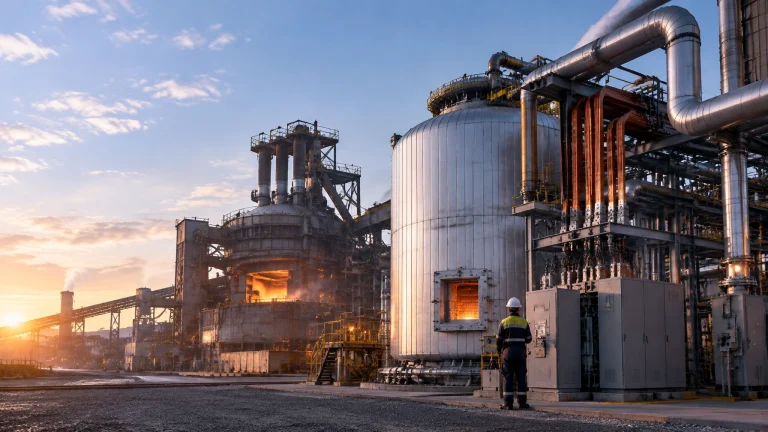
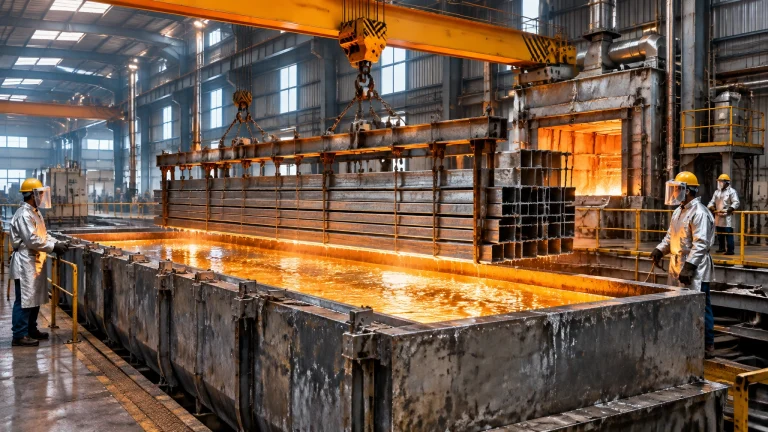
The essential shift is clear: a reheating furnace must be engineered as an energy-recovery system, not merely as a combustion chamber.
What Combustion Efficiency 4.0 means
Combustion Efficiency 4.0 combines four technical layers:
- High-efficiency combustion through regenerative, recuperative, oxy-fuel or flameless technologies.
- Waste-heat recovery from flue gas and furnace exhaust.
- Real-time control of air-fuel ratio, oxygen, pressure, temperature and production load.
- Fuel flexibility for natural gas, hydrogen blends, oxygen enrichment and selected alternative fuels.
A poorly maintained furnace can lose 30–40% of input energy through exhaust gases, wall losses, radiation, skid systems and air infiltration. Burner imbalance, damaged refractory and excessive air can increase specific fuel consumption without creating any visible production defect until energy costs are reviewed.
The objective is not simply a hotter flame. It is uniform heat transfer at the lowest safe fuel input, while controlling scale formation, NOx, temperature variation and metallurgical quality.

Regenerative burners: the highest-impact retrofit for many mills
A regenerative burner system uses paired burners and ceramic storage media. While one burner fires, the opposite burner transfers heat from outgoing flue gas into a regenerator. The flow then reverses, sending preheated combustion air back into the furnace.
This cycle recovers energy that would otherwise leave through the stack.
Published steel-industry experience demonstrates the potential:
- 10–30% fuel savings compared with conventional recuperative arrangements in suitable retrofit conditions
- Approximately 20–35% savings where the baseline uses older or inefficient combustion systems
- Up to 30% average energy savings in documented steel-furnace applications
- Regenerator heat-recovery effectiveness commonly in the 70–90% range, depending on fuel, design and operating conditions
- Payback periods commonly between 1.5 and 4 years, with high-utilization mills often achieving the shorter end of the range
These figures are project benchmarks, not additive guarantees. A regenerative burner retrofit should be evaluated against the existing furnace condition, production schedule, fuel price, exhaust temperature, burner layout and control architecture.
Regenerative burners are particularly effective when:
- Furnace exhaust temperatures are high
- The furnace operates continuously or across multiple shifts
- Existing recuperators are undersized, fouled or degraded
- The plant has high excess-air losses
- A phased retrofit is preferred over complete furnace replacement
Recuperation, oxy-fuel and flameless combustion compared
Recuperative burners transfer heat from flue gas to combustion air through a heat exchanger. They are compact and practical for many heat treatment furnaces, batch furnaces and lower-throughput lines.
Oxy-fuel combustion replaces some or all combustion air with oxygen. This reduces nitrogen ballast in the exhaust, increases available heat and can reduce flue-gas volume. Studies of oxygen-enriched reheating have reported approximately 19.6–26.8% lower natural-gas consumption in specific operating conditions.
Flameless or highly preheated-air combustion distributes the reaction zone, reducing local temperature peaks. With the correct burner geometry and control strategy, it can improve temperature uniformity and reduce NOx while retaining high heat-transfer performance.
| Technology | Typical fuel-saving benchmark | Primary advantage | Main project consideration | Indicative payback |
|---|---|---|---|---|
| Conventional recuperative burner | 10–20% versus cold-air operation | Practical heat recovery and compact installation | Heat-exchanger fouling and pressure drop | 1.5–3 years |
| Regenerative burner | 10–30% versus existing recuperative systems; higher versus cold-air systems | Very high combustion-air preheat and lower stack losses | Switching valves, ceramic media and control integration | 1.5–4 years |
| Oxy-fuel or oxygen enrichment | Approximately 5–25% in suitable applications | Reduced exhaust volume and high available heat | Oxygen cost, safety systems and flame management | Site-specific |
| Flameless/highly preheated-air combustion | Often combined with regenerative systems | Uniform heat flux and lower peak flame temperature | Burner design, furnace geometry and NOx control | Site-specific |
| Advanced APC and oxygen trim | Additional 5–12% after hardware upgrades | Continuous optimization by grade, load and zone | Sensors, data quality and control-system capability | 6–24 months |
Savings should not be simply added together. A properly engineered system models the interaction between burner hardware, air preheat, oxygen enrichment, furnace pressure, residence time and product loading.
Flue-gas temperature is an economic opportunity
High-temperature flue gas represents recoverable process value. Depending on the furnace design and operating profile, exhaust temperatures may reach several hundred degrees Celsius, with the hottest zones operating close to steel discharge temperatures of approximately 1,100–1,250°C.
Useful heat sinks include:
- Combustion-air preheating
- Billet, slab or scrap preheating
- Boiler feedwater heating
- Steam generation
- Process-water heating
- Thermal storage
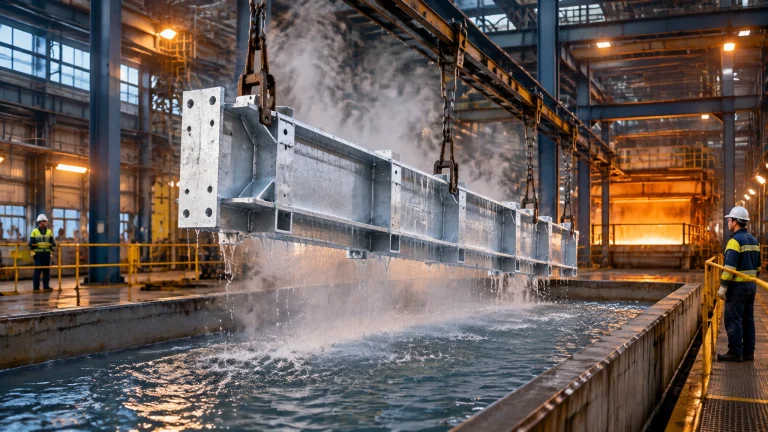
- Adjacent pickling, galvanizing or heat-treatment operations
Every 50°C reduction in combustion-air preheat can materially increase fuel use. Conversely, recovering more sensible heat reduces the duty placed on the fuel system.
A recovery study must measure:
- Exhaust temperature and flow
- Oxygen concentration
- Pressure and draft
- Particulate and corrosive content
- Furnace operating hours
- Available plant heat sinks
- Seasonal production variation
- Maintenance access and cleaning requirements
The strongest business cases combine recovery hardware with sealing, refractory repair, burner balancing and automated control.
Hydrogen blending, EAF growth and CBAM readiness
The global steel transition is changing the role of thermal processing equipment. Scrap-based EAF production represented approximately 29% of global crude-steel production in 2024, while hydrogen-based direct reduced iron and EAF routes remain central to long-term decarbonization strategies.
For a rolling mill, this does not eliminate the need for efficient reheating. It increases the value of every unit of energy saved after casting or EAF production.
Hydrogen-ready combustion systems must address:
- Variable hydrogen blending, potentially from low percentages to high shares
- Higher flame speed and altered ignition behaviour
- Gas-train capacity and pressure regulation
- Flame detection and safety interlocks
- NOx formation and mitigation
- Burner turndown
- Heat-flux distribution
- Revised control logic and purge sequences
The primary benefit of hydrogen blending is lower direct carbon intensity, not automatically lower energy consumption. Burner geometry, regenerative preheat and advanced controls are required to preserve heat-transfer quality as fuel composition changes.
CBAM adds a direct commercial reason to act. The European Union’s definitive CBAM regime applies from 1 January 2026 to covered imports including iron, steel and aluminium. Importers must manage embedded-emissions reporting and, where applicable, certificate obligations. Lower furnace fuel consumption therefore supports both operating profitability and emissions-data performance.

A four-phase roadmap for the 2026 fuel-saving agenda
Phase 1: Assessment and planning
Create a verified baseline over representative production campaigns.
Measure:
- Specific fuel consumption in GJ/t
- Electricity consumption in kWh/t
- Charging, zone and discharge temperatures
- Flue-gas temperature, flow and oxygen
- Furnace pressure and excess air
- Burner condition and zone balance
- Refractory hot spots and door leakage
- Scale loss, yield and unplanned downtime
A plant cannot defend a capital project without a reliable before-and-after measurement method.
Phase 2: Technology selection
Select technology according to operating conditions rather than marketing labels.
Evaluate:
- Recuperative versus regenerative burners
- Oxy-fuel or oxygen-enrichment economics
- Flameless combustion requirements
- Exhaust heat-recovery opportunities
- Hydrogen-blending readiness
- PLC, SCADA and MES integration
- NOx and safety compliance
- Availability of critical furnace spare parts
The correct solution for a continuous slab reheating furnace may differ substantially from the correct solution for batch heat treatment furnaces, an aluminum melting furnace or a metal recycling furnace.
Phase 3: Implementation
Execute the project in controlled stages:
- Repair refractory, doors and seals
- Calibrate thermocouples, oxygen sensors and pressure instruments
- Install burner and heat-recovery systems
- Integrate switching valves and safety logic
- Commission zone-by-zone
- Validate temperature uniformity
- Compare GJ/t against the approved baseline
- Train operations and maintenance teams
A staged retrofit minimizes downtime and provides early evidence of savings before wider deployment.
Phase 4: Continuous improvement
Sustained performance requires ongoing management:
- Track GJ/t by grade, size and shift
- Use oxygen trim and furnace-pressure control
- Monitor regenerator switching performance
- Detect fouling and burner degradation
- Link production scheduling to furnace loading
- Use predictive maintenance for fans, valves and sensors
- Maintain critical spares inventory
- Review hydrogen-blend performance as fuel availability evolves
This is where Industry 4.0 converts furnace data into measurable profitability.

The wider thermal-processing opportunity
The same combustion principles extend beyond the steel rolling mill. They apply to:
- A melting furnace for steel
- An aluminum melting furnace
- A metal recycling furnace
- Continuous heat-treatment lines
- Annealing systems for the wire and cable industry
- Pickling and coating lines
- A hot dip galvanizing plant
- Foundry and non-ferrous thermal systems
Continental Furnaces combines 35+ years of industrial experience, customized engineering, ISO-certified quality and responsive lifecycle support. As an experienced industrial furnace manufacturer, we design complete industrial furnace systems around energy performance, metallurgical quality, maintainability and long-term uptime.
Further reading
- European Commission: Carbon Border Adjustment Mechanism
- IEA: Iron and steel energy-system transition
- Regenerative burner application in steel reheating furnaces
- Continental Furnaces: Hot charging and direct rolling
- Continental Furnaces: Energy efficiency and 2026 steel trends
- Continental Furnaces: Melting for the circular economy
Conclusion: make combustion efficiency a competitive standard
The fuel-saving sequence is decisive:
- Measure the baseline
- Recover heat before it leaves the stack
- Upgrade combustion with the right burner technology
- Control oxygen, pressure and temperature continuously
- Prepare for hydrogen and fuel flexibility
- Connect furnace performance to production and emissions data
- Protect uptime with predictive maintenance and furnace spare parts
A regenerative or oxy-fuel project is not merely an equipment purchase. It is a strategic investment in yield, regulatory compliance, carbon resilience and sustained profitability.
Consult Continental Furnaces for a plant-specific assessment of your reheating furnace, thermal processing line or modernization roadmap. Take action now to secure sustained competitive advantage.