In modern metals manufacturing, temperature control is only half the process. Atmosphere control determines whether the heated surface remains clean, whether carbon potential stays within specification, and whether energy is converted into saleable product rather than scale, rework, or scrap.
For plant directors and operations leaders, this is the 2026 quality agenda: move from furnace temperature management to complete thermal and chemical control. Protective atmospheres, accurate dew-point measurement, stable gas generation, and leak-free furnace construction now directly influence yield, profitability, regulatory compliance, and customer approval.
This applies across heat treatment lines, steel rolling mills, wire and cable production, galvanizing, foundries, recycling operations, and non-ferrous processing.
Why Furnace Atmosphere Control Is a Profitability Issue
A furnace can hold a temperature setpoint and still produce non-conforming material. The reason is straightforward: moisture, oxygen, carbon monoxide, hydrogen, and furnace pressure alter the surface reactions taking place during heating.
Poor atmosphere control can create:
- Decarburization and reduced surface hardness
- Excessive oxidation and scale formation
- Incorrect case depth after carburizing
- Discoloration during bright annealing
- Dimensional variation and inconsistent mechanical properties
- Additional grinding, cleaning, or reheat cycles
- Higher gas consumption caused by control loops compensating for leaks
- Customer claims and lost production capacity
Accurate atmosphere control creates the opposite result: repeatable metallurgy, lower scrap, reduced gas usage, and more stable cycle times.
For example, endothermic carburizing atmospheres commonly contain approximately 40% hydrogen, 40% nitrogen, and 20% carbon monoxide. Their dew point is often maintained within approximately +30°F to +50°F (-1°C to +10°C), depending on the steel grade, furnace temperature, carbon potential, and process specification. These values are operating benchmarks: not universal recipes — and must be validated against the specific treatment cycle.
Dew Point: The Essential Quality Variable
Dew point measures the moisture content of a furnace atmosphere. A higher dew point indicates more water vapor; a lower dew point indicates a drier atmosphere.
That measurement matters because moisture participates in reactions that influence:
- Oxidation and reduction
- Carbon transfer at the steel surface
- Decarburization and carburization
- Brightness and surface cleanliness
- Sintering and powder-metal integrity
In endothermic atmospheres, dew point is commonly used as a practical indicator of carbon potential when furnace temperature and gas composition are stable. A generator may be operating correctly while the furnace atmosphere is not. Air ingress through door seals, radiant tubes, thermocouple ports, water-cooled components, or damaged refractory can raise the furnace dew point and destabilize the process.
A useful maintenance comparison is the difference between the generator dew point and the furnace dew point:
- Small, stable difference: atmosphere delivery and furnace sealing are performing as intended.
- Rising furnace dew point: investigate air leakage, water ingress, or combustion-tube integrity.
- Unstable readings: inspect sampling lines, sensors, pressure control, gas flow, and calibration.
- High dew point with excessive enriching gas: the control loop may be compensating for a leak rather than correcting the underlying problem.
Industry guidance commonly recommends maintaining furnace pressure only slightly above ambient. A reference range of approximately 0.25–0.35 inches water column is cited for many atmosphere furnaces, although the correct value depends on furnace design and process requirements.

Selecting the Right Protective Atmosphere
The correct atmosphere depends on the material, treatment objective, temperature, and required surface condition.
Endothermic gas for carbon-controlled steel treatment
Endothermic, or RX, gas is widely used for carburizing and carbon-controlled heat treatment. A generator cracks a controlled mixture of fuel gas and air over a catalyst to create a repeatable process atmosphere.
Key control points include:
- Air-to-gas ratio
- Catalyst condition
- Generator outlet dew point
- Carbon potential
- CO, CO₂, CH₄, and hydrogen levels
- Furnace pressure
- Delivery-line integrity
- Carbon-probe and analyzer accuracy
A practical benchmark is to verify generator output periodically using a dew-point analyzer or three-gas analyzer rather than relying exclusively on the control system display. Catalyst degradation, sooting, and incorrect flowmeter calibration can change the gas composition before it reaches the furnace.
Exothermic gas for economical protective applications
Exothermic atmospheres are produced through controlled partial combustion. They can serve cost-effective protective or heating applications, but they generally do not provide the same level of carbon-potential control required for demanding carburizing operations.
Their application must therefore be matched carefully to:
- Material sensitivity to oxidation
- Surface-finish requirements
- Temperature range
- Required carbon activity
- Acceptable gas consumption
- Environmental and safety standards
Nitrogen-hydrogen and low-dew-point atmospheres
Bright annealing, brazing, sintering, and stainless-steel processing often require very dry, reducing atmospheres. Depending on the metal and process, target dew points may be below -40°C, with demanding applications operating around -50°C to -70°C.
Continuous measurement is essential. Process-sensing guidance identifies low dew point as a critical factor in preventing oxidation and maintaining consistent metallurgical properties. For sintering near 600°C, a stable dew point around -60°C may be required to prevent moisture-related defects.
Vacuum and controlled-atmosphere heat treatment
Vacuum processing removes atmospheric contamination and supports exceptionally clean surfaces. It is valuable for high-value components, tool steels, aerospace materials, and applications where oxidation cannot be tolerated.
Controlled-atmosphere systems remain highly effective where continuous throughput, large workpieces, or integrated production lines make vacuum processing less practical. The correct choice is determined by:
- Batch size and throughput
- Alloy chemistry
- Surface-finish specification
- Required hardness or case depth
- Loading and unloading method
- Available utilities
- Total lifecycle cost
Conventional Versus Precision Atmosphere Control
| Operating factor | Conventional furnace approach | Modern controlled-atmosphere approach |
|---|---|---|
| Atmosphere verification | Periodic manual checks | Continuous dew point, carbon-potential, and gas analysis |
| Generator monitoring | Setpoint-based operation | Ratio control with independent analyzer verification |
| Furnace sealing | Reactive leak repair | Scheduled integrity testing and pressure monitoring |
| Quality response | Detect defects after the batch | Alarm, trend, and correct deviations during the cycle |
| Gas consumption | Excess flow used as a safety margin | Flow optimized to process demand |
| Surface condition | Variable scale and discoloration risk | Repeatable oxidation and reduction control |
| Maintenance model | Replace components after failure | Calibrated sensors, planned seals, tubes, and furnace spare parts |
| Business outcome | Rework, scrap, and uncertain yield | Higher first-pass quality and predictable throughput |
The return on investment is not limited to fuel savings. Avoiding one failed high-value batch, reducing rework, and extending campaign stability can justify atmosphere-control upgrades faster than energy savings alone.
How Atmosphere Accuracy Improves Energy Efficiency
Atmosphere precision supports energy efficiency through four connected mechanisms:
-
Lower rework and reheat demand
Defective hardness, surface oxidation, or incorrect case depth often require additional processing. Preventing the defect avoids the energy required for a second cycle. -
Reduced excess gas flow
When leakage forces operators to increase enriching or protective gas, the plant pays for gas that is compensating for poor furnace integrity. -
Shorter stabilization periods
Reliable sensors and controlled gas generation reduce the time required to stabilize the furnace before loading production. -
Better thermal integration
A stable atmosphere enables tighter temperature profiles and better coordination with heat recovery, charging, cooling, and downstream handling systems.
These principles apply to thermal processing equipment across ferrous and non-ferrous operations. An aluminum melting furnace requires different atmosphere and oxidation controls from a carburizing furnace, while a melting furnace for steel must address slag, oxygen potential, refractory wear, and off-gas management. The engineering objective remains the same: control the process variables that determine yield.

A Four-Phase Atmosphere-Control Roadmap
Phase 1: Baseline assessment
Document current performance across each furnace and line:
- Generator and furnace dew points
- Carbon potential stability
- Gas consumption per tonne
- Furnace pressure
- Scrap and rework rates
- Cycle time and stabilization time
- Sensor calibration history
- Door, tube, and water-cooling leak points
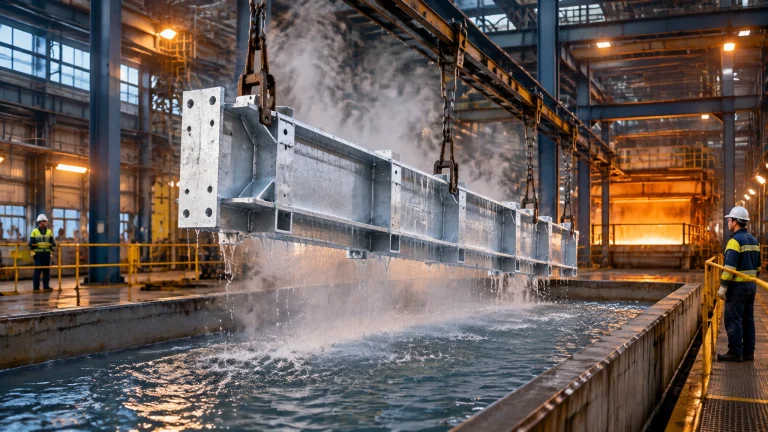
Include connected equipment such as a hot dip galvanizing plant, annealing line, reheating furnace, and metal recycling furnace.
Phase 2: Instrumentation and integrity upgrades
Install or validate:
- Dew-point analyzers at the generator and furnace
- Carbon probes and independent verification methods
- CO₂, CO, CH₄, O₂, and hydrogen analysis where appropriate
- Pressure sensors and alarm limits
- Correct sampling lines and conditioning systems
- Improved door seals, burner tubes, and penetrations
Use OEM-approved furnace spare parts to protect measurement accuracy and minimize unplanned downtime.
Phase 3: Process optimization
Create grade-specific recipes covering:
- Heat-up profile
- Soak temperature and time
- Atmosphere composition
- Dew-point target
- Carbon potential
- Gas flow
- Furnace pressure
- Quench or controlled-cooling conditions
For the wire and cable industry, this approach supports consistent annealing, tensile performance, conductivity, and surface quality. For a steel rolling mill, it helps reduce scale and preserve yield during reheating and downstream treatment.
Phase 4: Lifecycle partnership and continuous improvement
Select an industrial furnace manufacturer capable of supporting the full operating life of the installation: not only the original supply.
A durable support model includes:
- Operator and maintenance training
- Calibration and inspection schedules
- Critical-spares planning
- Burner, sensor, refractory, and seal replacement
- Energy audits
- Control-system upgrades
- Process troubleshooting
- Capacity expansion and retrofit engineering
This is the value of integrated industrial furnace systems: the furnace, generator, controls, sensors, handling equipment, and service plan function as one production asset.
The 2026 Quality Agenda
Atmosphere control is no longer a specialist concern confined to the heat-treatment department. It is a plant-wide performance lever connected to yield, energy intensity, customer quality, sustainability, and regulatory compliance.
Continental Furnaces brings more than 35 years of thermal-processing experience to the design, manufacture, modernization, and support of industrial furnace solutions. From heat treatment furnaces and galvanizing lines to aluminum melting, steel melting, recycling, and specialized processing systems, our approach begins with the material, production target, and lifecycle economics.
Review your furnace atmosphere data before the next quality deviation becomes a lost batch. Consult Continental Furnaces for a structured process assessment, modernization roadmap, and engineered solution designed for sustained competitive advantage.