The 2026 steel manufacturing agenda is defined by one decisive shift: the industrial furnace is no longer an isolated heat source. It is becoming a connected production asset: continuously measured, digitally modelled, and optimized against energy, quality, throughput, emissions, and profitability targets.
For steel producers, rolling mills, foundries, recyclers, and wire manufacturers, this transformation is essential. A connected furnace allows plant teams to move beyond historical averages and operator intuition. It creates a live operational picture of what is happening inside the furnace, why performance is changing, and which control action will deliver the best result.
As an experienced industrial furnace manufacturer, Continental Furnaces sees digitalization as an engineering discipline: not a software overlay. The value emerges when sensors, combustion systems, thermal profiles, automation, and process expertise operate as one integrated system.
Why the Connected Furnace Matters in 2026
Energy remains one of the largest controllable costs in steel and metal processing. At the same time, manufacturers must meet tighter product specifications, reduce carbon intensity, maintain output, and document performance for customers and regulators.
In a steel rolling mill, even a small mismatch between furnace discharge temperature and rolling requirements can create:
- Excessive fuel consumption
- Waiting time between furnace and mill stands
- Temperature-related defects
- Unnecessary reheating
- Increased scale formation
- Lower overall equipment effectiveness
- Higher emissions per tonne of finished steel
A connected furnace addresses these issues by linking furnace data with production scheduling, material tracking, utility consumption, and downstream rolling parameters.
Industry programs are already demonstrating the direction of travel. In 2025, Steel Authority of India Limited and ABB announced a collaboration to develop data-based digital twins for blast furnaces and basic oxygen furnace areas at Rourkela Steel Plant. The plant produced 4.08 million tonnes of saleable steel products in FY 2024–25, illustrating the scale at which digital furnace optimization is becoming strategically relevant.
What a Digital Twin Adds to Furnace Operations
A digital twin is a continuously updated computational representation of a physical furnace, process line, or plant. It combines engineering models with live operating data to show the relationship between operating conditions and production outcomes.
For industrial furnace systems, the twin can model:
- Furnace-zone temperature distribution
- Billet, bar, strip, or wire residence time
- Fuel and combustion-air flow
- Oxygen, carbon monoxide, and flue-gas behaviour
- Furnace pressure and draft
- Burner loading and staging
- Heat transfer and thermal uniformity
- Energy consumed per heat or per tonne
- Production constraints and material movements
The most important advantage is scenario testing. Plant teams can evaluate a change in burner staging, setpoint, production sequence, or fuel mix before applying it to the live process.
This turns the question from “What happened?” into:
- What will happen if the furnace temperature is reduced by 10°C?
- How will a slower rolling schedule affect residence time?
- Can the furnace meet quality requirements with a hydrogen blend?
- Which operating window minimizes fuel per tonne?
- What is the energy cost of a delayed downstream process?
For a heat treatment furnaces installation, the same principle applies to recipe control, soak time, quenching conditions, atmosphere management, and traceability. The digital twin becomes a shared technical reference for production, quality, maintenance, and management teams.

IIoT: The Data Backbone of the Modern Furnace
Industrial Internet of Things technology provides the live data required by the digital twin. The objective is not to install sensors indiscriminately. It is to measure the variables that directly influence quality, energy consumption, asset health, and compliance.
Typical furnace data points include:
- Zone temperature and product temperature
- Fuel flow and combustion-air flow
- Furnace pressure
- Oxygen and carbon monoxide levels
- Flue-gas temperature and composition
- Burner status and firing rate
- Fan, blower, and pump vibration
- Electrical power demand
- Door position and charging activity
- Material entry and discharge timestamps
Energy meters should be installed at meaningful boundaries: the furnace, major mill drives, reheating auxiliaries, compressors, and other high-load equipment. This enables reporting in practical terms such as kWh per tonne, fuel per heat, and carbon dioxide per finished tonne.
Edge gateways are equally important. Furnace environments can be hot, dusty, and operationally critical. Local edge processing allows alarms, interlocks, and selected optimization functions to continue operating even when cloud connectivity is interrupted.
Real-Time Energy Optimization: From Monitoring to Action
Monitoring energy consumption is only the first step. The commercial advantage comes from converting data into real-time action.
A connected optimization layer can continuously coordinate:
- Air–fuel ratio
- Burner staging
- Furnace-zone setpoints
- Furnace pressure
- Product residence time
- Waste-heat recovery
- Charging sequence
- Mill schedule
- Idle and standby periods
- Electricity demand peaks
For combustion systems, maintaining the correct air–fuel ratio is fundamental. Excess air carries heat out through the stack, while insufficient air causes incomplete combustion, unstable flames, carbon monoxide formation, and quality risks. A digital model can identify these conditions faster than periodic manual checks.
The performance opportunity is significant. Industry research and active steel digitalization programs commonly report potential improvement ranges such as:
- 5–15% lower energy per heat in data-optimized electric melting operations
- 10–18% lower energy cost per tonne through coordinated load management
- 20–30% lower energy use in selected melting applications when efficient burners, automation, and heat recovery are combined
- 12–24-month payback periods for well-scoped furnace modernization projects
These figures are project benchmarks, not universal guarantees. The achievable result depends on the existing furnace condition, production mix, baseline energy intensity, control architecture, operating discipline, and quality requirements. A robust energy baseline must be established before savings are calculated.
Traditional Furnace Control vs. Connected Furnace Control
| Performance area | Traditional disconnected operation | Connected digital operation |
|---|---|---|
| Temperature management | Periodic readings and fixed setpoints | Continuous zone and product-temperature analysis |
| Combustion control | Manual adjustment or basic closed-loop control | Dynamic air–fuel optimization and burner staging |
| Energy reporting | Monthly or shift-level estimates | Real-time kWh/t, fuel/t, and CO₂/t dashboards |
| Production response | Operator reacts after deviation | Model recommends corrective action before deviation |
| Quality control | End-of-line inspection | Process traceability linked to thermal history |
| Labour requirement | Multiple manual checks | Automated data collection with exception-based response |
| Planning | Fixed schedules | What-if simulation for throughput and energy impact |
| ROI visibility | Difficult to isolate | KPI-based measurement by product, heat, and campaign |
The connected approach does not eliminate experienced operators. It amplifies their judgment with faster, more complete information.

The 2026 Furnace Digitalization Roadmap
Phase 1: Assessment and Planning
Start with an engineering audit, not a software purchase. Document:
- Furnace configuration and production capacity
- Existing PLC, SCADA, MES, and ERP architecture
- Fuel and electricity consumption
- Critical quality variables
- Manual data-entry points
- Production bottlenecks
- Communication and cybersecurity requirements
The first deliverable should be an asset and data map showing where reliable information exists and where instrumentation is required.
Phase 2: Connectivity and Instrumentation
Install or validate the sensors that affect operating decisions. Prioritize high-value assets and measurable business outcomes.
A practical first deployment may include:
- Temperature sensors in critical furnace zones
- Fuel and air-flow meters
- Flue-gas analysers
- Power meters
- Pressure transmitters
- Vibration sensors on fans and drives
- Edge gateways connected to the plant historian
Phase 3: Digital Twin Development
Begin with a descriptive twin that shows the current state of the operation. Progress to diagnostic and predictive capabilities as data quality improves.
The twin should be calibrated against:
- Actual production rates
- Furnace temperature surveys
- Energy bills and meter data
- Product quality results
- Material residence times
- Burner performance
- Historical process deviations
Phase 4: Optimization and Operator Integration
The optimization layer should provide clear recommendations rather than unexplained automated commands. Operators need to see:
- The current condition
- The recommended action
- The expected energy or quality impact
- The reason for the recommendation
- The relevant alarm or process constraint
This human-centred approach accelerates adoption and protects production continuity.
Phase 5: Scale Across the Plant
Once the first furnace delivers validated results, extend the architecture to connected rolling mills, galvanizing lines, melting units, and utility systems.
The same framework can support an aluminum melting furnace, a melting furnace for steel, a metal recycling furnace, or a continuous annealing line for the wire and cable industry. A common data structure allows management to compare performance across equipment, products, and sites.
Digitalization Across Thermal Processing Applications
Connected furnace technology is not limited to steel reheating.
- In aluminum recycling, real-time monitoring supports metal recovery, melt consistency, and energy control. Continental Furnaces’ published work on industrial aluminum melting furnace applications highlights the importance of automation, quality monitoring, and recovery performance.
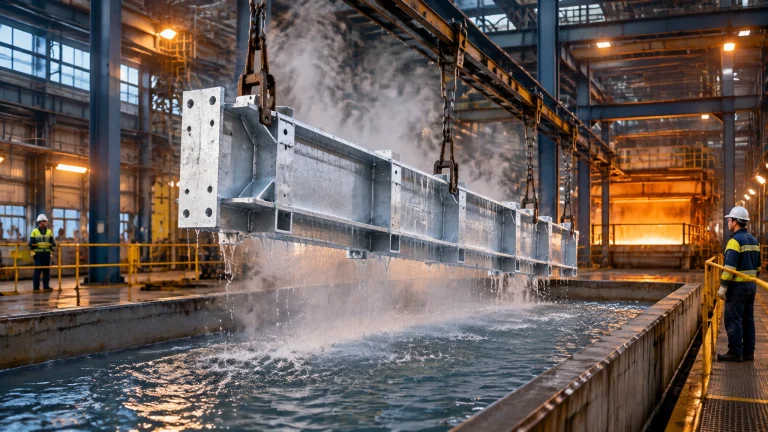
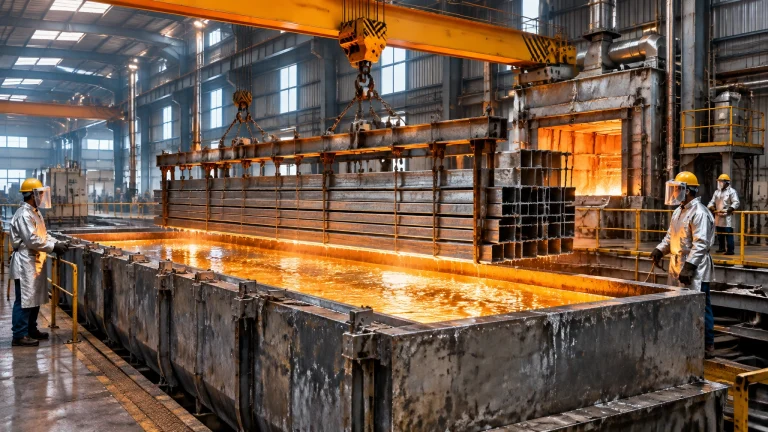
- In galvanizing, a connected hot dip galvanizing plant can link bath temperature, line speed, coating quality, and material traceability.
- In heat treatment, recipe control and thermal uniformity can be connected to product certificates and customer specifications.
- In recycling projects, furnace data can help quantify yield, emissions, and circular-economy performance.
- In wire production, connected vertical and continuous annealing systems can coordinate wire speed, thermal exposure, and downstream quality.
The result is a more transparent form of thermal processing equipment management, where engineering decisions are tied directly to yield and profitability.
The Role of the Industrial Furnace Partner
Digital transformation succeeds when the physical furnace and the digital layer are engineered together. A software provider may deliver dashboards, but the furnace manufacturer understands burner behaviour, refractory limitations, thermal profiles, process windows, and the consequences of changing a setpoint.
Continental Furnaces has operated in industrial thermal processing since 1987, supporting ferrous and non-ferrous wire, heat treatment, annealing, melting, galvanizing, and related applications. Our approach combines customized engineering, energy-efficient technology, ISO-certified quality practices, furnace spare parts, commissioning, and responsive after-sales service.
This is an enduring partnership. The objective is not merely to install connected equipment. It is to create a lifecycle platform that improves performance through commissioning, operator training, data validation, optimization, upgrades, and long-term technical support.
The Morning Takeaway
The connected furnace is now a central component of the 2026 steel manufacturing agenda. Digital twins create operational intelligence. IIoT creates visibility. Real-time energy optimization converts that visibility into measurable action.
Plants that connect furnace performance with rolling schedules, quality data, energy meters, and production planning will achieve stronger control over:
- Energy intensity
- Throughput
- Thermal uniformity
- Product yield
- Emissions reporting
- Regulatory compliance
- Asset utilization
- Long-term operating cost
The next competitive advantage in steel will not come from heating more aggressively. It will come from knowing precisely when, where, and how much heat the process requires.
Contact Continental Furnaces to assess your furnace data foundation, digitalization roadmap, and energy optimization opportunities. Make the connected furnace a strategic move toward sustained competitive advantage.