Afternoon Edition | 10 September 2026
Industrial furnace performance is now measured by more than temperature achievement. For a modern steel rolling mill, foundry, recycling facility, galvanizing line, or wire-processing plant, furnace reliability directly determines yield, energy intensity, product quality, and regulatory compliance.
The 2026 operating standard is clear: thermal processing equipment must be measurable, maintainable, digitally connected, and designed for lifecycle value.
This edition examines the maintenance strategies and technology updates that will define high-performing industrial furnace systems through 2026 and beyond.
The Maintenance Mandate for 2026
Reactive maintenance remains one of the most expensive operating models for high-temperature equipment. An unexpected failure of a burner, refractory lining, thermocouple, fan, conveyor, or control system can stop production for hours: or require a prolonged cool-down and restart cycle.
A modern maintenance programme must progress through three levels:
- Preventive maintenance: Scheduled inspection, calibration, cleaning, and replacement based on operating hours or OEM recommendations.
- Condition-based maintenance: Maintenance triggered by real-time temperature, vibration, pressure, energy, and combustion data.
- Predictive maintenance: Analytics used to identify deterioration trends before failure affects production.
The business impact is substantial:
- Lower unplanned downtime
- More stable product quality
- Reduced emergency labour and expedited freight
- Better control of energy consumption
- Longer refractory and burner life
- Improved safety and environmental performance
Research and industrial maintenance practice consistently emphasize that furnace cleaning, calibration, refractory inspection, and sensor-based monitoring must operate as one integrated programme. See the industrial furnace maintenance guidance from Advanced Technology Services for additional maintenance principles.
Traditional Maintenance Versus the 2026 Standard
| Performance area | Traditional approach | 2026-ready approach |
|---|---|---|
| Maintenance trigger | Failure or fixed calendar interval | Condition and risk-based intervention |
| Energy measurement | Monthly utility bill | Real-time kWh/t, Nm³/t, or GJ/t |
| Temperature control | Single-point or manually checked readings | Multi-zone sensors, recipes, and deviation alerts |
| Labour requirement | Frequent manual rounds and emergency response | Targeted inspections supported by dashboards |
| Fuel performance | Corrected after high consumption appears | Combustion tuning, oxygen trim, and heat-recovery monitoring |
| ROI evaluation | Equipment price only | Lifecycle cost, downtime exposure, yield, and energy savings |
| Typical retrofit screening | Unplanned capital expenditure | 12–36-month payback target, validated by a thermal audit |
A properly engineered combustion, insulation, sealing, and heat-recovery upgrade can create 15–30% fuel-saving potential, depending on furnace condition, operating profile, charge temperature, and baseline efficiency. Improved insulation alone can deliver energy savings approaching 20% in suitable applications.
These are engineering benchmarks: not universal guarantees. The correct business case begins with measured data.
Phase 1: Establish a Furnace Health Baseline
Before upgrading controls or specifying new equipment, plant teams must establish the current operating condition.
A comprehensive assessment should document:
- Furnace type, age, capacity, and production duty
- Fuel or electricity consumption per tonne or batch
- Temperature profiles and uniformity
- Flue-gas temperature, oxygen, carbon monoxide, and NOx
- Burner condition and air-to-fuel ratio
- Refractory cracks, spalling, hot spots, and shell temperature
- Door seal and gasket integrity
- Fan, blower, conveyor, roller, and drive condition
- Alarm history and control-system obsolescence
- Planned and unplanned downtime
- Scrap, scale, dross, rejection, and rework rates
- Availability of critical furnace spare parts
Infrared thermography is particularly valuable for locating insulation failures and shell hot spots without waiting for a major shutdown. Flue-gas analysis identifies excess-air losses, unstable combustion, and burner imbalance.
The objective is to convert furnace performance from an opinion into a verified operating baseline.
Phase 2: Build a Disciplined Maintenance Programme
Daily and Shift-Based Checks
Operators should record deviations at the point of use rather than relying only on monthly engineering reviews.
Daily checks should include:
- Zone temperatures and recipe adherence
- Burner flame stability or electrical heating response
- Furnace pressure and draft
- Door and access-point sealing
- Cooling-water flow and leakage
- Fan and blower vibration or unusual noise
- Gas, electrical, and hydraulic connections
- Alarm history and safety-interlock status
- Energy consumption against production output
Monthly and Bi-Monthly Checks
Maintenance teams should schedule deeper inspection and calibration activities:
- Clean burners, pilots, sensors, fans, and blowers
- Inspect heating elements for erosion or uneven loading
- Analyse combustion gases
- Calibrate thermocouples, pyrometers, and atmosphere sensors
- Inspect refractory linings for cracks and hot spots
- Check conveyor, roller, and door-mechanism alignment
- Review critical spare-part consumption
- Confirm emergency shutdown and flame-failure systems
Quarterly and Annual Activities
During planned shutdowns:
- Clean flues, ducts, chambers, and scale accumulation
- Perform temperature-uniformity testing
- Lubricate bearings, drives, linkages, and moving assemblies
- Conduct a complete refractory survey
- Overhaul worn burners, fans, valves, and drives
- Update PLC logic, HMI screens, recipes, and alarm limits
- Verify safety circuits and electrical-panel integrity
- Reconcile maintenance history with operating hours and heat cycles
For heat treatment furnaces, temperature uniformity commonly requires control within approximately ±3°C to ±10°C, depending on the material, process, and applicable standard. Any drift can affect hardness, tensile strength, elongation, surface condition, or dimensional stability.

Maintenance Priorities by Furnace Application
Different processes create different failure mechanisms. A maintenance programme must reflect the metallurgy and production duty.
Steel Rolling Mill and Steel Melting Applications
A melting furnace for steel operates in an extreme thermal and chemical environment. Molten-steel temperatures commonly fall within approximately 1,500°C to 1,650°C, making refractory erosion, slag attack, cooling-system reliability, electrode condition, and off-gas management central maintenance priorities.
For a steel rolling mill reheating furnace, maintenance should focus on:
- Burner balance and flame geometry
- Billet temperature uniformity
- Roller alignment and scale removal
- Door sealing and furnace pressure
- Recuperator or regenerative-burner condition
- Discharge-temperature consistency
- Scale formation and oxidation losses
Aluminum Melting and Recycling
An aluminum melting furnace generally operates around 660°C to 750°C, depending on alloy and holding practice. The principal risks are dross formation, contamination, refractory attack, excessive holding time, and heat loss during charging.
Maintenance teams should monitor:
- Dross generation per tonne
- Metal recovery rate
- Door-opening frequency
- Burner efficiency and flame stability
- Bath-temperature uniformity
- Refractory condition around charging areas
- Flue-gas temperature and heat-recovery performance
A properly integrated metal recycling furnace also supports circular-economy objectives by processing internal returns, machining scrap, defective castings, and purchased scrap into controlled secondary feedstock.
Hot Dip Galvanizing and Wire Processing
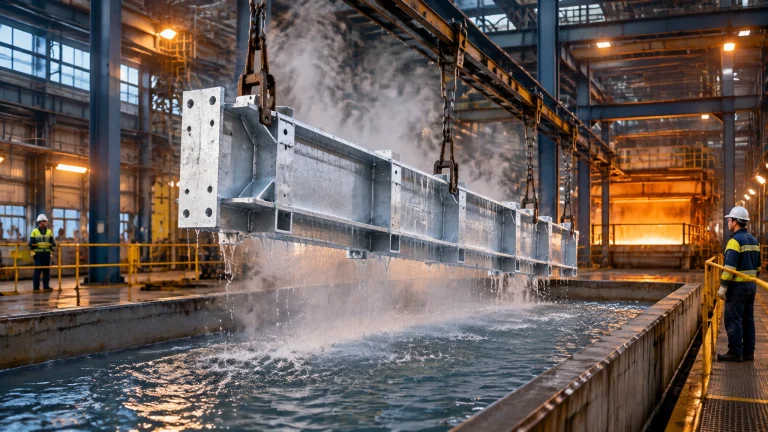
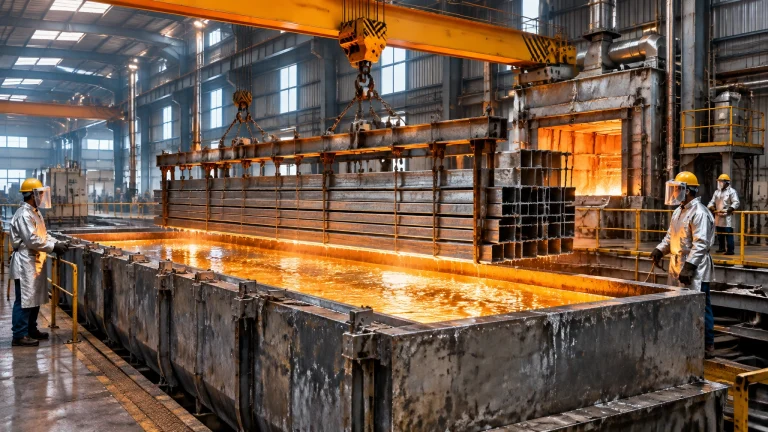
A hot dip galvanizing plant typically maintains a zinc bath near 450°C to 460°C. Temperature instability, kettle-wall wear, burner fouling, and poor process control can produce coating defects and unnecessary energy consumption.
For the wire and cable industry, continuous annealing systems require stable temperature, line speed, atmosphere, and cooling conditions. Even small deviations can affect conductivity, tensile strength, elongation, and surface quality.
Critical maintenance actions include:
- Bath-temperature mapping
- Kettle and refractory inspection
- Burner and circulation-system servicing
- Conveyor and line-speed verification
- Annealing-zone calibration
- Atmosphere and cooling-system monitoring
- Traceability of recipes and production batches

2026 Technology Updates: From Sensors to Decision Systems
The most important technology update is not a single furnace component. It is the integration of furnace data with maintenance, production, and energy-management systems.
IIoT and Edge Monitoring
Sensors can be added to both new and existing equipment to monitor:
- Multi-zone temperature
- Fuel, power, and auxiliary energy consumption
- Fan and motor vibration
- Furnace pressure and draft
- Flue-gas oxygen and carbon monoxide
- Burner performance
- Shell temperature and refractory hot spots
Edge gateways allow data to reach SCADA, CMMS, MES, or cloud analytics platforms without requiring a complete furnace replacement.
Predictive Analytics and Digital Twins
A 2026-ready system can compare live operating data against historical cycles and expected performance. This enables earlier detection of:
- Burner fouling
- Fan-bearing deterioration
- Refractory wear
- Sensor drift
- Increasing energy intensity
- Unusual cycle duration
- Repeated quality deviations
Digital-twin models can simulate recipe changes, production schedules, charge conditions, and energy strategies before they are applied to the live line.
Controls, Connectivity, and Energy Optimization
Modern control upgrades should include:
- Recipe-based heating and soaking
- Automatic idle firing reduction
- Oxygen-trim capability where applicable
- Open communication protocols such as OPC UA
- Role-based access and audit trails
- Alarm prioritization
- Remote diagnostics
- Energy dashboards by batch, grade, or tonne
The result is a quantum leap from displaying temperature to managing yield, energy, quality, and asset risk as connected business variables.
Phase 3: Protect Uptime with a Critical-Spare Strategy
A furnace cannot be considered reliable if its critical components are unavailable when failure occurs.
Risk-based inventories should include:
- Thermocouples and temperature sensors
- Burners, pilots, valves, and regulators
- Heating elements and electrical components
- Door seals, gaskets, and insulation
- Refractory modules and repair materials
- Bearings, belts, chains, and drive components
- Fans, blowers, and vibration sensors
- PLCs, HMIs, relays, and communication modules
Plants should classify spare parts by failure impact, lead time, and interchangeability. A low-cost thermocouple with a short lead time may require a different stocking policy from an obsolete PLC or custom burner assembly.
Continental Furnaces supports lifecycle requirements through furnace spares and technical assistance, enabling customers to plan maintenance rather than depend on emergency procurement.

Phase 4: The 2026 Modernization Roadmap
A practical modernization programme should proceed in chronological phases.
Phase 1: Assessment and Planning
- Complete a thermal and production audit
- Establish energy, downtime, yield, and quality baselines
- Identify safety and compliance gaps
- Map obsolete controls and critical components
- Define the expected return on investment
Phase 2: Reliability Upgrades
- Repair refractory and insulation defects
- Seal doors and access points
- Tune combustion systems
- Calibrate sensors
- Replace high-risk spare parts
- Correct mechanical alignment and lubrication failures
Phase 3: Digital Integration
- Install priority sensors and energy meters
- Connect SCADA and CMMS systems
- Standardize alarms and failure codes
- Introduce condition-based work orders
- Build production and maintenance dashboards
Phase 4: Optimization and Expansion
- Implement predictive analytics
- Add heat recovery or high-efficiency burners
- Optimize recipes and batch scheduling
- Evaluate electrification or hybrid heating
- Expand data integration across the production line
Continental Furnaces: Engineering for Lifecycle Value
Selecting an industrial furnace manufacturer is a strategic decision. The supplier must understand furnace geometry, metallurgy, automation, refractory behaviour, production scheduling, safety, and total cost of ownership.
With more than 35 years of expertise, Continental Furnaces designs customized, ISO-certified solutions for:
- Steel rolling mill and reheating applications
- Heat treatment and annealing
- Ferrous and non-ferrous melting
- Aluminum melting and recycling
- Hot dip galvanizing plant projects
- Pickling plants
- Wire and cable processing
- Furnace spare parts and accessories
- Energy-efficient industrial furnace systems
Explore the hot dip galvanizing plant solutions, review our metal recycling project expertise, or assess the latest thermal processing solutions.
Conclusion: Turn Maintenance into Competitive Advantage
In 2026, furnace maintenance is no longer a support function. It is a direct contributor to profitability, yield, energy performance, regulatory compliance, and customer confidence.
The strongest plants will:
- Measure energy per tonne and batch
- Maintain refractory and combustion systems proactively
- Use predictive analytics to reduce failure risk
- Stock critical furnace spare parts
- Connect furnace data to plant systems
- Protect temperature uniformity and metallurgical quality
- Plan modernization in controlled phases
Continental Furnaces builds enduring partnerships around engineering performance, prompt service, customized design, and lifecycle value.
Contact Continental Furnaces to assess your furnace condition, define a 2026 maintenance roadmap, and make thermal performance a foundation of sustained competitive advantage.