
The 2026 Priority: More Recycled Metal, Less Energy per Tonne
For plant managers, production directors, and procurement leaders, melting efficiency has become a direct profitability issue. Energy costs, scrap availability, emissions reporting, and customer requirements are converging around one operational question:
How efficiently can a plant convert secondary metal into saleable, specification-compliant product?
The answer depends on more than the furnace itself. Charge preparation, furnace loading, heat recovery, temperature control, metal yield, downstream thermal processing, and maintenance all determine the true cost per tonne.
The circular economy creates a compelling industrial opportunity:
- Recycled aluminum requires approximately 95% less energy than primary aluminum production, according to the International Aluminium Institute.
- Scrap-based electric arc furnace steelmaking typically operates in the range of 350–500 kWh per tonne, depending on scrap quality, furnace configuration, power density, and process controls.
- Modern aluminum melting systems can target approximately 500–650 kWh per tonne under well-optimized operating conditions.
- Melt loss targets of 1–2% for prepared aluminum scrap represent strong circular-economy performance.
These benchmarks are not universal guarantees. They are engineering reference points for evaluating an existing furnace, selecting a new system, and establishing measurable improvement targets.
Aluminum Melting: Yield Begins with Charge Discipline
An efficient aluminum melting furnace must manage three variables simultaneously: energy input, metal recovery, and alloy quality. Scrap is valuable only when the furnace preserves as much of that material as possible.
Aluminum’s high surface-area-to-volume ratio makes chips, turnings, painted scrap, and thin-gauge material particularly vulnerable to oxidation. Poorly prepared scrap increases dross formation, extends melting cycles, and raises energy consumption per tonne of liquid metal.
Essential efficiency levers
- Charge preparation: Sorting, drying, decoating, and densifying scrap reduce contamination and oxidation.
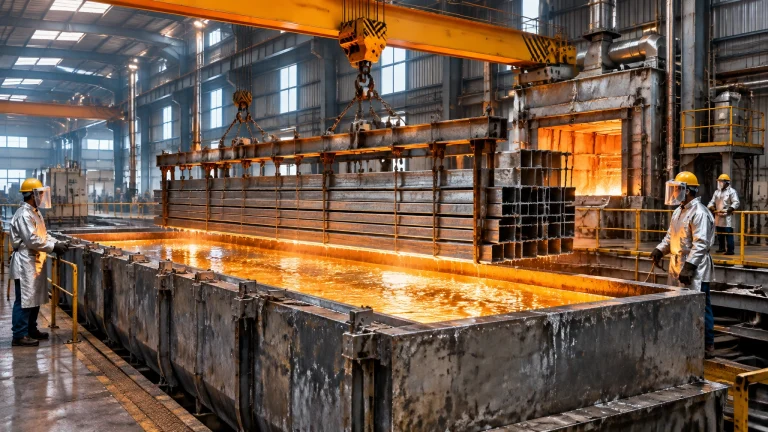
- Correct furnace selection: Double-chamber, rotary, induction, and tilting systems serve different scrap profiles and throughput requirements.
- Reduced door-open time: Charging and skimming procedures must minimize cold-air infiltration.
- Separate melting and holding: This prevents the furnace from operating at peak temperature when only temperature maintenance is required.
- Heat recovery: Recuperative or regenerative systems can preheat combustion air or incoming charge material.
- Accurate temperature measurement: Stable control protects alloy chemistry and reduces unnecessary superheat.
- Dross management: Efficient skimming and recovery protect yield and reduce saleable metal losses.
Continental Furnaces’ published aluminum furnace applications identify recovery rates above 99% for suitable processes and materials. Actual results depend on the scrap mix, charge density, furnace design, operating practice, and alloy specification.

Steel Melting: Scrap Quality and Electrical Performance Drive the Result
A melting furnace for steel must deliver high-temperature performance while controlling electrical consumption, electrode or power-system demand, refractory wear, and tap-to-tap productivity.
For scrap-based steel production, the electric arc furnace remains a central circular-economy technology. It converts end-of-life steel, manufacturing offcuts, and process returns into new liquid steel without repeating the full reduction route from iron ore.
The U.S. Department of Energy’s iron and steel program identifies the significant energy advantage of scrap-based steelmaking, while the U.S. Energy Information Administration confirms that EAF production has materially lower energy intensity than conventional blast furnace–basic oxygen furnace production.
Operational priorities for steel melting
- Maintain a consistent scrap basket with controlled residuals and contamination.
- Use scrap preheating or hot charging where plant layout and process economics support it.
- Optimize electrical input, arc stability, and power factor.
- Limit unnecessary holding time between melting and tapping.
- Recover useful off-gas energy where technically and economically justified.
- Integrate fume extraction without creating excessive heat loss.
- Track energy against tonnes of liquid steel, not only furnace operating hours.
Steel recycling does not eliminate the need for high-quality thermal processing. After melting and casting, products still require controlled reheating, annealing, normalizing, stress relieving, or other metallurgical treatments to meet final performance specifications.
Induction, Gas-Fired, and Electric Arc Systems: A Practical Comparison
Technology selection must follow the material stream, production rate, energy availability, emissions requirements, and downstream process. No single furnace architecture is optimal for every plant.
| Decision factor | Induction melting | Optimized gas-fired melting | Electric arc furnace |
|---|---|---|---|
| Best fit | Clean or prepared ferrous and non-ferrous charge | High-throughput aluminum and thermal process lines | Scrap-based steel production |
| Typical energy benchmark | Approximately 480–620 kWh/t for aluminum; 500–600 kWh/t for steel under good practice | Approximately 500–650 kWh/t equivalent with heat recovery; older systems may exceed 800 kWh/t | Approximately 350–500 kWh/t electricity for many scrap-based operations |
| Primary efficiency advantage | Direct, controllable electrical heating | High-temperature combustion with recuperation or regeneration | Fast melting of high-volume scrap |
| Key risk | Electrical infrastructure and peak-demand cost | Flue-gas loss, excess air, infiltration, and fuel-price exposure | Scrap variability, power quality, off-gas, and electrode consumption |
| Circular-economy contribution | High yield from controlled melting | Effective processing of diverse prepared scrap | Large-scale conversion of steel scrap into new steel |
The correct evaluation must include total cost per tonne, metal yield, labor, emissions control, maintenance, and lifecycle support. A lower-capital furnace can become the higher-cost asset when it consumes more energy and produces greater melt loss over ten operating years.
From Melting to Finished Product: Downstream Thermal Processing Matters
Circularity does not end at the tap-out point. The quality and efficiency of downstream operations determine whether recycled metal becomes a reliable industrial product.
A modern steel rolling mill requires coordinated reheating, rolling, cooling, and heat treatment. Incorrect temperature uniformity can create scale, uneven mechanical properties, dimensional instability, or excess rejection.
Continental Furnaces supplies heat treatment furnaces designed for controlled heating profiles, uniform temperature distribution, and customized industrial production requirements.
The same principle applies across connected sectors:
- Rolling mills: Reheating and heat treatment must support throughput without excessive scale formation or thermal loss.
- Wire and cable industry: Annealing furnaces require precise temperature control, stable line speed, and consistent metallurgy across long continuous runs.
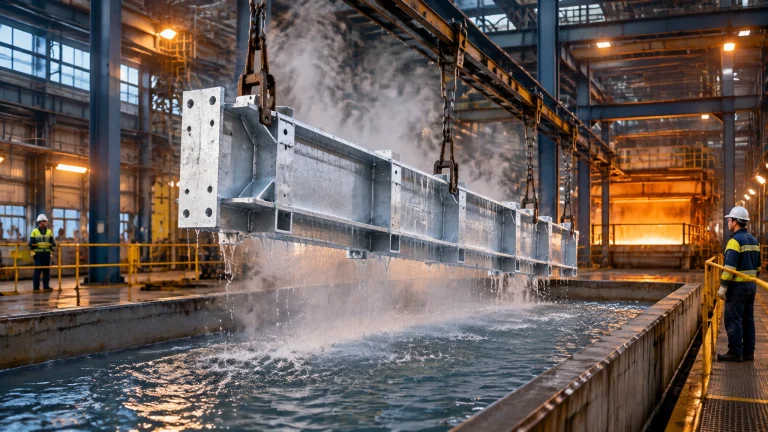
- Galvanizing operations: A hot dip galvanizing plant depends on properly prepared steel, effective pickling, controlled zinc temperature, and uniform coating conditions.
- Non-ferrous processing: Aluminum and copper lines require repeatable thermal profiles to protect conductivity, ductility, and surface quality.

The result is an integrated chain of thermal processing equipment, not an isolated furnace purchase.
The 2026 Energy Efficiency Roadmap
A disciplined project roadmap turns energy efficiency from an aspiration into a controlled capital program.
Phase 1: Assessment and Baseline : Weeks 1–4
Measure the current process before selecting technology.
- Establish specific energy consumption in kWh per tonne or GJ per tonne.
- Record metal yield, dross generation, tap-to-tap time, and holding time.
- Measure flue-gas temperature, excess oxygen, furnace pressure, and door-open duration.
- Map scrap composition, moisture, coatings, and contamination.
- Identify bottlenecks in charging, melting, tapping, casting, and downstream processing.
Phase 2: Engineering and Technology Selection : Weeks 5–10
Match the furnace to the real production requirement.
- Select induction, rotary, double-chamber, gas-fired, or arc technology according to the charge stream.
- Evaluate recuperators, regenerative burners, charge preheaters, and combustion controls.
- Define capacity, batch size, melt rate, operating temperature, and duty cycle.
- Include emissions control, operator safety, access for maintenance, and future expansion.
- Specify critical furnace spare parts and service support before commissioning.
Phase 3: Installation and Commissioning : Weeks 11–20
Protect the production schedule through structured implementation.
- Verify mechanical, electrical, combustion, and control-system integration.
- Conduct dry runs, cold commissioning, hot commissioning, and performance trials.
- Train operators on charging, temperature control, skimming, tapping, and shutdown procedures.
- Confirm energy, yield, throughput, and quality results against agreed acceptance criteria.
Phase 4: Continuous Improvement : Ongoing
Maintain the gains through operational discipline.
- Review energy intensity per tonne every production shift.
- Track melt loss and rejected product by alloy or steel grade.
- Maintain burners, sensors, transformers, coils, linings, doors, seals, and handling systems.
- Keep critical furnace spare parts and accessories available to minimize unplanned downtime.
- Recalculate the business case as energy prices, production mix, and scrap availability change.

Circular-Economy Performance Is a Business KPI
A circular production model must deliver more than environmental messaging. It must improve yield, reduce raw-material exposure, strengthen supply security, and support regulatory compliance.
Plant leaders should monitor:
- Specific energy consumption: kWh/t or GJ/t of liquid metal.
- Metal yield: Saleable metal divided by charged material.
- Melt loss: Dross, oxidation, slag, and handling losses.
- Throughput: Tonnes per hour and tonnes per operating day.
- Thermal efficiency: Useful heat transferred to the product compared with total input.
- Maintenance performance: Planned versus unplanned downtime.
- Carbon intensity: CO₂ emissions per tonne, using a clearly defined system boundary.

Build the Next Efficiency Gain with the Right Partner
The 2026 energy-efficiency playbook is clear: prepare the charge, select the correct melting technology, recover waste heat, control every tonne, and connect melting with downstream thermal processing.
As an experienced industrial furnace manufacturer, Continental Furnaces brings more than 35 years of engineering knowledge to aluminum melting, steel melting, recycling projects, heat treatment, rolling mill applications, galvanizing, and wire-processing lines. Our role is to create an enduring partnership that protects performance throughout the equipment lifecycle: from feasibility and design to commissioning, service, and replacement furnace spare parts.
Review your energy-per-tonne, yield, and downtime data now. Then contact Continental Furnaces to assess the next furnace or recycling project as a strategic move toward sustained competitive advantage.
Further reading
- Metal Recycling Projects: How Industrial Furnaces Are Building a Sustainable Future
- Industrial Aluminum Melting Furnace Applications Across Automotive and Recycling Industries
- International Aluminium Institute: Aluminum Recycling and Energy Savings
- Nucor: Benefits of Electric Arc Furnace Steelmaking